Iceland weighs spring shooting permits for Whooper Swans
A motion before Iceland's parliament would put birds returning from Britain and Ireland within reach of shooting permits on farmland, including during the breeding season.

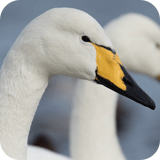
A Whooper Swan feeding in an English field this winter may be back on its Icelandic breeding grounds in spring. Ten Icelandic MPs have asked for a change that could allow birds like it to be shot on farmland shortly after their return. The dates are what trouble Iceland's bird conservation organisation, Fuglavernd: the first permits could start on 15 March and run through the nesting season.
The motion before the Althingi would not itself authorise anyone to shoot a swan. Its sponsors want the minister responsible for the environment to draw up a scheme for temporary, conditional permits in places where grazing pressure on grassland or cereal crops is judged substantial. They cite losses to farmers, including damage by flocks of young swans on newly established grassland. Their proposal has two overlapping parts.
| Period | Birds and land covered |
|---|---|
| 15 March to 20 August | Whooper Swan, Greylag Goose, Pink-footed Goose and Barnacle Goose on grassland and cereal fields. |
| 1 May to 1 October | Whooper Swan only, on cereal fields only. |
For a Whooper Swan using cereal fields, the two periods would together stretch from mid-March to the start of October. Those limits distinguish the motion from a year-round hunting season. They do not answer the objection Fuglavernd makes in its evidence to the committee: the dates deliberately reach birds when they are returning to breed or raising young.
“Hunting these species is not a private matter for us Icelanders” Fuglavernd, in its submission to parliament (translated from Icelandic)
The winter counts put numbers to that point. In January 2020, the international census published in Wildfowl recorded 43,255 birds in the Icelandic population. England held 15,927 and the Republic of Ireland 14,467. Counters found another 5,052 in Scotland and 4,644 in Northern Ireland. Just 2,923 were in Iceland itself. These are figures for that winter, not an estimate of how many birds would encounter shooting on their return.
The sponsors also want a management and conservation plan drawn up with agencies and interested parties. Fuglavernd argues that an increase from historically depleted numbers is not, in itself, evidence that protection has gone too far. A national winter census can document recovery; it cannot show how much a flock has eaten on a particular farm or whether shooting there would reduce the loss.
The parliamentary record shows that the motion went to the Environment and Transport Committee after debate on 4 November. The deadline for written submissions was 20 November. If the motion is adopted as drafted, the minister would be asked to bring proposals and a report on the plan back to parliament by 1 February 2027. That is a deadline to report, not a date for shooting to begin.
20 November 2026
Get Breaking Birdnews First
Get all the latest breaking bird news as it happens, download BirdAlertPRO for a 30-day free trial. No payment details required and get exclusive first-time subscriber offers.