


Hidden Habits Revealed: Shearwaters Relieve Themselves Only in Flight
Researchers discover that Streaked Shearwaters avoid defecating on the water, instead releasing waste every few minutes while airborne, with implications for marine ecosystems and disease spread
Excretion in the open ocean
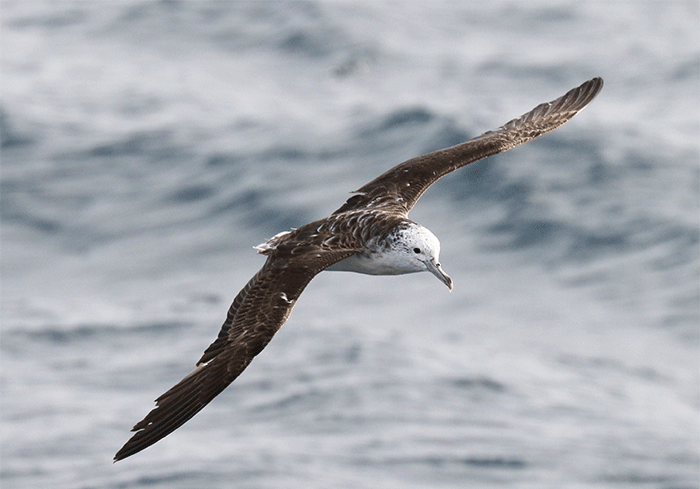
Seabirds are known to shape coastal ecosystems through their guano deposits, but little has been understood about how they excrete while travelling far from land. A new study published in Current Biology has provided the first direct evidence, showing that Streaked Shearwaters Calonectris leucomelas almost always excrete in flight, rather than when resting on the sea surface.
Using belly-mounted video loggers deployed from breeding colonies in Japan between 2021 and 2023, researchers recorded 195 excretion events across 36 hours of footage. Almost all events occurred during flight, with only one exception when a bird was sitting on the water.
A periodic pattern
The study revealed that excretion follows a remarkably regular rhythm. Shearwaters typically expelled waste every 4–10 minutes during daylight, with half of all first excretions occurring within 30 seconds of taking off from the sea surface. In some cases, birds appeared to launch into the air solely to defecate before landing again within a minute.
On average, the birds excreted more than 5% of their body weight per hour – far higher than previous estimates for seabirds. Such frequent release may not only reduce flight costs by shedding mass but could also serve as a way to avoid contact with faeces, limit pathogen exposure, or even reduce predation risks from sharks and seals attracted to faecal plumes.
Implications for ecology and disease
The researchers highlight that this frequent, airborne excretion may have ecological consequences comparable to the well-documented “whale pump,” by which whales fertilise the ocean through nutrient-rich waste. With hundreds of millions of Procellariiform seabirds globally, their cumulative contribution to nutrient cycling in pelagic waters may be significant.
There are also potential epidemiological concerns. Seabird faeces can carry avian influenza viruses, and with birds from different colonies congregating at shared feeding grounds, frequent excretion at sea may facilitate long-distance disease transmission between populations.
A new frontier in seabird biology
Lead author Leo Uesaka of the University of Tokyo said the findings open a new avenue for understanding how seabirds interact with their marine environment: “By revealing the periodic and flight-linked nature of seabird excretion, we can begin to assess how these birds transport nutrients and pathogens across oceans. It is an overlooked behaviour with far-reaching ecological significance.”
The study emphasises how advances in animal-borne technology are continuing to uncover hidden aspects of seabird life, with even the most basic behaviours – such as when and where birds relieve themselves – carrying important implications for conservation, marine ecology and global disease dynamics.
August 2025
Share this story





