Finland's Yellow-browed Warbler autumn starts at record pace
An exceptional run of early records preceded the species' main passage, raising the prospect of one of the country's largest influxes.
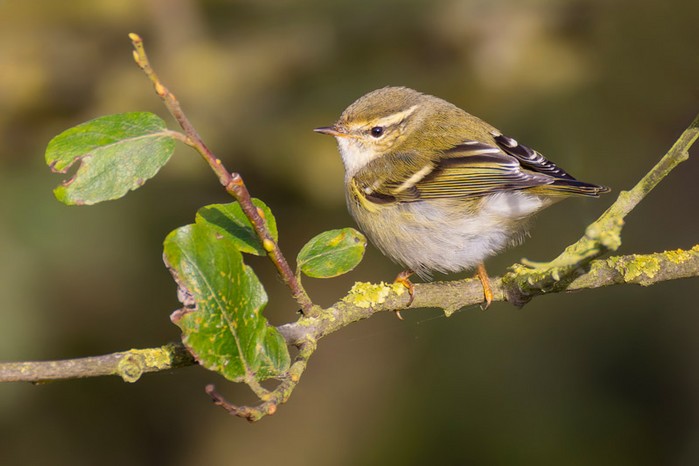
Ornithomedia are reporting an exceptional early autumn for Yellow-browed Warblers in Finland, based on figures published by BirdLife Finland. The unusually early records arrived before the species' normal peak passage and suggested that a much larger movement might follow.
Yellow-browed Warbler, Phylloscopus inornatus, breeds across northern Asia, with the nearest regular breeding areas to Finland in northern Russia west of the Urals. Most migrate towards southern Asia, but increasing numbers travel west into Europe each autumn.
BirdLife Finland recorded scattered birds from the first half of August and then daily reports from 27 August. Around 60 were logged during the month, almost ten times the previous August record. By 6 September the running autumn total had reached nearly 190.
The largest local gatherings at that stage were five birds at Kalajoki on 2 September and four at each of four sites on the Gulf of Bothnia coast. Those concentrations matter because records of the species are normally dispersed among coastal headlands, islands, woodland edges and gardens.
Early autumn abundance has regularly predicted abundance during the main migration later in the autumn.
BirdLife Finland - translated from Finnish
BirdLife Finland calculated its totals from the Tiira bird-recording system using a method intended to reduce obvious duplication. Finland was divided into one-square-kilometre cells, and only the highest daily count from each cell was added to the seasonal sum.
That method cannot identify every individual. A bird moving into a neighbouring cell or remaining for several days may still influence the figures, while unreported birds are missed. Its strength is consistency: the same calculation can be applied to earlier years to compare the scale and timing of movements.
The best previous Finnish autumn was 2015, when more than 1,000 Yellow-browed Warblers were recorded. BirdLife Finland noted in early September that the 2026 pace could carry the total beyond 2,000, but explicitly treated that as a forecast to be tested as the season developed.
Why so many birds move west remains unresolved. High breeding success, weather systems, population change and an expansion of the breeding range have all been discussed. BirdLife Finland noted suggestions that the species may be breeding farther west in Russia, but said firm evidence was lacking.
The western movement is no longer viewed simply as a stream of disorientated vagrants. Repeat appearances, ringing recoveries and occasional wintering birds indicate that at least some individuals survive and may follow the route again, although the proportion reaching viable wintering areas is unknown.
The Finnish figures cover the opening weeks rather than the complete 2026 season. They are valuable because they document how early the movement began and provide a measured baseline against which the later main passage can be judged. They also offer birders elsewhere in northern and western Europe advance notice of a movement likely to spread beyond Finland.
10 Oct 2026
Get Breaking Birdnews First
Get all the latest breaking bird news as it happens, download BirdAlertPRO for a 30-day free trial. No payment details required and get exclusive first-time subscriber offers.