Dunlin breeds again in the Netherlands after three-decade absence
Three recent breeding records have raised hopes that the threatened Baltic Dunlin could re-establish itself in the Netherlands.
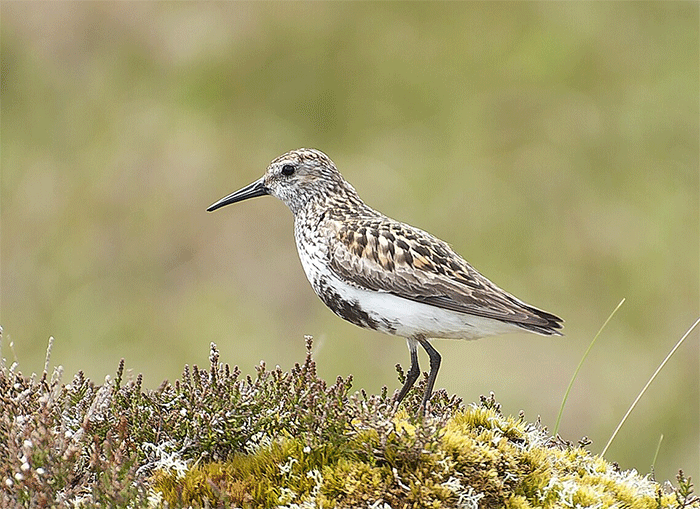
Ornithomedia reports that Dunlin has been confirmed breeding again in the Netherlands following an absence of more than 30 years, with three breeding records documented since 2019.
The birds belong to the subspecies Calidris alpina schinzii, commonly known as Baltic Dunlin, which breeds from south-east Greenland and Iceland through Britain and southern Scandinavia to the Baltic coast. The Netherlands lies close to the southern edge of its breeding range.
The latest confirmed nest was found at Lauwersmeer in May 2023, 37 years after the previous nest there in 1986. A female was accidentally flushed from floodplain grassland before a male appeared and performed distraction behaviour, leading researchers to discover a nest containing three eggs. A fourth egg had been laid when the nest was checked the following day.
The clutch was expected to hatch in early June, but the nest was subsequently found empty and clean. There were no clear signs that the eggs had either hatched or been taken by a predator, leaving the outcome uncertain.
Other recent breeding records occurred at Marker Wadden, a newly created wetland archipelago in Lake Markermeer. A nest was discovered there in 2019, while a pair accompanied by young was recorded in 2022.
Although confirmed nests had been absent from northern Netherlands between 1986 and 2023, territorial Dunlin continued to appear. Researchers compiled 38 records from the Dutch Wadden Sea and the northern provinces, including 23 birds showing alarm or distraction behaviour and 14 displaying individuals or pairs. Most came from the Dollard estuary and Lauwersmeer.
The birds generally selected areas of short, tussocky vegetation close to pools or open water. Most territories were on saltmarshes, although birds also occupied flooded grassland, wet heath and mown reedbeds.
Baltic Dunlin has undergone a severe decline across much of its European range. Denmark’s population has fallen from tens of thousands of pairs during the 19th century to fewer than 200, while only small remnants survive in Germany and southern Sweden. The recent Dutch records nevertheless show that suitable wetlands can still attract breeding birds at the southern edge of the subspecies’ range.
July 2026
Get Breaking Birdnews First
Get all the latest breaking bird news as it happens, download BirdAlertPRO for a 30-day free trial. No payment details required and get exclusive first-time subscriber offers.
Share this story