


Critically Endangered Rüppell’s Vulture Found Dead in Southern Portugal
Poisoning suspected after tagged bird’s journey from Morocco ends in tragedy, prompting urgent investigation and renewed conservation warnings
Sudden end to an intercontinental journey
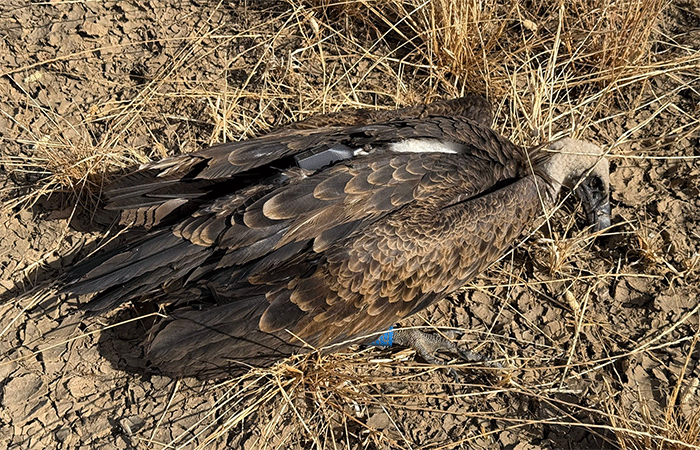
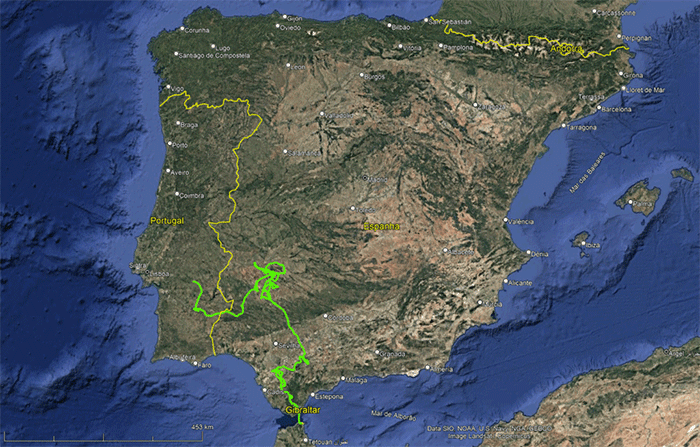
A young Rüppell’s Vulture (Gyps rueppelli), tagged and tracked as part of an international conservation project, has been found dead in southern Portugal. The bird, which originated in northern Morocco, had successfully crossed the Strait of Gibraltar and travelled through Spain into the Alentejo region, where it was discovered lifeless near Beja on 30 June 2025.
The vulture had been tagged by GREFA on 2 May 2025 at the Jbel Moussa Raptor Rehabilitation Centre, equipped with a GPS transmitter supplied by the Vulture Conservation Foundation (VCF). Its migration into Europe was closely monitored as part of efforts to understand and protect this Critically Endangered species, which is increasingly appearing in the Iberian Peninsula.
Suspicious signs and rapid response
GPS data showed the bird behaving normally until 29 June, when its movements became erratic and confined to a small area. On 30 June, its signal ceased. A search party coordinated by the LIFE Aegypius Return project and the Portuguese GNR, including poison detection dog teams and environmental officers, located the carcass on 3 July.
Two dead Eurasian Jays (Garrulus glandarius) were also found nearby. The vulture and jays were retrieved according to Portugal’s Antidote Protocol and transported to the University of Évora’s Veterinary Hospital for toxicological analysis.
VCF: Hope and concern for Europe’s fifth vulture
The Rüppell’s Vulture, a native of the Sahel and East Africa, is globally threatened due to widespread poisoning and habitat loss. Its increasing presence in Spain and Portugal represents a rare example of range expansion for a threatened species.
The Vulture Conservation Foundation, which supports monitoring of Rüppell’s Vultures through GPS tagging, highlighted the significance of the data. “By fitting more individuals with GPS devices, the team hopes to better understand the ecology and behaviour of these visitors – how long they remain in Europe and how they interact with local ecosystems,” the VCF stated. “There is hope for the future of Rüppell’s Vultures.”
However, the death in Portugal underscores the persistent threat that poisoning poses to vultures throughout their range, including Europe. Without real-time tracking, the incident would likely have gone unnoticed, and the opportunity for investigation lost.
Cross-border conservation in action
This case reflects both the growing ambition and the fragility of international efforts to conserve vulture species. The LIFE Aegypius Return project, in partnership with GREFA, VCF, SEO BirdLife, IUCN-MED and others, is working to secure safe habitats and flight paths for vultures across the Mediterranean and into the Iberian Peninsula.
The data from this vulture’s journey – from Morocco to southern Portugal in under two months – provides rare insights into the species’ movement and habitat use. It also shows how rapidly threats can manifest once birds arrive in European farmland landscapes.
A call for urgent action
Conservationists are urging authorities to step up enforcement against illegal poisoning and to increase public awareness of its devastating impact on birds of prey. The death of a single Rüppell’s Vulture represents a heavy loss for a species already on the brink – and for the knowledge it might have yielded.
August 2025
Share this story





