Close bonds between Jackdaws bring food benefits but with waiting costs
A two-year experiment in Cornwall found that mates and close relatives coordinated their visits and tolerated each other at single-bird feeders.
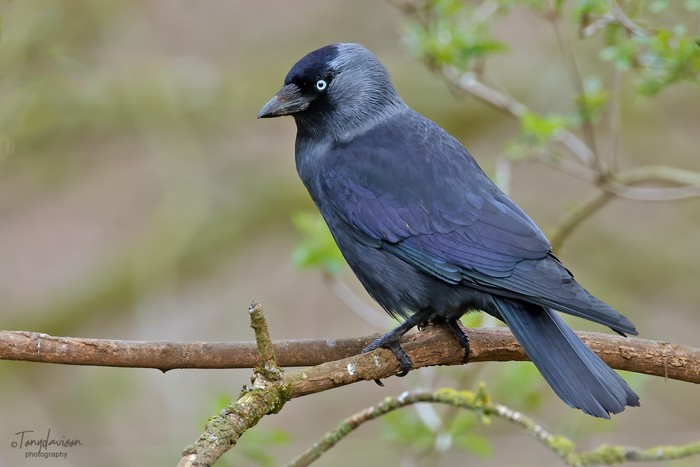
Close relationships help wild Jackdaws keep access to food, but birds sometimes pay for that support by waiting while a partner feeds, according to a two-year field experiment in Cornwall.
Researchers from the University of Exeter and Swansea University used a population of individually colour-ringed Jackdaws to examine how mates and close relatives behaved at deliberately restricted feeding stations. The study in Proceedings of the Royal Society B asks how the well-known link between strong social bonds and fitness might work during everyday foraging.
Each station allowed one bird to feed while another waited immediately behind. Transponder rings identified visitors automatically, enabling the team to compare arrival times, companions, displacement and tolerance in a standardised setting where food could not be shared side by side.
Bonded pairs visited together more often than birds without a close relationship and tended to arrive nearer to one another in time. They also coordinated their activity and were less likely to displace one another from the feeding position.
Lead author Luca G Hahn told Phys.org that bonded partners were more tolerant. That support reduced the risk that the feeding bird would be forced away, but the individual behind could not eat and therefore accepted a time and opportunity cost.
Bonded partners also showed higher social tolerance toward each other.
Luca G Hahn, University of Exeter
The result gives social support a practical ecological setting. Patchy food attracts competitors, and an animal that retains its position can continue feeding or gather information about a resource. Arriving with a familiar partner may therefore improve access even when the partner does not deliver food directly.
Parents and juveniles may receive a further benefit. A young bird following an adult could learn how to approach or use a feeder, although the experiment was not designed to measure the long-term value of that learning.
The team distinguishes bonded relationships from looser associations. Mating partners and close relatives were expected to maintain ties over time, while other birds in the flock could provide information without offering the same tolerance. Future work will test whether transient associates help Jackdaws locate unpredictable resources.
The study does not demonstrate that waiting for a partner directly increases survival or breeding success. It records decisions and immediate outcomes at artificial stations, then identifies a plausible route through which social bonds could affect food intake under natural competition.
Standardised feeders were useful because they exposed a trade-off that would be difficult to quantify in an open field. Their simplicity is also a limitation: natural food patches differ in size, concealment and risk, and several birds may feed simultaneously.
Jackdaws live in fluid societies containing long-term pairs, relatives and changing flock-mates. The new work suggests that those categories are not interchangeable when food is contested. A bonded companion can make a feeding position more secure, but maintaining the relationship can require one bird to pause and let the other take its turn.
19 Oct 2026
Get Breaking Birdnews First
Get all the latest breaking bird news as it happens, download BirdAlertPRO for a 30-day free trial. No payment details required and get exclusive first-time subscriber offers.