Clearcutting silences resident birds in boreal forests
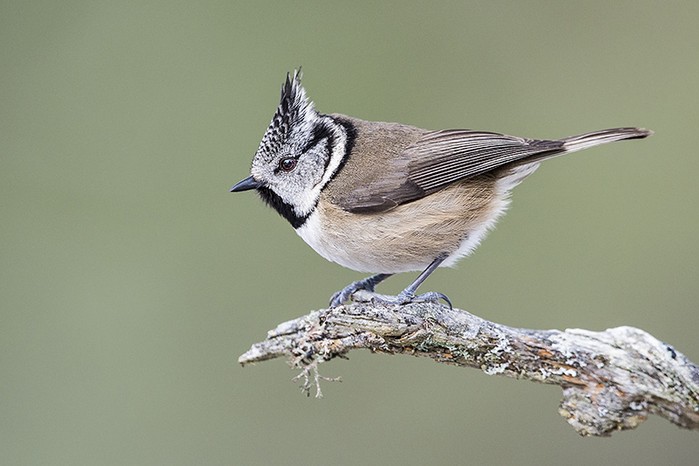
New research shows that intensive clearcutting reduces the vocal activity of year-round forest birds, with Crested Tit, Treecreeper and Goldcrest among the species most affected.
Clearcutting in boreal forests can lead to a marked reduction in the activity of resident forest birds, according to a new study from Southwest Finland.
The research, published in Forest Ecology and Management, used passive acoustic monitoring to compare bird activity before and after clearcutting at forest sites in Finland. Unlike many forestry studies, which focus mainly on the breeding season and include many migratory species, this work concentrated on birds that remain in the forest year-round and are therefore directly exposed to local habitat change.
Researchers recorded bird sounds at 60 forest sites, comparing data from 2020 with recordings made in 2024. Half the sites remained uncut, while the other half had experienced clearcutting within 100 metres of the recording point. The clearcut sites were divided into low-impact and high-impact categories, depending on how much forest had been removed.
The results showed that total bird vocal activity declined significantly at high-impact clearcut sites. In simple terms, the forests became quieter after substantial tree removal. Species richness - the number of species detected - did not show the same clear response, suggesting that clearcutting did not necessarily remove all resident species from affected areas, but did reduce how much some birds used or vocalised in those habitats.
The strongest negative responses were found in Crested Tit, Eurasian Treecreeper and Goldcrest. These are all species associated with mature, structurally complex forest, where they rely on features such as conifer canopies, trunks, bark surfaces, insects, spiders and other small invertebrate prey.
The Eurasian Treecreeper appeared particularly sensitive, with reduced vocal activity even at lower levels of clearcutting. The authors suggest this reflects the species’ strong dependence on older forest structure and trunk-dwelling arthropods. Crested Tit and Goldcrest also declined at high-impact sites, consistent with their preference for mature coniferous woodland.
One species, Black Woodpecker, showed the opposite pattern, with increased vocal activity at high-impact sites after clearcutting. The researchers suggest several possible explanations, including retained deadwood, temporary access to food such as ant mounds, the species’ large home range, or simply that calls may travel more easily in newly opened areas.
The study used a Before-After Control-Impact design, allowing researchers to compare the same areas before and after clearcutting while also using uncut control sites. This is important because it helps separate the effects of forestry from ordinary year-to-year variation in bird activity.
The findings also show the value of passive acoustic monitoring. Automated recorders allowed researchers to capture large amounts of data on forest soundscapes without relying solely on traditional field surveys. However, the authors note that vocal activity is not the same as abundance. A quieter forest may reflect fewer birds, reduced habitat use, behavioural avoidance, or changes in calling behaviour.
The wider message is clear: intensive clearcutting can reduce the use of boreal forests by resident birds, especially species tied to mature and complex woodland. The authors argue that more sustainable forestry is needed, including tree retention, deadwood retention, selective harvesting, longer rotation periods and undisturbed buffers around sensitive habitats.
For boreal forest birds, the study underlines the importance of what remains after logging. Clearcutting may not immediately remove every species from a landscape, but it can make forests less suitable for the birds most dependent on mature woodland structure. In conservation terms, a quieter forest may be an early warning that important habitat quality has been lost.
June 2026
Get Breaking Birdnews First
Get all the latest breaking bird news as it happens, download BirdAlertPRO for a 30-day free trial. No payment details required and get exclusive first-time subscriber offers.
Share this story