American Black Tern produces hybrid chick in Northumberland
The returning American Black Tern at Long Nanny has produced a hybrid chick with an Arctic Tern, following several summers of close association with the Northumberland colony.
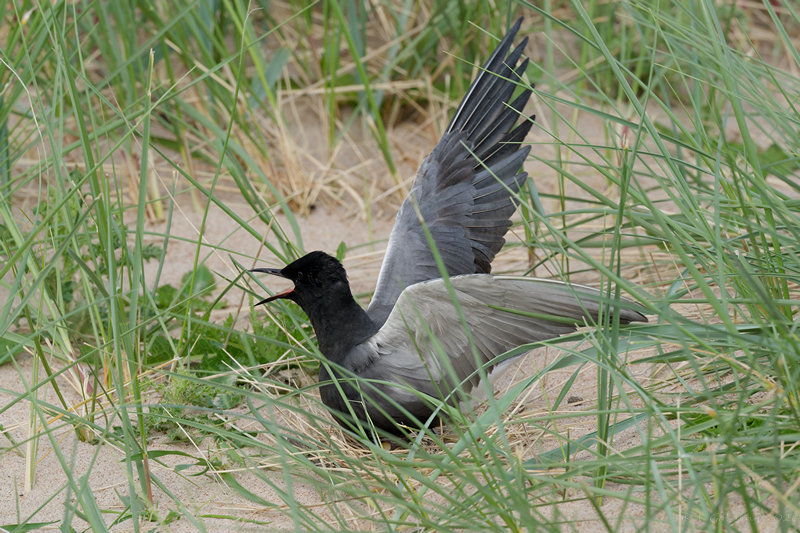
The long-staying American Black Tern at Long Nanny has added an extraordinary new chapter to its already remarkable story, after producing an apparent hybrid chick with Arctic Tern.
The bird, now a familiar summer presence on the Northumberland coast, returned again this year to the tern colony near Beadnell. Its prolonged site fidelity has already made it one of the most closely followed Nearctic vagrants in Britain, but the successful hatching of a chick takes the record well beyond a standard rarity narrative.
The female American Black Tern has been associated with Arctic Terns at Long Nanny in previous seasons, including a breeding attempt in 2025 which produced three eggs, none of which hatched. This year, however, the pairing with a male Arctic Tern has gone a stage further, with a chick seen in the colony in recent days.
The hybrid chick is likely to bring further interest to the site. Long Nanny remains one of Northumberland’s key breeding sites for Arctic and Little Terns, with seasonal protection helping to reduce disturbance and improve nesting success.
Whether the chick fledges, and what it may look like as it develops, will now be of obvious interest. For the moment, the record stands as one of the most remarkable breeding events involving a vagrant tern in Britain.
June 2026
Get Breaking Birdnews First
Get all the latest breaking bird news as it happens, download BirdAlertPRO for a 30-day free trial. No payment details required and get exclusive first-time subscriber offers.
Share this story