20-year-old Bewick's Swan reaches Slimbridge for the first time
A colour-ringed female first recorded on the Arctic tundra has reached WWT Slimbridge for the first time, offering rare insight into migration, longevity and the importance of Europe's wetland network.
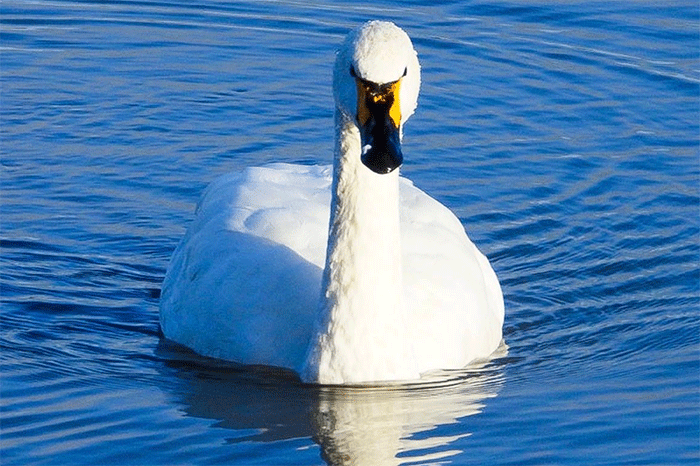
A Bewick's Swan with one of the most remarkable migration histories ever recorded has arrived safely at Slimbridge WWT, more than two decades after she was first caught and colour-ringed on the Arctic tundra of northern Russia.
The 20-year-old female, known as Galina, was originally ringed by researchers working in the Pechora Delta in Arctic Russia. Since then, she has travelled thousands of miles across mainland Europe, being recorded in several countries before finally reaching the UK for the first time.
Two decades traced across Europe
Because Galina carries a distinctive colour ring, researchers have been able to track her movements through sightings reported over many years. She has been recorded in Germany, the Netherlands, France, Poland and Estonia, painting a vivid picture of how Bewick's Swans depend on a chain of safe wetlands stretching across the continent.
Her appearance at Slimbridge offers rare, long-term evidence of how migratory swans use a network of protected sites rather than relying on a single wintering destination. It also underlines how individual birds can adapt their routes and stopover sites as conditions change.
Defying expectations of age and survival
Galina's arrival is all the more striking given the typical lifespan of Bewick's Swans. On average, they live around nine to eleven years, though a small number of individuals monitored by WWT have been recorded reaching their late twenties.
At around 20 years old, Galina is already well beyond the norm. Her survival through decades of migration, harsh winters and changing landscapes highlights the resilience of the species - and the role that protected wetlands play in supporting birds throughout their lives.
A new bond at Slimbridge
Galina arrived at Slimbridge alongside Grinner, a long-standing winter visitor who has returned to the site every year since 2014. Experts believe the pair are newly bonded, despite Galina's advanced age.
Male Bewick's Swans typically select wintering sites, and it is thought that Grinner has led Galina to Slimbridge. This is his third known life mate, and Galina is now benefiting from the security of a well-managed, protected wetland during the winter months.
Changing migration patterns across Europe
Galina's story comes at a time when Bewick's Swans are changing their wintering behaviour across Europe. Rising temperatures mean many birds no longer need to migrate as far from Arctic Russia, with increasing numbers now wintering in central Europe - a process known as short-stopping.
As a result, recent winters have seen historically low numbers of Bewick's Swans recorded in the UK. Conservationists say this makes maintaining a strong, connected network of protected wetlands along the flyway more important than ever.
Wetlands as climate and nature solutions
Wetlands play a crucial role far beyond providing space for wintering swans. They store carbon, reduce flooding and support a wide range of wildlife, making them one of the most effective natural tools for addressing both climate change and biodiversity loss.
As climate pressures continue to mount, restoring and protecting wetlands can help migratory species adapt. Galina's arrival at Slimbridge shows that well-managed wetlands continue to function as intended - offering safe refuge even to birds late in life.
Progress on long-standing threats
There has also been recent progress in tackling other dangers faced by waterbirds. In 2025, following decades of campaigning, the UK government confirmed a ban on lead ammunition.
For years, lead from spent ammunition polluted wetlands and was estimated to poison up to 100,000 waterbirds annually in the UK. The ban is expected to prevent countless deaths each year, benefiting migratory swans such as the Bewick's and strengthening the long-term prospects of species already under pressure.
January 2026
Get Breaking Birdnews First
Get all the latest breaking bird news as it happens, download BirdAlertPRO for a 30-day free trial. No payment details required and get exclusive first-time subscriber offers.
Share this story