Critically Endangered Sulu Hornbill rescued 600km from known range
A Sula Hornbill has been found exhausted off the coast of Cagayan de Oro, over 600km from its known range on Tawi Tawi
An unexpected rescue in unfamiliar waters
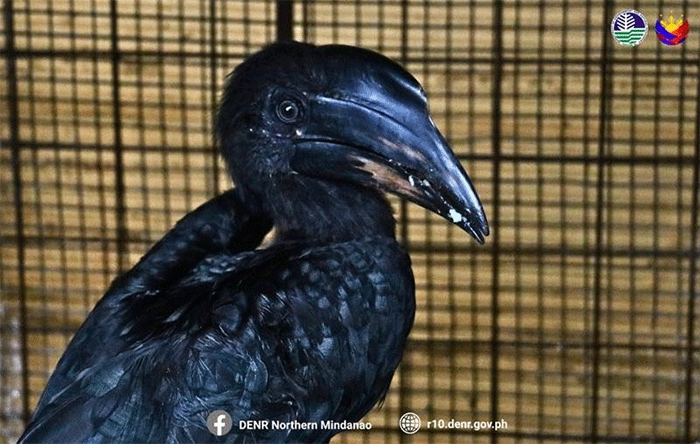
A critically endangered Sulu Hornbill was rescued on 19 November 2025 after construction workers discovered the bird weak and struggling in coastal waters off Barangay Macabalan, Cagayan de Oro City. The location is far outside the species’ known natural range, making the discovery both extraordinary and deeply concerning.
The workers alerted the authorities after realising the bird was in distress. Their quick response was praised by the Department of Environment and Natural Resources (DENR) Region X, which highlighted the incident as a strong example of how public awareness and swift action can play a crucial role in protecting threatened wildlife.
Plans for specialist care and assessment
Because the Sulu Hornbill is native only to the Sulu Archipelago, DENR recommended transferring the bird to DENR Region IX, where conservation staff and wildlife specialists are more familiar with the species and its ecological needs. There, experts will assess its health and determine whether rehabilitation and eventual release back into suitable habitat is possible.
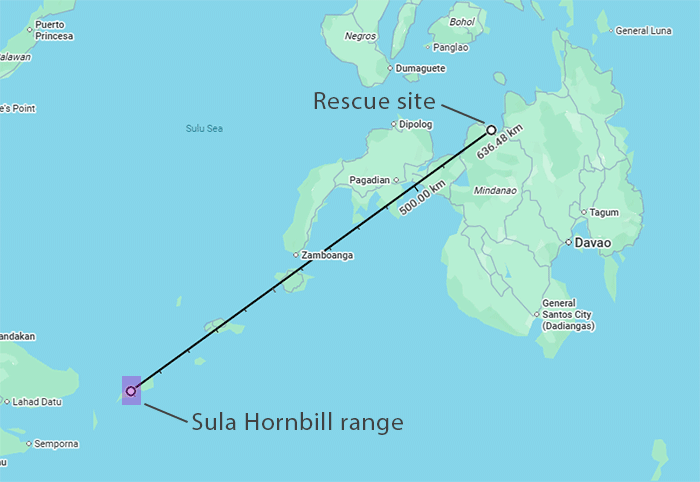
How the hornbill came to be found so far from its natural home remains unclear. Severe weather, habitat disturbance, or extreme weakness may all have contributed. Whatever the cause, the incident underlines just how vulnerable the species has become.
The Sulu Hornbill – a species found nowhere else
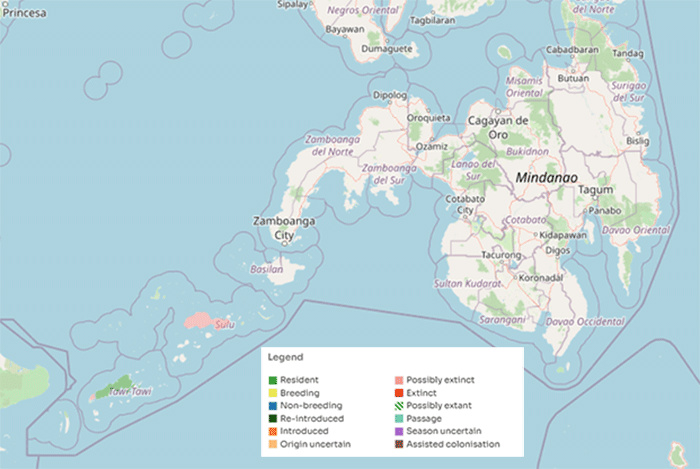
The Sulu Hornbill (Anthracoceros montani) is one of the rarest hornbills in the world and is endemic to a small number of islands in the Sulu Archipelago in the southern Philippines. It inhabits lowland and foothill forests, where it depends on large, mature trees for nesting cavities and fruiting trees for food.
Like other hornbills, it plays a vital ecological role as a seed disperser, helping to maintain forest structure and regeneration. Its breeding strategy, however, makes it particularly vulnerable. Females seal themselves inside tree cavities while incubating eggs and raising chicks, relying entirely on the male to supply food for many weeks.
Critically endangered and running out of options
The species is classified as Critically Endangered, with its population thought to number only in the hundreds, and possibly far fewer. Extensive deforestation across the Sulu Archipelago has removed much of its original habitat, while hunting and the loss of large nesting trees have further reduced breeding opportunities.
Political instability and limited resources for conservation in parts of the region have made long-term protection especially challenging. For a species with such a small population, the loss of even a single adult bird can have serious consequences.
A stark reminder – and a rare moment of hope
This rescue serves as a sobering reminder of how close the Sulu Hornbill may be to extinction. At the same time, the actions of the workers who intervened show how individual decisions can still make a difference.
Conservationists stress that protecting remaining forests in the Sulu Archipelago, safeguarding nesting trees, and reducing hunting pressure are essential if the species is to survive. For now, the rescued hornbill stands as both a warning and a symbol of hope for one of the Philippines’ most imperilled birds.
January 2026
Get Breaking Birdnews First
Get all the latest breaking bird news as it happens, download BirdAlertPRO for a 30-day free trial. No payment details required and get exclusive first-time subscriber offers.
Share this story