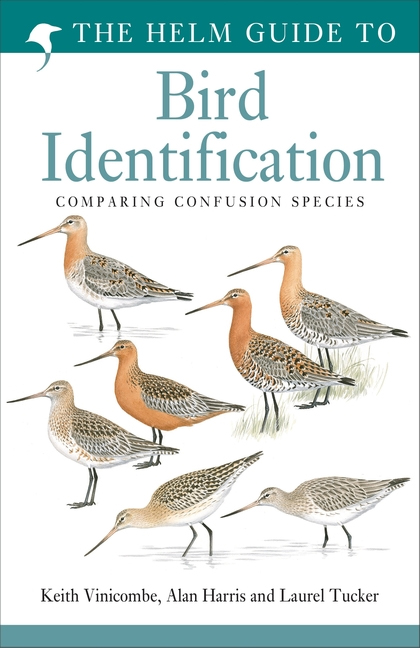
The Helm Guide to Bird Identification - an in-depth look at confusion species
Keith Vinicombe, Alan Harris and Laurel Tucker
Spoon-billed Sandpiper campaign
When the Macmillan Field Guide to Bird Identification first appeared in 1989 it was, quite rightly, very well-received. Here was a long-needed new approach to the identification guide, focused not on covering all species but on addressing those species or species pairs/groups which cause perennial difficulties for the ‘average’ birdwatcher (and that means most of us).
Although it quickly became a ‘must-have’ guide in the early 1990s, this small volume has long been out of print and, of course, much has changed since then. Our knowledge of identification criteria has continued to evolve, taxonomic revisions have dramatically increased the number of species and forms ‘on the radar’, the occurrence patterns of many species have changed and the rise of digital photography has transformed the way in which we look at (or sometimes don’t look at!) birds. Fast forward to 2014, however, and we have a new, updated edition of this ground-breaking guide which responds to all these new challenges.
The author and illustrator line-up remains the same as in the first guide. Laurel Tucker tragically died part-way through the production of the plates for the first edition and this was, in the end, a jointly-illustrated work with Alan Harris. Happily, this new edition continues to recognise Laurel’s formative input and most of her original plates are reproduced here, a tribute to their lasting scientific accuracy and aesthetic appeal. Her beautiful swans plate remains, for me, the best in the book.
Inevitably, this new guide is considerably larger and thicker than its predecessor (396 pages compared with 224) and covers a much wider range of species and forms, some of which were undreamt-of or even unheard-of in the 1980s. However, as acknowledged in the Introduction, the problem of which to include and which to exclude is a very real one. Although not focused on the ‘super-rarities’, discussion of their identification is often directly relevant to that of commoner forms so, for example, a discussion of Thayer’s Gull follows that of Kumlien’s Gull and a section on Moltoni’s Warbler inevitably has to follow that on Western and Eastern Subalpine Warblers. The choices were clearly difficult, however - there is, for example, no treatment of either American Herring Gull or Wilson’s Snipe, both recorded more frequently than either of the above and both also relevant to the identification of commoner species.
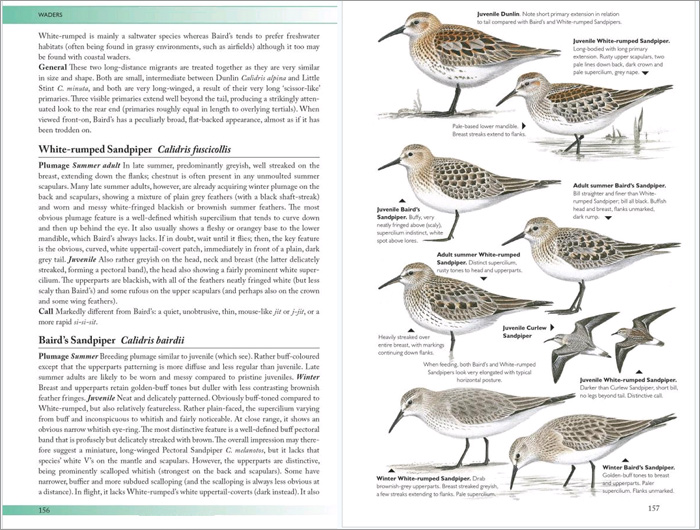
The species texts we do have are a triumph of comprehensiveness, clarity and compression. They range from the relatively straightforward (Goldcrest and Firecrest) to the much more complicated (Yellow-legged and Caspian Gulls) but all are thorough, accurate, well-researched, up to date and fully referenced. Many draw on the author’s long-running and popular series of mini identification papers in Birdwatch magazine. Even those species/groups whose taxonomy is notoriously fluid (e.g. the Great Grey Shrikes) or for which identification criteria continue to evolve (e.g. Siberian Chiffchaff) are well covered and incorporate the most up to date knowledge and thinking.
Nowhere though are the advances of the last twenty-five years illustrated to greater effect than in the section on large gulls. Caspian Gull was not even mentioned in the 1989 guide but here it receives a suitably detailed treatment, as befits its new status. The author rightly acknowledges that there is a fine line to tread with the large gulls. An over-simplistic treatment will lead to a high identification error rate, whilst addressing all the nuances and complexities could fill a book all by itself but in the process alienate most readers. What’s here may therefore disappoint the ‘hard core’ of gull enthusiasts (who will note, for example, the lack of mention of dark juvenile argentatus) but it will be hugely helpful to the majority of readers.
Published: 27 Mar 2014
Christopher Helm Publishers Ltd
Pages: 400
ISBN: 978-1408130353
Softback
RRP: £25.00
SPECIAL OFFER Pay just £16.99 when you quote discount code RBA35
Very important please read before ordering: When ordering via WildSounds, the value of the voucher will be deducted from your order when the order is processed. The total displayed on your shopping basket excludes the value of the promo but this will be applied before final payment is taken.

The author is commendably clear, both in this section and elsewhere, where the limits of our identification capabilities lie (or should that be the acceptance thresholds of records committees?) and highlights the (many) species and groups for which some combination of good quality images, extensive notes, sound recordings and expert back-up will be either useful or essential. These include such eternal problems as Baltic Gull, Stejneger’s Stonechat, Eastern Lesser Whitethroat etc., all of which are doubtless occurring more frequently than the official record yet acknowledges. This guide should therefore encourage us to document what we see in the field as comprehensively as possible.
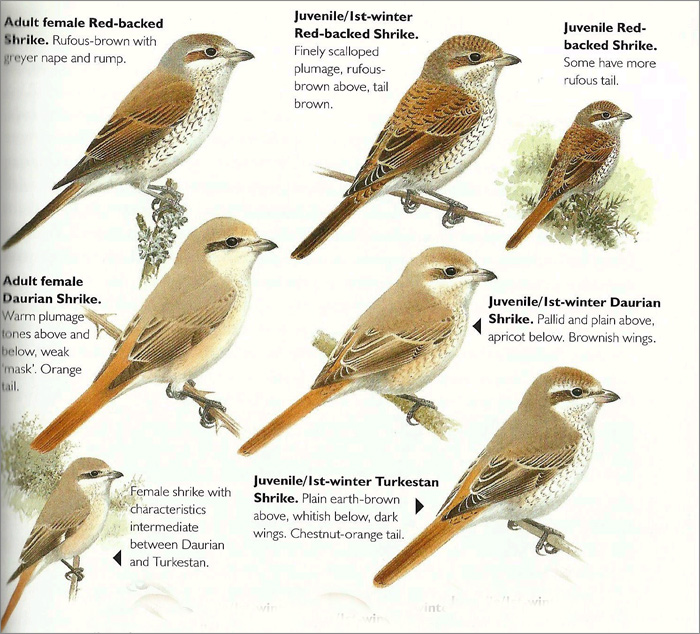
Those familiar with the 1989 guide will recognise many of the plates here. With the exception of the (relatively few) Laurel Tucker pictures, all are, as before, the work of Alan Harris. Some have stayed as they were but many have been reworked and many wholly new plates have been created too. Their style is, as always, crisp and accessible, well-suited to an identification guide. The artwork is both attractive and accurate and I particularly enjoyed the new shrike images - I would happily have any of them on the wall.
In summary, this major revision of a classic guide is a resounding success. Its greater dimensions, its greater number of species and its more in-depth treatments are ample testimony both to the advances of the last twenty-five years and to the knowledge and skill of its author and artist in condensing them so well. The ‘frontiers’ (to coin a phrase) of our knowledge today lie well beyond where they did in 1989 and they will doubtless lie elsewhere in another twenty-five years. Can we look forward to another version in 2039?
Andy Stoddart
February 2014

Rare Bird Alert does not profit from the sale of books through Wildsounds. Instead a percentage of every sale made through RBA helps supports BirdLife's Spoon-billed Sandpiper Fund
.