Weekly birding round-up: 3 - 9 Aug 2021
August began, for many of us, under something of a cloud – the weekend just gone being largely a wet and grey affair. But was it a damp squib where the birding was concerned? It’s time to shed that dripping coat and take a dive into the birds of the week just gone…
Last seen in Ireland near Arklow (Co.Wicklow) on 19th July, the optimists amongst British birders could have been forgiven for hoping the wandering adult Egyptian Vulture was going to head east across the Irish Sea towards the Llyn Peninsula, a tempting finger of land jutting out from the Gwynedd coastline.
Unfortunately, thus far there’d been no sign of it in North Wales. Had it drifted into the Welsh hinterlands unseen by birders?
What looks like the wandering Egyptian Vulture reported to have been photographed near the Céide Fields, Co. Mayo on Wed. 4th August. pic.twitter.com/ygWpH2i1Op
— Irish Bird News (@irishbn) August 6, 2021
News, this week, emerged that either dashed those hopes or, if you happened to be in Ireland, maintained the dream that you too might stumble across the ultimate local mega – the bird had once more been sighted, this time near the Ceide Fields Visitor Centre at Ballycastle (Co.Mayo) on 4th. Far from heading east, the bird took one look at the open water ahead of it on 19th July and turned northwest, traversing Ireland entirely to the west coast. What with this and Red-winged Blackbird, Co.Mayo is enjoying a blinding year.
But where next for this restless bird? Watch this space…
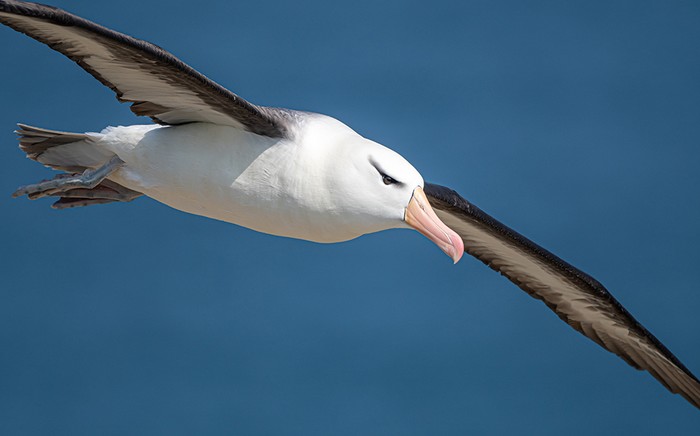
We begin the seabirds – where else? – with the happy news that the adult Black-browed Albatross was still present in East Yorkshire this week at Bempton Cliffs RSPB – more or less reliably, being absent on 4th, and then again on 8th-9th. We hardly dare hope this summer’s star bird will make an annual habit of being this obliging going forwards, though time alone will tell, but at least in 2021 it’s stuck around long enough to allow anyone thus inclined to head to the Yorkshire coast and see the remarkable spectacle of an albatross at a bustling mainland seabird colony.
Whilst getting to Scilly requires somewhat more conscious effort and time than a day out in Yorkshire, the past week has proved once again that, should you time it right, the pelagic trips that operate out of St Mary’s are without compare when it comes to catching up with a Wilson’s Petrel. Or two, or three, or double figures, depending on the trip in question… and who knows what else you might chance upon whilst out there filling your boots with these attractive petrels?
Whilst there wasn’t a monster vagrant seabird recorded off Scilly this week, there’s time yet for one such, and birders present on recent pelagics could hardly complain, such were the numbers of Wilson’s Petrels recorded – two birds on 3rd; four on 5th; six on 6th; at least 10 birds on 7th; six on 8th; and nine on 9th. A further possible bird was seen from Strumble Head (Pembrokeshire) on 8th, and a final probable bird was seen from St Agnes Head (Cornwall) on 9th.
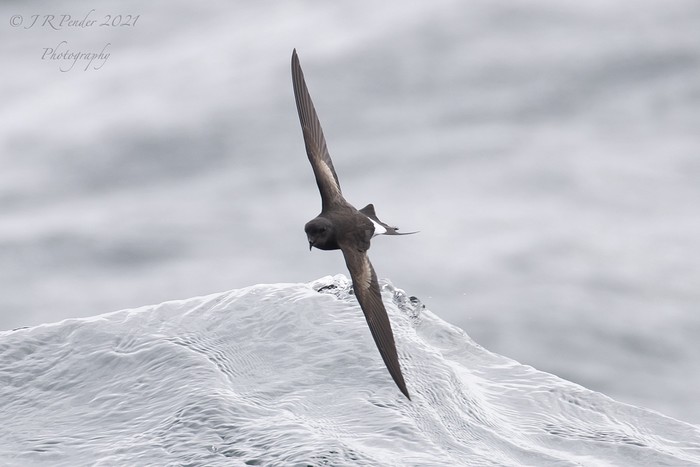
Ireland was getting in on the act too, with birders there logging two birds from Bridges of Ross (Co.Clare) on 6th, and six from Brandon Point (Co.Kerry) in the morning of 7th. On 8th another was seen between Skellig and Portmagee (Co.Kerry).
A trip out to sea off Shetland’s north Mainland on 3rd didn’t deliver a Wilson’s, but some fine compensation in the form of a Leach’s Petrel instead. One was trapped and ringed at Noss Head (Highland) on 4th.
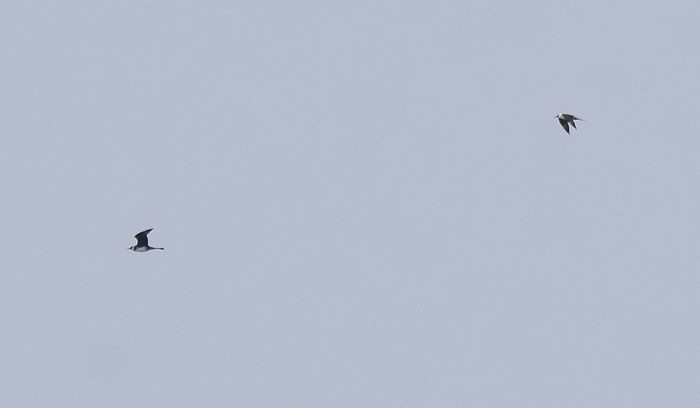
Around 20 Pomarine Skuas were seen nationwide this week; Long-tailed Skuas were once more rather less numerous, with the Boddam (Shetland) bird seen intermittently until 9th, and further sightings coming from Collieston (Aberdeenshire) on 5th, Bridges of Ross (Co.Clare) on 6th, Dornoch Point (Highland) on 7th and, on 8th, Bridges of Ross and Starr Gate (Lancashire), both of which scored two birds apiece.
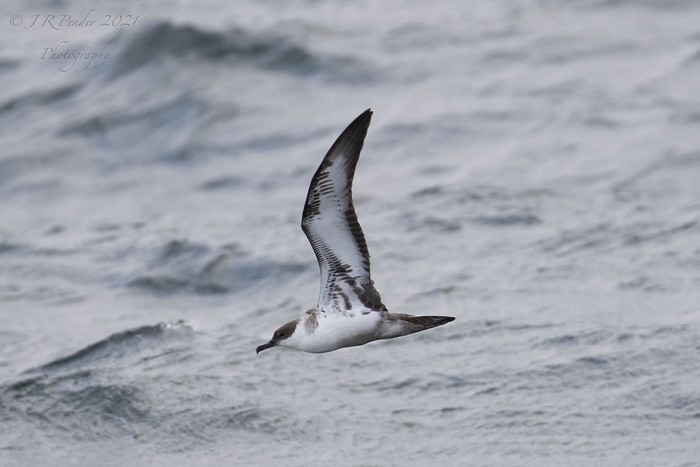
Large shearwaters began to be recorded in fair numbers in recent days – nothing extraordinary, but some decent tallies made in the English southwest and off southern and western Ireland. Around 140 Great Shearwaters were logged across the region, with notable counts on 7th comprising 31 birds off Pendeen (Cornwall) and 37 from Bridges of Ross (Co.Clare). Some 90 Cory’s Shearwaters were also recorded this week – of which peak counts came on 5th, with 19 seen from a Scilly pelagic and 11 off Cape Clear (Co.Cork).
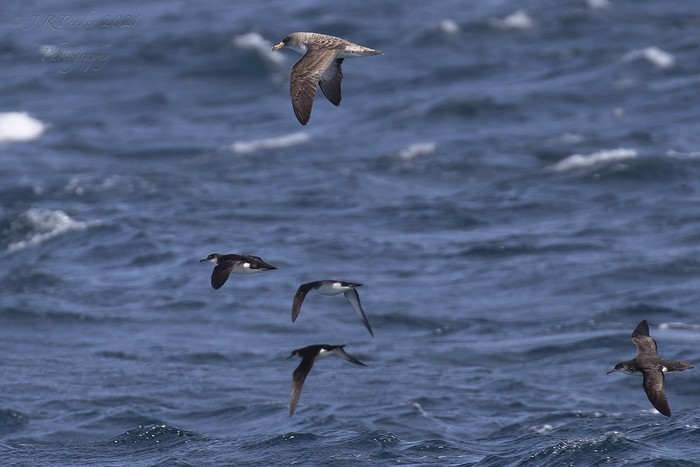
Around 400 Balearic Shearwaters were logged over the course of recent days and, of these, the best tally came from Start Point (Devon) where 57 birds were seen on 5th.
Penultimately, the bird that would have made the headlines had there not been that fractional element of uncertainty – a probable Barolo Shearwater photographed heading west off Pendeen (Cornwall) in the late afternoon of 5th. August is the prime month for sightings of the former ‘Little Shearwater’ - but with closely related Audubon’s and Boyd’s Shearwaters to throw into the mix, certainty is always likely to be something of a chimaera when a small shearwater hoves into view. Neither of the latter two species breed as close to us as does Barolo - ‘close’ being somewhat relative, given their deep Atlantic island breeding grounds – and with seriously lost shearwaters like Short-tailed making it to the North Atlantic, we know almost anything’s possible, and breeding proximity is no guarantee of identity.
And finally, another bird that, had the report only been more concrete, would also have soared into the headlines – an unconfirmed report of a Brown Booby heading south past Boulmer (Northumberland) on 9th. These days, that’s not such an unlikely prospect…
Marking a small change in the usual order of things amongst the long-legged beasties, three Purple Herons seen this week elevate them to the top of the pecking order for once. The individual remained on 3rd at Carlton Marshes SWT (Suffolk) – though was far from the most intriguing news to emanate from there, as we’ll see in due course – and further birds were noted at Britford (Wiltshire) on 4th-5th, and over Hunstanton (Norfolk) on 5th.

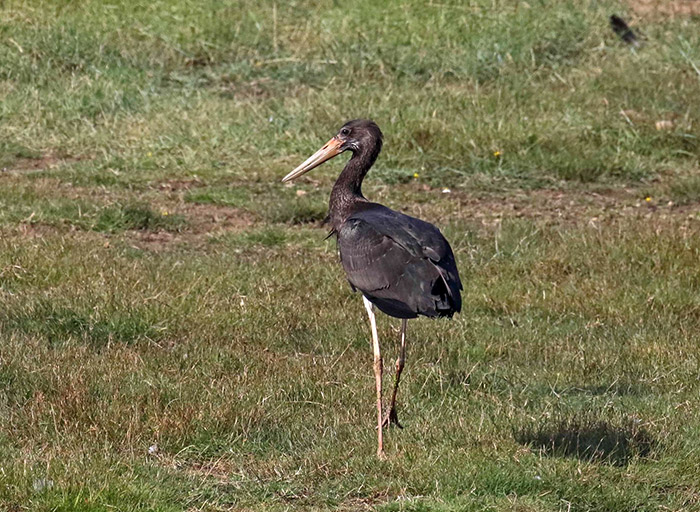
Further rare variety came in the form of sightings of Black Stork in the north of England – one was seen on 5th over Beeley Moor (Derbyshire), followed on 7th by a succession of sightings in East Yorkshire at Flamborough, Bempton Cliffs RSPB and Buckton. On 8th the East Yorkshire sightings continued, starting with a report at Grimston, followed by Withernsea and, latterly, Easington and Out Newton; while on 9th the bird remained in the general Spurn area all morning and, in the afternoon, what was presumably the same individual was seen in Lincolnshire near Tetney.
Settled Glossy Ibises remained in Norfolk at Ken Hill Marsh on 3rd-9th and in Lincolnshire at Alkborough Flats NR still on 3rd-4th; while in Kent one was again seen at Dungeness on 6th and 9th. A further bird was noted on 7th at Kingfishers Bridge NR (Cambridgeshire).
Once again, the surface of the rarities duckpond was almost mirror calm this week. Scoters are usually the best of the bunch at this time of year – in recent days the first-summer drake Surf Scoter remained off Kinnaber Links (Angus) on 4th-7th, and was joined by an adult drake there on 7th.
However, this week we got a tiny bit of variety amongst the quackers in the form of an eclipse drake American Wigeon in Cambridgeshire at Ouse Fen briefly on 5th. Not quite duck all this week after all, then.
We posed the question last week of what’s better than one adult Pacific Golden Plover, and concluded that three seen in one day in Britain was clearly the answer. We were, it transpires, wrong about that – as this week we discovered that the only thing better than one adult Pacific Golden Plover was, of course, two together at the same site. Step forward Frampton Marsh RSPB (Lincolnshire) where the recent adult bird present still on 3rd-7th was joined there by a second individual on 5th and 7th-9th. One was also available, intermittently in recent days, in Norfolk, being noted at North Point Pools on 4th, 7th and 9th; and at Burnham Overy again on 5th.
Marking a change from that, an American Golden Plover was found initially at Seaforth LWT (Lancashire & Merseyside) on 7th before relocating that afternoon to Hoylake (Cheshire & Wirral), where it remained on 8th.
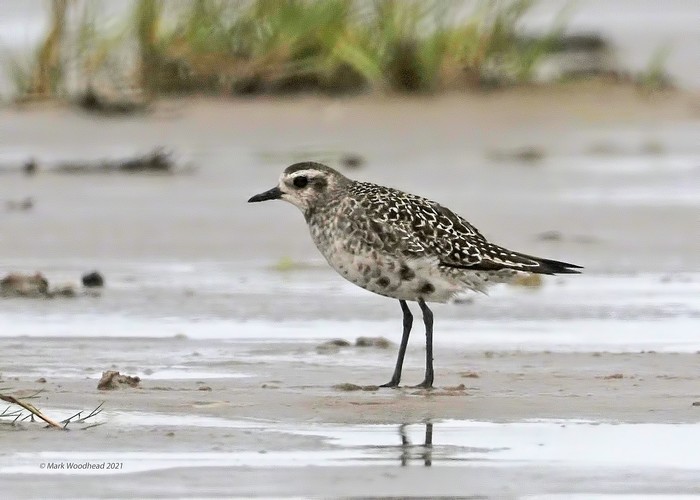
Turning to sandpipers, the rarest of the lot was the Western Sandpiper still present at Clonea Beach (Co.Waterford) on 3rd.
Also on 3rd, an adult White-rumped Sandpiper flew through Snettisham CP (Norfolk); while on 3rd-9th an adult bird remained at Minsmere RSPB (Suffolk). A further individual was found on Swords estuary (Co.Dublin) on 4th-7th; and, on 9th, the adult was back at Snettisham RSPB again on the changing tide.
Here's a quote from finder in the field on finding the lovely White-rumped Sandpiper at Swords. ( My eyes lit up like two Solus bulbs in my head ) Good man Peter how did you get out of your cage,?????? #PeterPH58996153 pic.twitter.com/NKvENj88Zr
— David Fox (@davidthomasfox) August 8, 2021
The first of the autumn’s Buff-breasted Sandpipers was found in Cornwall on the Camel estuary on 4th.
A couple of Pectoral Sandpipers lingered – on Tiree (Argyll & Bute) on 3rd and at Minsmere RSPB (Suffolk) on 3rd-9th – while fresh birds were found on 6th-7th at Saltholme RSPB (Cleveland), on 6th-8th at Burton Mere Wetlands RSPB (Cheshire), at Blue House Farm EWT (Essex) on 8th, and on 7th at the seemingly incomparable wader magnet, Frampton Marsh RSPB.
Speaking of which, it was Frampton that landed a Temminck’s Stint on 3rd-8th.
The recent adult Long-billed Dowitcher was seen once more in Cheshire & Wirral, now at Frodsham Marsh on 3rd-6th.
A Lesser Yellowlegs was found on Tresco (Scilly) on 9th.
The Black-winged Stilt remained in Devon at Velator NR on 3rd-4th; one was in Somerset at Steart WWT on 6th-9th; and a possible bird was noted in Worcestershire at Clifton Pits on 7th.
Finally, a Red-necked Phalarope was seen in Suffolk at Havergate Island RSPB on 4th, with another at Snettisham RSPB (Norfolk) on 9th; and a Grey Phalarope was seen from Strumble Head (Pembrokeshire) on 8th.
Needless to say, the week’s gulls’n’terns have to kick off with the relocated adult Elegant Tern, now enjoying the northwest English coast at Hightown (Lancashire & Merseyside) on 3rd-6th and once more at Formby Point on 9th.
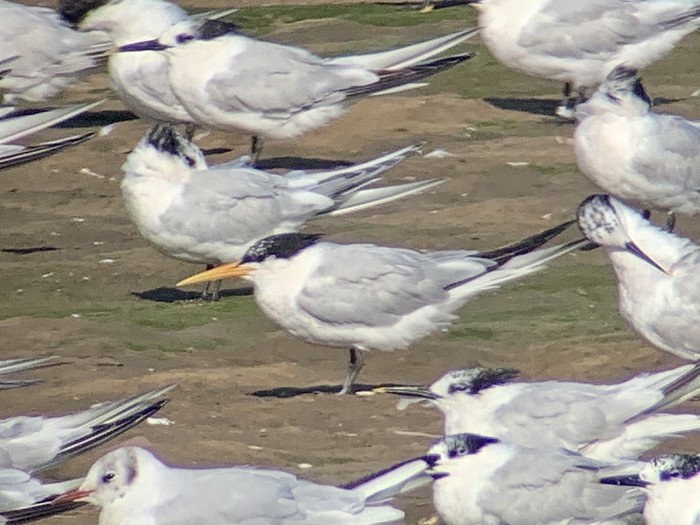
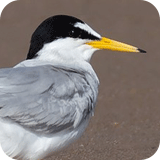
Ireland continued to hold both the adult male Least Tern, still present at Portrane (Co.Dublin) on 7th-8th; and the relocated adult Forster’s Tern, again at Soldier’s Point (Co.Louth) on 3rd-4th and once more on 9th.
Worked, won a Gaelic match and snuck in a new life tick for me just around the corner from the house; Forster's Tern...@BirdWatchIE @BirdsMatter_ie pic.twitter.com/YmoixaZhEB
— Sean Geeney (@LeftLost_Pltcs) August 3, 2021
The week’s seawatching focus was always likely to yield a Sabine’s Gull or two, and so it proved – birds being noted on 6th at Deelick Point (Co.Kerry), Ram Head (Co.Waterford), and Bridges of Ross (Co.Clare). The pace quickened on 8th, with further birds seen off Bloody Foreland (Co.Donegal) and between Skellig and Portmagee (Co.Kerry) and, in Britain, from Pendeen (Cornwall), where two birds were logged. Two more were seen from Pendeen on 9th.
Ireland also landed an adult Bonaparte’s Gull this week, seen on 5th-6th at Garretstown (Co.Cork); while the second-winter bird remained on Unst (Shetland) at Norwick on 3rd-9th, and in Kent the adult bird was still present at Oare Marshes KWT on 3rd-8th.
A couple of Glaucous Gulls were noted in recent days – the settled second-winter still foraging happily at the Coleraine (Co.Kerry) Burger King on 3rd-7th, and another on North Uist (Western Isles) on 7th.
An Iceland Gull was reported from Lewis (Western Isles) on 7th, while another was seen in Cornwall at Trevilley on 3rd.
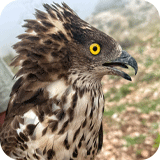
We invoked the annual August event of Eleonora’s Falcon and/or Booted Eagle sightings last week, with reports of both – and, of the latter species, that included a possible dark morph individual that was seen heading over Breydon Water (Norfolk) on 31st.
This week got a little busier, with a flurry of sightings of potential pale morph Booted Eagles… On 3rd, a bird was reported circling high over Carlton Marshes SWT (Suffolk), followed on 7th by a sighting of a probable pale morph seen from a moving vehicle at Martlesham (Suffolk)… and sandwiched between those reports was a probable pale morph noted over a garden in Chepstow (Gwent) on 4th.
One of these days one of these birds will be photographed and the identity, at least, will be proven beyond dispute. How such a bird will fare with the relevant record committees is, of course, another matter entirely…
Refreshingly less controversial, a Black Kite was found in East Sussex at Cuckmere Haven on 4th.
We got just the faintest sniff, in recent days, of the long weeks of autumn that lie ahead of us, with some easterly winds heralding the arrival of one or two scarce passerines of note, particularly in Shetland and Orkney.
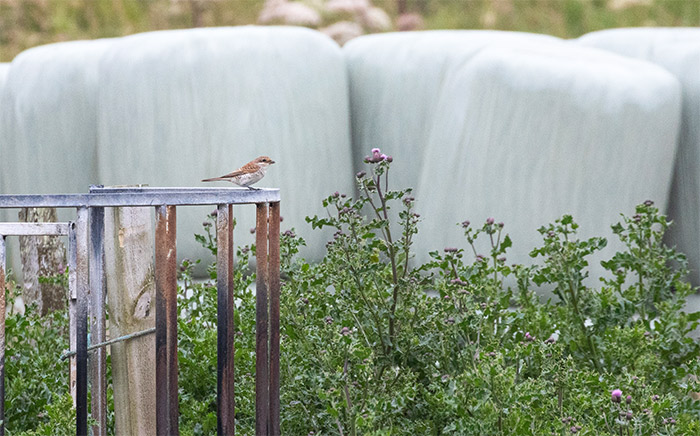
A Red-backed Shrike on Fair Isle (Shetland) on 6th-8th was followed closely by another at Girdle Ness (Aberdeenshire) on 7th-8th.
On the Shetland Mainland, a Marsh Warbler was in the lush depths of the Swinister Burn on 4th.
A Barred Warbler was found out on Noss (Shetland) on 6th whilst, on 7th, another bird was found in Shetland’s south Mainland at Scatness and, on 8th, one was seen on North Ronaldsay (Orkney).
Orkney was getting busy with Icterine Warblers too, with a Stronsay garden bird on 7th followed by two present on Papa Westray on 8th.
Some promising signs there, then…
At the other end of the country, a Bluethroat was found at Nanjizal (Cornwall) on 3rd and, in Kent on 4th, a Hoopoe brightened up Oare Marshes KWT.
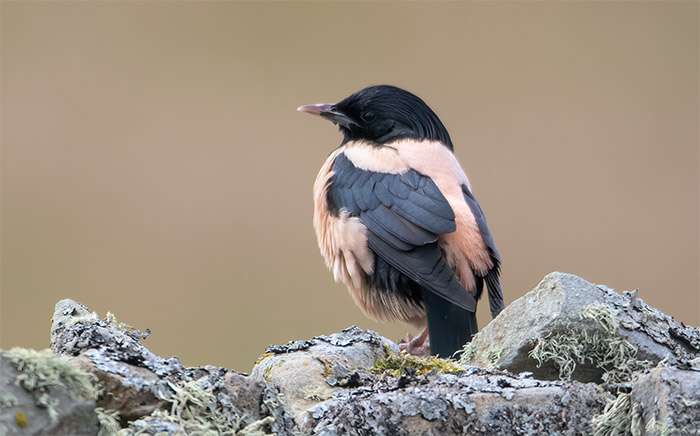
For the most part, lingering Rose-coloured Starlings remained of a northerly persuasion, the exception being the bird present on Skokholm (Pembrokeshire) on 5th-7th. The remaining birds this week were individuals still on Fair Isle (Shetland) on 4th-9th; at Stromness (Orkney) on 5th-9th; at Applecross (Highland) on 5th-6th; and at Carnoustie (Angus) on 7th-8th.
The male Blue-headed Wagtail was still present at Pilning Wetland (Gloucestershire) on 3rd-4th.
And finally, on Unst, a Common Rosefinch was seen at Norwick on 8th-9th.
Our overseas news could begin either with stonking seabirds or luscious lapwings but, given that sea-watching close to home was beginning to pick up some momentum this past week, we’ll opt for the former and head right overseas…
…to the Azores first, where a Trindade Petrel was seen at sea off Graciosa on 7th , the sixteenth Western Palearctic record of the species, thirteen of which have been in the Azores…
Photo by Josh Beck pic.twitter.com/5xfvoWQGqZ
— Graeme Joynt (@grazjoynt) August 7, 2021
…and then to Madeira, where a pelagic served up a Cape Verde Shearwater on 5th.
Cape Verde itself features this week, with an Allen’s Gallinule seen on Sal on 5th.
To Central Europe next, and those lapwings… on 5th, Germany scored a White-tailed Lapwing at Randowbruch whilst, in Slovenia, the country’s first and only the third ever Western Palearctic Grey-headed Lapwing was seen at Naravni Reservat, the latter bird remaining on 6th.
Grey-headed Lapwing, Vanellus cinereus photographed at Naravni rezervat Škocjanski zatok, by Miroslav Repar, photo by Daniel Bosch - the 1st record for Slovenia and 3rd for Western Palearctic pic.twitter.com/wfItshMdiZ
— Tarsiger (@TarsigerTeam) August 5, 2021
North a ways, in Estonia a Ross’s Gull was found on 6th at Pöösaspea.
In Norway, the Sandhill Crane remained at Porsanger on 3rd-7th.
Icelandic birders were treated to not one, but two female Hooded Mergansers at Botnsvogur on 4th-8th.
In Holland, the Pygmy Cormorant was still present at Plas Laagraven on 5th-9th.
And finally, in France the two Lesser Flamingos were still to be seen at Les Cayrelles on 6th-8th.
Westerlies and southwesterlies emanating from deep in the Atlantic suggest that sea-watching may yet be profitable in the week to come, and that would in turn make a rare seabird a tempting, low-hanging fruit to predict for the days ahead…
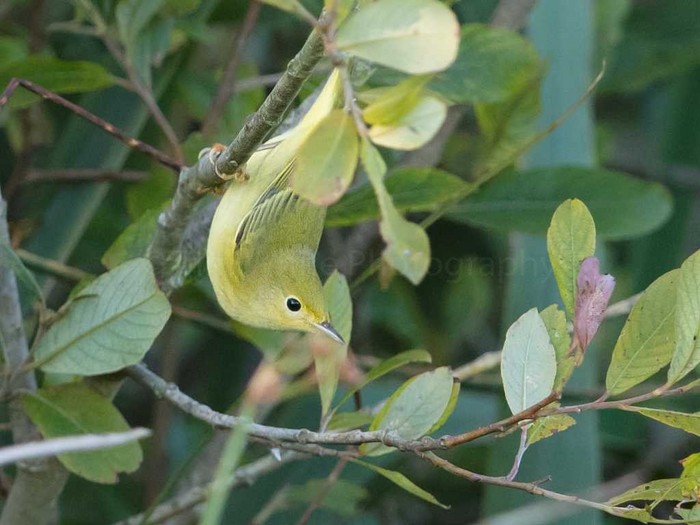
But ever the optimist, there’s also the enticing possibility of a Nearctic shorebird of note or, more outrageous still, a warbler of some description. Sure, a Wilson’s Phalarope or a Solitary Sandpiper would be nice, but a Yellow Warbler would be even nicer. It’s maybe a week too early for one – six of Britain and Ireland’s combined eleven prior records have been found in the last ten days of August – but it doesn’t hurt to hope, particularly if you’re birding in either Cornwall or Scilly, where a first record remains long overdue.
Jon Dunn
10 Aug 2021
Many thanks to all this week's contributors for your photos and videos
Share this story