Weekly birding round-up: 13 - 19 Jun 2018
The highlight of the week came on the last day when a large orange-billed tern bearing a ring was located in Pagham Harbour at Church Norton, West Sussex late afternoon on the 19th. Given that the Sandwich Tern colony here hosted a ringed Elegant Tern last June between 10th and 20th it was understandable that it was presumed to be this bird returning again. However, the first image of the tern to be posted online showed an unexpectedly heavy bill, shorter 'spikier' nape feathering and incomplete breeding aspect - all anomalous features for the well-documented male Elegant Tern that is known to have been returning to France since it was ringed there as an adult at the Banc d' Arguin, Gironde on 3rd July 2003 (and is most likely the same individual that was earlier present at Dawlish Warren, Devon on 18th May 2002 as the first Elegant Tern for Britain). The noted inconsistencies all pointed to the current Church Norton tern being a Royal Tern and in particular an individual of the nominate form maximus American Royal Tern present on the Channel Islands from 5th February to 26th May 2017 and again from 24th July 2017 to 6th May 2018 and having visited Brittany, France between 12th June and 16th July 2017. This American Royal Tern had been predicted to reach here last summer but now as a second-summer it was even more likely to be compelled to wander further in search of conspecifics.
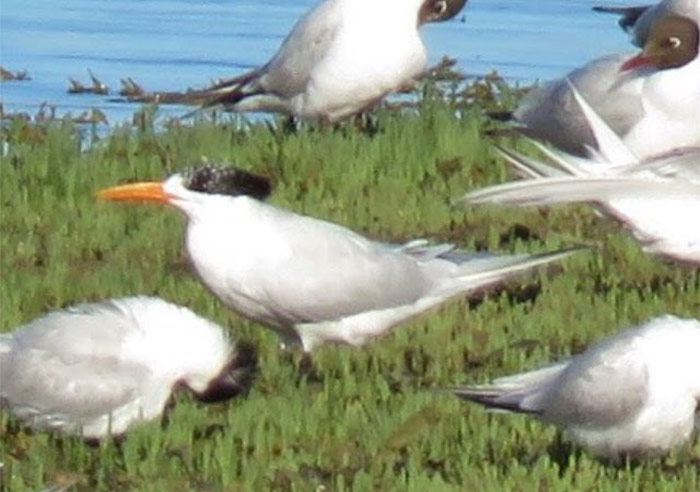
With the correct identification soon broadcast birders were given another chance to chase a Royal Tern - a notoriously evasive vagrant here: with previously just same-day twitches possible at Musselburgh, Lothian on 9th August 1999, Black Rock Sands, Gwynedd on 15th June 2009 and the same bird then at Llandudno, Conwy on 20th June 2009 and all had left a trail of dippers in their wake. In Ireland a Royal Tern at Roonagh Lough, County Mayo on 16th-17th August relocated to the Shannon Estuary, County Kerry/County Clare on 23rd-28th August where faecal matter was collected and provisional analysis suggested it was an African Royal Tern form albididorsalis. Subsequently a paper discussing the genetics of Royal Tern was published in the Biological Journal of the Linnean Society and 'When morphology is not reflected by molecular phylogeny: the case of three ‘orange-billed terns’ Thalasseus maximus, Thalasseus bergii and Thalasseus bengalensis (Charadriiformes: Laridae)' revealed that African Royal Tern is genetically distinct from American Royal Tern and genetically is closer to Lesser Crested and Crested Terns. Given this revelation the authors indicate that two species of Royal Tern could be recognised. .
Criteria for identifying vagrant African and American Royal Terns in the field are a work in progress but the longer tail and narrower bill of African coupled with a yellow - not orange - bill when in breeding condition offer clues and both the Lothian and Gwynedd/Conwy records were believed to be African by some of those who saw them. The sole existing British record of an American Royal Tern was a USA metal-ringed first-winter that was read in the field at Kenfig Pool, Glamorgan on 24th November 1979 by Steve Moon and although the code was not read in its entirety the very presence of a ring at that point in history eliminated African Royal Tern and indeed all other large orange-billed terns.
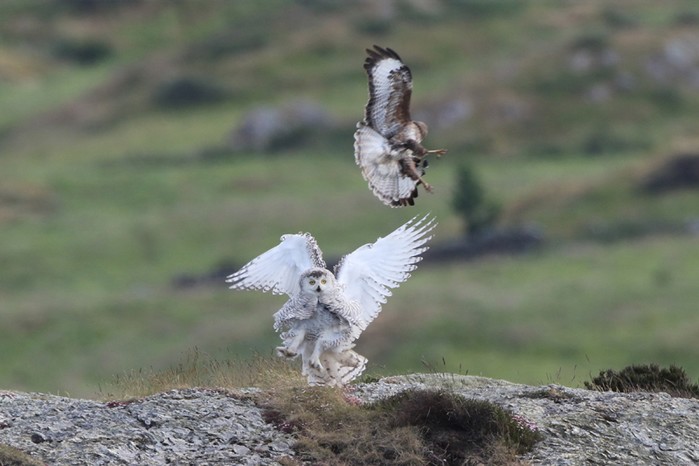
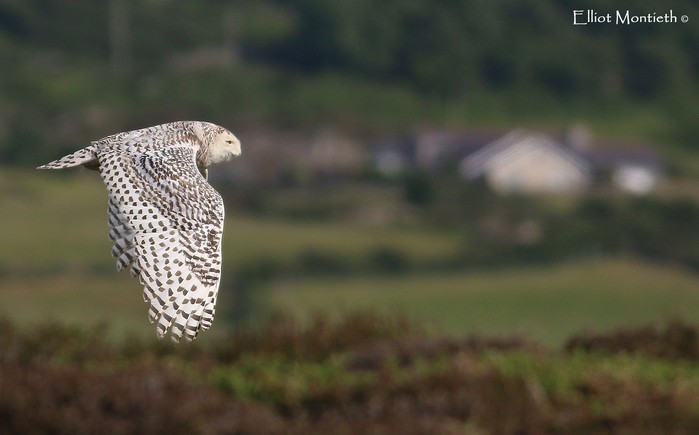
2018 has proved to be an exceptional year for Snowy Owls around Britain and Ireland and this week saw another showing in Wales. Earlier on the afternoon of the 15th news was broadcast of a female Snowy Owl at Amwlch and it later transpired that it has been present on-site for four days. Birders converged on the site and the Snowy Owl showed well late into the evening before ultimately it flew off, presumably to hunt. Regrettably it could not be relocated over the weekend but it seems likely that will still be in the area and was presumably same individual previously seen at South Stack on 24th March and reported between Rhoscolyn and Four Mile Bridge on 10th April. Meanwhile the Snowy Owl on St Kilda, Western Isles was still present on 17th.

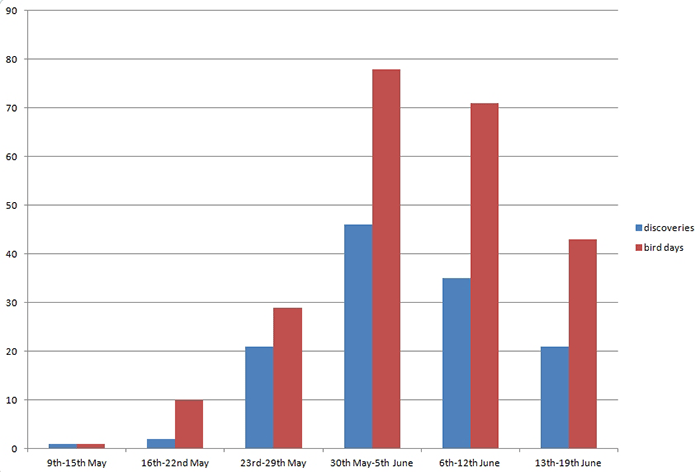
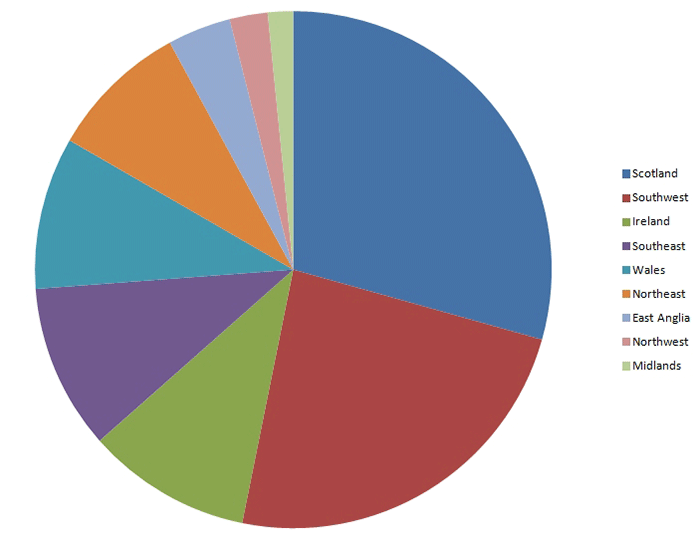
Although 21 new Rose-coloured Starlings were discovered this week the summer influx is now slowing. 126 have been located since the first on 9th May and it seems inevitable we will surpass the reported total of 128 seen here in June 2002 during that record invasion. Arrivals this week were:
13th: West Bexington (Dorset), Leven (Fife)
14th: Vatersay (Western Isles)
15th: South Hylton (Durham), Foreness Point (Kent)
16th: Ashton (Cornwall), Spean Bridge (Highland), Tralee (Kerry), Brecon (Powys), Gulberwick (Shetland Isles),
17th~: Auchnagatt (Aberdeenshire), Carrigaline (Cork), Barra (Western Isles), Harris (Western Isles)
18th: Upper Horsebridge (East Sussex), Cloddach (Moray), Valtos (Lewis, Western Isles)
19th: Bullers of Buchan (Aberdeenshire), Cape Clear (Cork), Kilmuir (Highland)
Eyebrows and expectations were raised when three Greater Flamingos were reported to have flown northwest over Farthingstone, Northamptonshire on the evening of the 14th. Following a review by the British Ornithologists' Union Records Committee in 2001 Greater Flamingo still languishes in Category D of the British List. At that time ringing recoveries of the species suggested movements north of their native range were undocumented. However, since that review, in 2010 in northwest France one of five Greater Flamingos at Baie de Somme, Picardie from 28th June had been ringed as a nestling in the Camargue, Bouches-du-Rhone, France in 2005 and had subsequently been seen in Portugal from 2006 to 2008 and then back in the Camargue again briefly in early May 2010 and represented the northernmost record of a ringed Greater Flamingo from there: just 56 miles south southeast of Dungeness, Kent. In a similar vein a ringed Greater Flamingo - one of a flock of up to 11 - at Fanel, Lac de Neuchatel, Switzerland intermittently between 1st September 1998 and at least 16th September 2003 had previously been ringed in the Camargue which too was presumably the origin of a flock of 12 that flew west past Weybourne and Sheringham, Norfolk on 14th July 1980.
Around the Orkney Isles an immature White-billed Diver flew north northwest at sea between Westray and Papa Westray on 19th whilst elsewhere in Scotland the male Pied-billed Grebe remained on territory in Argyll at Loch Feorlin until 17th.
Single Wilson's Petrels were logged at sea from pelagics off St Mary's, Isles of Scilly on 14th and 18th with others passing Bridges of Ross, County Clare on 14th and Porthgwarra, Cornwall on 17th whilst a Leach's Petrel was off Maidens, Ayrshire in Storm Hector on 14th.
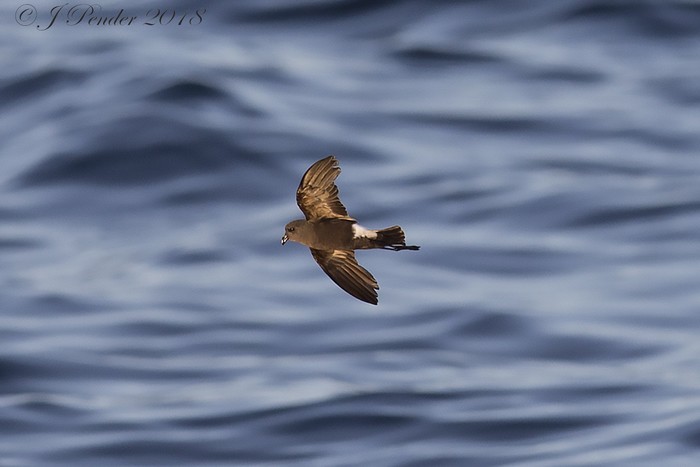
Notable shearwaters comprised three Balearics off Penwith from the bows of the Scillonian III on 13th and another in Thurlestone Bay, Devon on 14th with single Cory's Shearwaters espied from The Lizard, Cornwall on 17th and most notably from Selsey Bill, West Sussex on 16th.
Single Pomarine Skuas were recorded from the coasts of Ayrshire, County Durham, Cornwall, Norfolk and Devon during the period in review.
A Cattle Egret that visited Marshside, Merseyside on 15th-19th was presumably the same individual last seen there on 18th May. The ringed White Stork remained on the Nene Washes, Cambridgeshire until 18th: this ringed bird having first been seen at nearby Baston Fen, Lincolnshire on 27th March 2018 before undertaking a clockwise tour of middle England only to relocate to the fens on 19th May. Two more White Storks overflew Havant, Hampshire on 15th. The summering first-summer Glossy Ibis still resided in Druridge Bay, Northumberland on 17th.

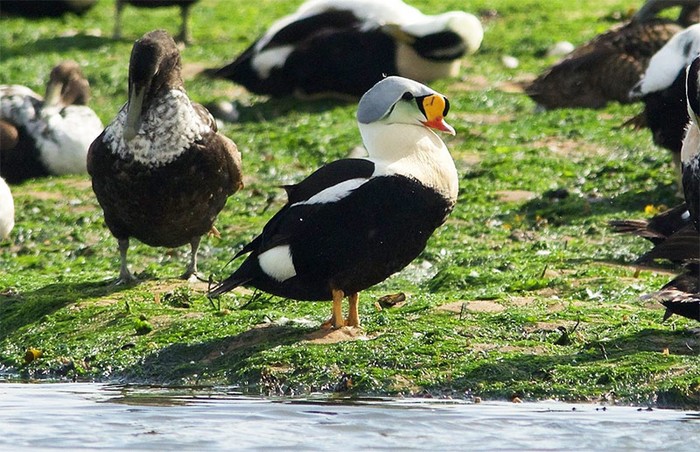
The male King Eider was present throughout on the Ythan Estuary, Aberdeenshire and in addition the Welsh female resurfaced in Gwynedd where it again frequented the Broad Water, Tywyn on 19th. This latter bird was first discovered in Ireland at Carnsore Point, County Wexford as a first-summer on 22nd June 2017 before relocating to Aberaeron, Ceredigion on 26th June and remaining along the coast of west Wales ever since. It represents only the second Welsh record following another long-staying female in Gwynedd at Black Rock Sands and Aberdysynni between 28th January 1989 and 8th May 1990.
Otherwise the male Black Duck was still present at Strontian, Highland on 14th, the male Ring-necked Duck remained on Loch Finlaggan, Islay, Argyll on 13th and male American Wigeons were at both Grindon Lough until at least the 16th and at Lough Beg, County Londonderry on 18th.
On the 17th the simultaneous arrival of single Black-winged Stilts at Sandwich Bay, Kent, Potter Heigham, Norfolk and Ouse Washes, Cambridgeshire surely hinted at breeding attempts elsewhere having been scuppered by heavy rainfall and consequent rising water levels: the first two remained overnight and the other until 19th.
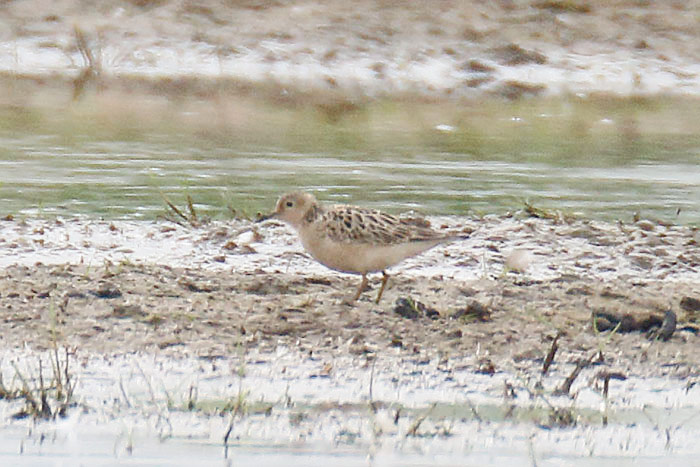
Following the Buff-breasted Sandpiper last week in Cornwall another - both this week and last - was at the current Broadland wader hotspot of Potter Heigham Marshes on 12th-15th. On the Orkney Isles a Pectoral Sandpiper visited Papa Westray on 18th.
Red-necked Phalaropes away from their breeding locales on the Shetland Isles and Western Isles singles were at Eves Loch, Mainland, Orkney Isles on 15th and both Frampton Marsh, Lincolnshire and Hornsea Mere, East Yorkshire on 19th. Most significant was a pair at Clifton Pits, Worcestershire on 17th with presumably the same two on the Weaver Bend, Frodsham Marsh, Cheshire the following day.
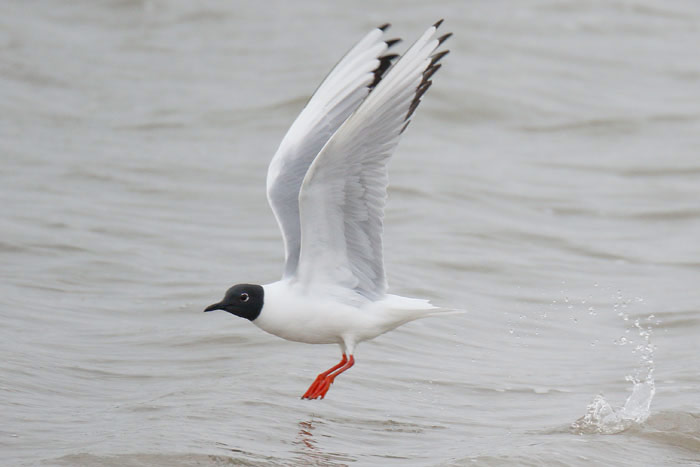
The rarest gull was a second-summer Laughing Gull heading west past Lizard Point, Cornwall on 14th June whilst in Kent the full breeding plumage adult Bonaparte's Gull remained throughout as expected; it will most likely linger until after it has completed its summer moult and into the early autumn as it has in each year since 2014. Other notable gulls were three first-summer Sabine's Gulls passing the Bridges of Ross, County Clare during Storm Hector on 14th, the first-summer Ring-billed Gull still at Loch of Hillwell, Shetland Isles on 16th June, whilst nine Iceland Gulls were scattered between Argyll, Highland, County Mayo, Northumberland, Orkney Isles, Pembrokeshire and the Western Isles (4), and seven Glaucous Gulls between Highland, County Kerry (two, both at Tralee Bay Wetlands and most notably including an adult on 17th-19th), Northumberland, County Sligo and the Western Isles (2).
Away from the few counties hosting breeding Roseate Terns singles visited tern colonies at the Ythan Estuary, Aberdeenshire on 13th and Hodbarrow, Cumbria on 18th, with two together at Minsmere, Suffolk on 19th.
Black Kite(s) were again reported in Suffolk at Leiston on 14th and Bury St Edmunds on 16th although the doubt surrounding the known escape continues there as discussed in my previous review. A Black Kite over Fen Drayton Lakes, Cambridgeshire on 19th was the sixth sighting in that county since 24th April 2018.
Honey Buzzards were in evidence with up to three displaying at Wykeham Forest, North Yorkshire throughout and singles over Fazakerley, Merseyside, Burnham Overy, Norfolk and Minsmere, Suffolk on 13th, Kingsdown 14th, Bough Beech Reservoir, Kent, Hickling Broad, Norfolk and Hatfield Moors, South Yorkshire on 17th. In stark contrast that only one Montagu's Harrier was seen - a female at Gibraltar Point, Lincolnshire on 13th - is a real cause for concern.
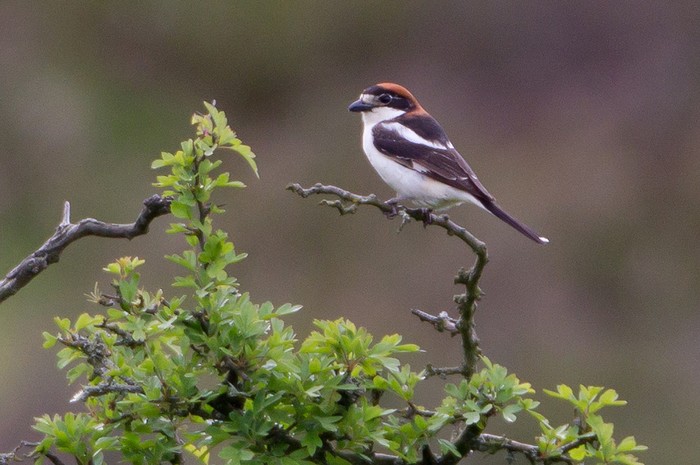
In Cumbria a Hoopoe was photographed in a garden at Hesket Newmarket on 18th whilst the only Golden Oriole recorded was in Dorset on Portland at Culverwell 13th. A first-summer male Woodchat Shrike frequented moorland by Scaling Dam Reservoir, Cleveland on 13th-14th and in Norfolk a female Red-backed Shrike visited Winterton North Dunes on 18th.
A popular rarity was a singing Great Reed Warbler in Cambridgeshire at Fen Drayton on 15th-19th where it remained faithful to the reeds at Elney Lake and although vocal proved frustratingly elusive. On Fair Isle, Shetland Isles the female Eastern Subalpine Warbler lingered until at least the 18th with up to three Marsh Warbler present there throughout the period. Iberian Chiffchaffs remained on territory at Hayle, Cornwall until 17th and Thurstaston Hill, Wirral until 18th. A female or first-summer male Red-breasted Flycatcher was trapped on North Ronaldsay, Orkney Isles on 16th.
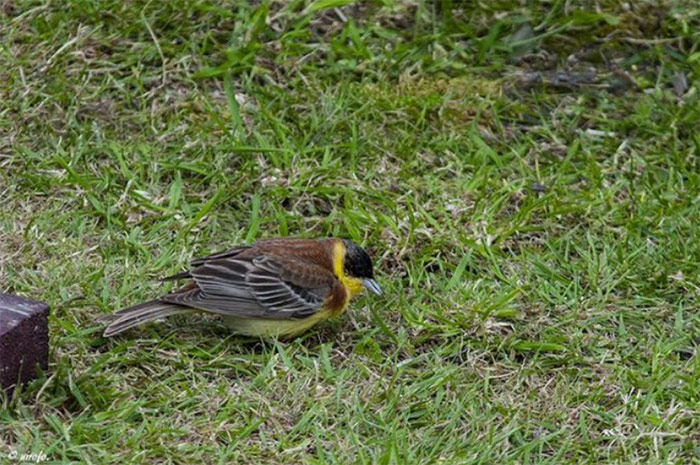
A male Common Rosefinch sang briefly at Hornsea Mere, East Yorkshire on 16th with single Serins seen the same day at Gibraltar Point, Lincolnshire and on Fair Isle - the latter only the fourth record for the hallowed isle and first there since 1964, the sixth for the Shetland Isles and only the tenth ever for Scotland (with thanks to Fair Isle Bird Observatory for the statistics). The fourth Black-headed Bunting of the spring visited a garden at Brims, Thurso intermittently on 17th-18th.
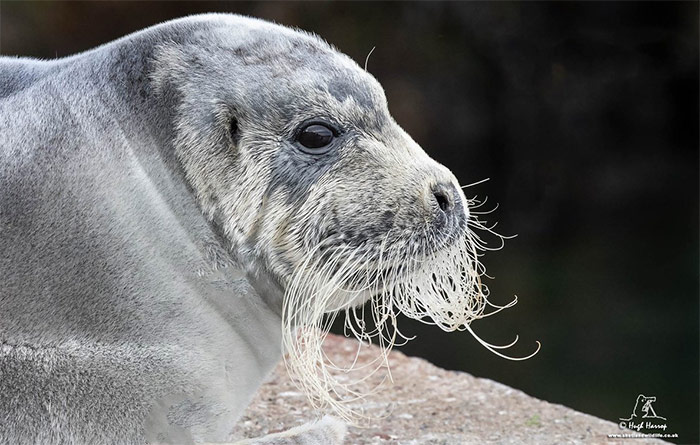
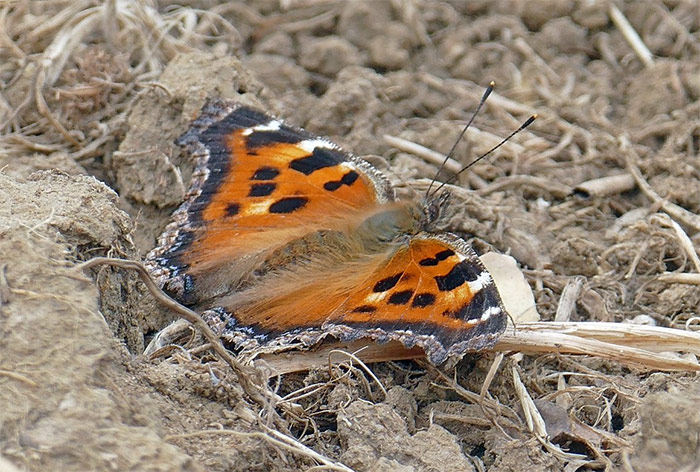
As well as the celebrity Bearded Seal remaining faithful to Victoria Pier in Lerwick, Shetland Isles, a Scarce Tortoiseshell butterfly was photographed in Buckinghamshire at Stoke Goldington on 16th and at the opposite end of the size spectrum two Fin Whales in Highland were in Inverness below the grand Kessock Bridge on 19th.
In the Netherlands a stunning Great Knot on Terschelling on 17th-19th was the third national record and kept up the recent annual summer appearance of this once hallowed vagrant to the Western Palearctic. In contiguous Belgium a Greater Spotted Eagle flew over Lubbeek, Vlaams-Brabant on 14th whilst in Germany the Sociable Plover remained in Brandenburg at Hartmannsdorf all week as did the Black-browed Albatross in Schleswig-Holstein; typically at the Rantumbecken but also - incongruously - on a roof at List on 17th. Poland hosted a Black-shouldered Kite at Ostrow Mazowiecka on 16th.
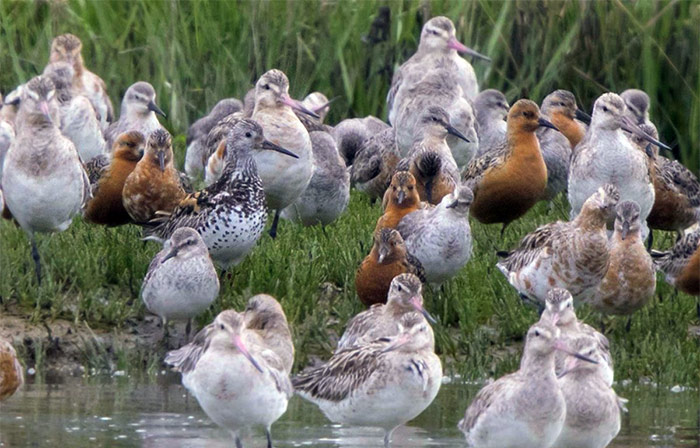
At the far corners of the region an Eleonora's Falcon in Kuwait at Jahra on 15th was a national first, on the Canary Islands the Dwarf Bittern lingered on on Fuerteventura and was still in Barranco de Rio Cabras on 15th with the Semipalmated Plover was still on Tenerife at Los Abrigos on 13th, and finally a far-flung Rose-coloured Starling even reached the Cape Verdes, on Sal on 13th.
With the American Royal Tern present until dark on 19th an early morning showing can be hoped for on 20th. But as the bird is still immature it seems unlikely that it will remain faithful to the Sandwich Tern colony at Church Norton - as last year's Elegant Tern was - but seems more likely to tour other tern colonies such as Brownsea Island, Dorset or Needs Ore Point, Hampshire to the west or Rye Harbour, East Sussex to the east. Alternatively it may return to Guernsey.
It seems far-fetched to think that three Greater Flamingos have remained hidden in Britain since their tantalising flyby nor west over Northamptonshire but if they move again the flamingo Mecca of Frodsham Marsh, Cheshire would be as likely a location as any for a drop-in; this site has history with four species of flamingo https://frodshammarshbirdblog.wordpress.com/2013/02/15/totally-tropical-on-the-river-mersey-by-james-walsh/ .
Green Sandpipers and Spotted Redshanks are characteristic mid June waders that have been returning to Britain in recent days but from here on in birdfinders will be on heightened alert for Asian shorebirds, in order of magnitude: Pacific Golden Plover, Terek Sandpiper, Great Knot and Oriental Plover.
Chris Batty
20 June 2018
Share this story