Woodcock filmed charging deer to defend nests
Researchers say the footage reveals an unexpected nest-defence strategy in a species better known for camouflage and distraction displays.
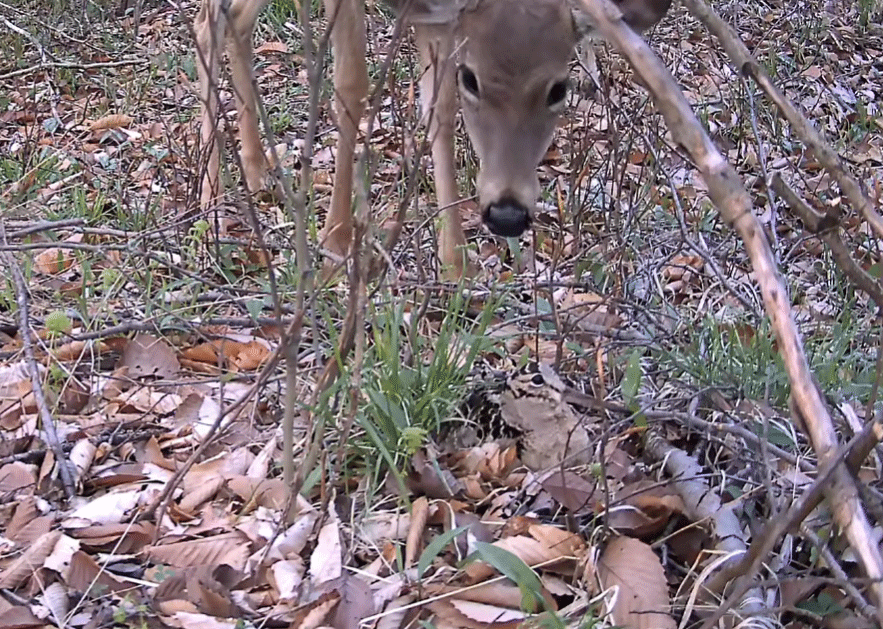
American Woodcock have been filmed aggressively confronting White-tailed Deer that approached their ground nests, revealing an unexpected form of nest defence in a species better known for camouflage and distraction displays.
The behaviour was recorded by University of Maine researchers using nest cameras in West Virginia as part of the Eastern Woodcock Migration Research Cooperative. The findings, reported by Phys.org, have been published in the journal Ecology.
American Woodcock are small, plump shorebirds with long bills, cryptic plumage and a distinctive bobbing walk. When nesting, females usually rely on remaining motionless and blending into leaf litter to avoid predators. They can also perform a “broken wing” display to draw threats away from eggs or chicks.
However, footage captured in April 2024 showed some hens taking a much more direct approach when deer came close to their nests. In six incidents involving five nesting woodcock, the birds chirped, postured, charged and in some cases flew into approaching deer. The deer either walked away or fled the area.
700One sequence showed a female American Woodcock lunging at a deer that was sniffing around her nest. The footage may represent the first recorded evidence of nesting birds aggressively driving away deer, according to the researchers.
Kylie Brunette, lead researcher on the study and a University of Maine PhD student in wildlife ecology, said the observations raised new questions about how birds respond to deer as potential nest predators.
“That small birds are willing to aggressively defend their nests against something as large as a deer, using different strategies based on the situation, opens a lot of interesting questions about how these unexpected interactions affect wildlife communities,” she said.
The aggressive behaviour was rare. Cameras recorded 73 occasions when deer approached woodcock nests, but only six resulted in active defence by the nesting hen. In most cases, the birds remained still and relied on camouflage.
Researchers said this suggests woodcock can adjust their response depending on the circumstances. Amber Roth, associate professor of forest wildlife management at the University of Maine, said some hens relied entirely on remaining motionless, while others became more assertive.
“Woodcock incubate their eggs for three weeks, which is long for smaller birds. The longer a hen sits, the more dedicated she becomes to defending that nest,” she said.
Although deer were detected at 68% of the nests monitored, they only interacted with nests on a smaller number of occasions. None of the deer recorded by the cameras ate eggs from the nests under surveillance.
The researchers said deer are often considered overabundant in parts of the eastern United States, raising concerns about their effects on other wildlife. The new findings show that nesting American Woodcock can use a range of behaviours when deer approach, from staying hidden to direct aggression.
July 2026
Get Breaking Birdnews First
Get all the latest breaking bird news as it happens, download BirdAlertPRO for a 30-day free trial. No payment details required and get exclusive first-time subscriber offers.
Share this story