Wildlife Groups Welcome Withdrawal of Norfolk Road Plans
Two wildlife organisations have welcomed the decision to withdraw plans for a dual carriageway through a sensitive habitat in Norfolk.
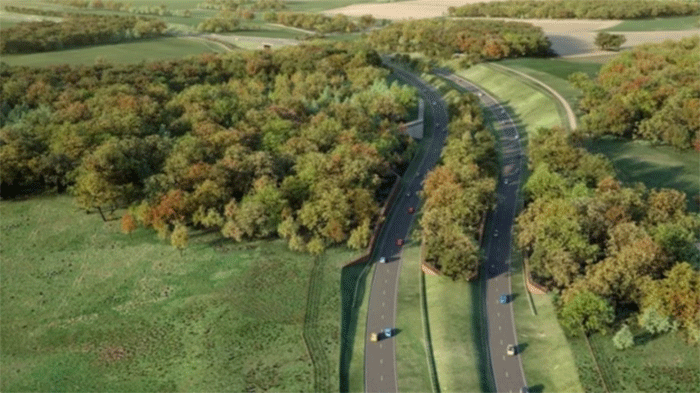
Norfolk County Council conceded that the Norwich Western Link—a proposed 3.9-mile (6.3km) extension completing the A1270 Broadland Northway—is unlikely to secure approval. Natural England advised the government the road would harm the barbastelle bat population in the Wensum Valley.
Despite this, the council insists the road remains "a priority project" and will continue discussions with the government.
Both the Woodland Trust and Norfolk Wildlife Trust welcomed the move. Eliot Lyne, chief executive of Norfolk Wildlife Trust, urged the council to find solutions that support economic growth without harming nature.
"This road would have devastated one of the last remaining colonies of the rare and legally protected barbastelle bat," he said.
"With the project now unlikely to proceed, these habitats remain intact, providing sanctuary for bats, badgers, owls, linnets, yellowhammers, and other wildlife.
"This result shows that working together, backed by evidence, we can safeguard Norfolk’s biodiversity. However, it is disappointing the council’s planning process did not avoid such harm in the first place."
Jack Taylor, lead campaigner for the Woodland Trust, also welcomed the decision.
"This is one of the most significant cases affecting veteran trees I have encountered in my decade at the Woodland Trust," he said.
"At least 30 veteran trees were at risk, with up to 90 facing harm. Each is an irreplaceable habitat supporting nature, people, and the planet.
"The road would have devastated one of the UK’s largest colonies of the increasingly rare barbastelle bat, a species facing extinction."
A council spokesperson said: "We have withdrawn the planning application and will prioritise discussions with the Department for Transport.
"The Norwich Western Link remains a priority for this council."
29 January 2025
Share this story