Why feral cats are such a threat to Australian wildlife
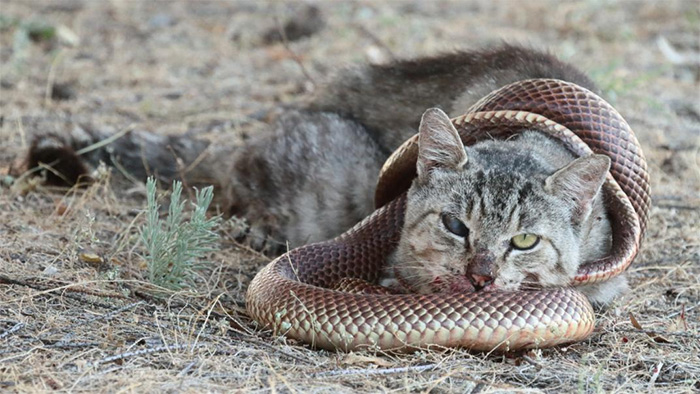
A team of researchers at the University of Tasmania has determined why feral cats are such a threat to wildlife in Australia. In their paper published in Proceedings of the Royal Society B, the group describes comparing the behaviour of feral cats in Tasmania with a native predator - the spotted-tail quoll - and what they learned from it.
Domestic cats were introduced into Australia in the late 18th century, and not long after, made their way to the Australian island of Tasmania. Since that time, feral cat populations have exploded, resulting in widespread threats to a wildlife across Australia. Prior research has shown that they kill billions of animals each year and have pushed multiple species to extinction. In this new effort, the researchers sought to better understand why feral cats are such a threat to wildlife. They conducted a study that compared the hunting and eating habits of feral cats with the spotted-tail quoll.
The spotted-tail quoll is a carnivorous marsupial similar in appearance to the Tasmanian devil. Prior research has shown they prey on the same sorts of wildlife as feral cats - reptiles, small mammals and birds - yet they do not pose a threat to the existence of native wildlife.
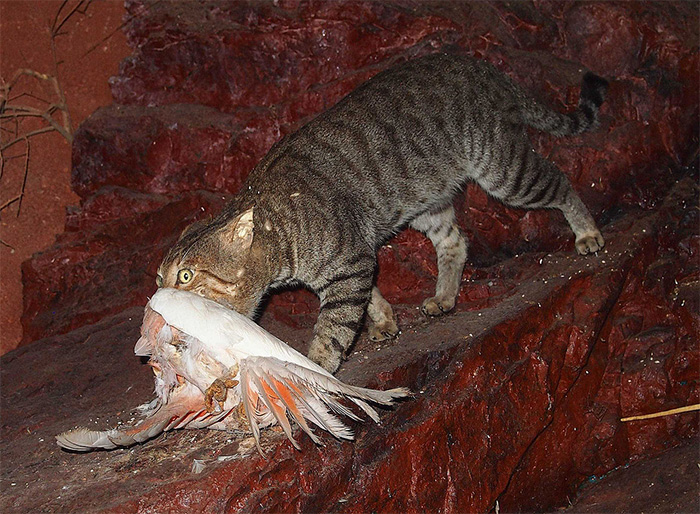
The study involved capturing 10 quolls and 25 feral cats from four locations on the island of Tasmania, fitting them with tracking collars and then releasing them where they were found. The researchers used the data from the collars to compare hunting strategies between the two species. To give an intimate look at such behaviors, the trackers recorded location information every five minutes.
The researchers found that the feral cats hunt with more intensity and across a broader environment than the quolls. They also noted that population levels for the cats was much higher than for the quolls - so much so that prey in the areas under study were 20 times more likely to encounter a feral cat than a quoll. Put another way, they found that there were approximately nine cats in every square kilometre of land they studied compared to 0.4 quolls. The researchers suggest that their study may lead to new ways to control the cats - prior efforts involving culls were ultimately unsuccessful.
11 January 2021
Share this story