Whales to be ‘herded’ out of Scottish Loch ahead of military exercise
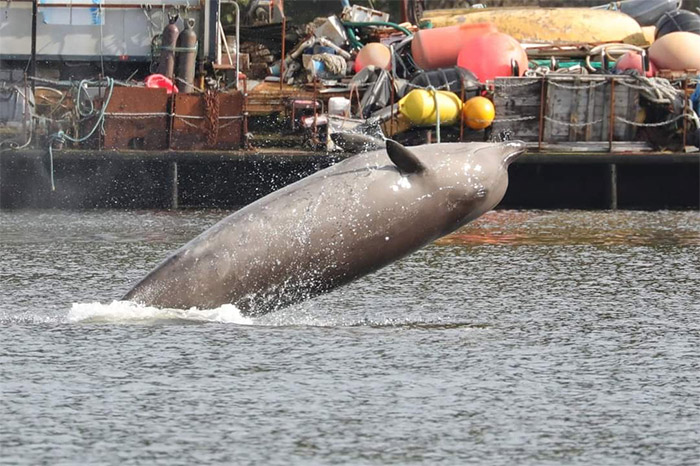
Boats will be used to ‘herd’ a group of Northern Bottlenose Whales from Gare Loch in Argyll ahead Europe’s largest joint military exercise which begins on Saturday. Experts are concerned that sonar used by the warships will distress the animals.
Over the last month British Divers Marine Life Rescue (BDMLR) Medics from across the Argyll and Ayrshire areas and beyond have been monitoring a pod of Northern Bottlenose Whales that have been spending a lot of time in various locations around the river Clyde, near Glasgow.
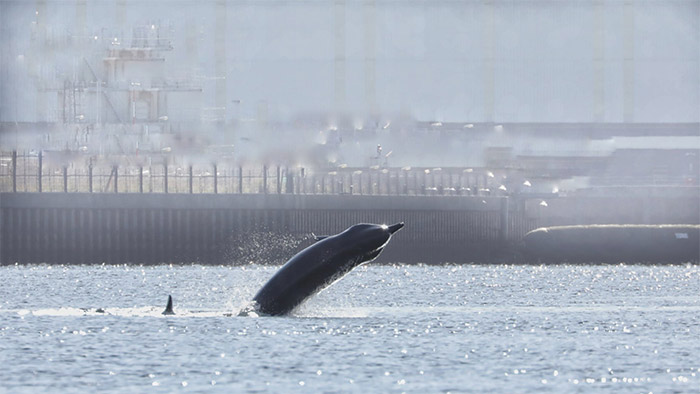
For much of this time a pair were observed in Loch Goil, until they disappeared a couple of weeks ago. A few days later, what was presumably the same pair were seen at the mouth of the Clyde, near Millport on the Isle of Cumbrae, and it was hoped this was the pair now leaving the area. However, since then five whales have been spotted in separate locations in the Loch Long area and have entered some of the smaller lochs nearby, where they have remained. The BDMLR team, with support from local residents and the MOD, have been working hard to keep up routine monitoring of the animals and trying to prevent disturbance to them through education and awareness on the ground.
Northern Bottlenose Whales are a deep-diving species of cetacean normally found off the edge of the continental shelf to the West of the UK and Ireland. It is very unusual for them to be in coastal waters. However there has been similar incidents in recent years where animals of the same species have entered lochs, including Loch Long, that have subsequently left of their own accord without intervention, and presumably have succeeded in returning to their proper habitat.
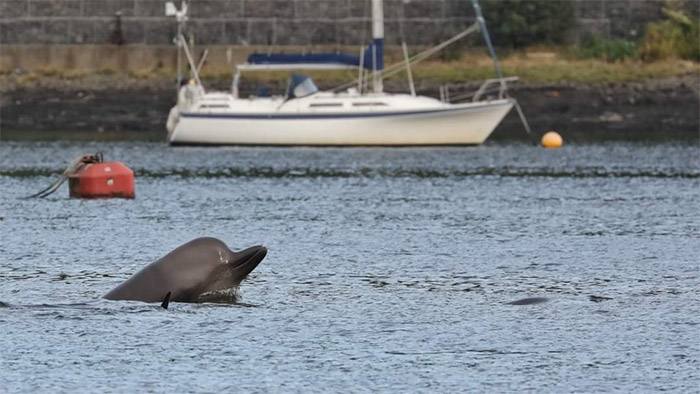
BDMLR recently became aware that the joint military exercise is due to begin next week, and as whales are particularly sensitive to underwater sound, have been concerned about the effect it may have on the animals. Therefore in consultation with colleagues at Whale and Dolphin Conservation and Hebridean Whale and Dolphin Trust, the decision has been made to attempt to herd the animals out using a number of boats in formation to get them back to open sea. This will be a very carefully planned operation carried out under our licence from NatureScot for exactly this type of situation where we need to try to move free swimming cetaceans to safety. This of course does come with risks of its own and there is no guarantee it will be successful given the depth of water and distance that needs to be covered, so will be undertaken with as much care as possible. BDMLR has said they will reassess their actions and options if the whales decide that they will not go.
They expressed their gratitude for all of the support the team has had from the local residents and boat operators who have offered their assistance with this as well as the MOD, they will be joining the BDMLR rescue boat coming in from Fife to carry out this operation tomorrow.
1 October 2020
Share this story