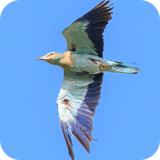
Weekly birding round-up: 19 - 25 Jun
It was all about the islands this week, the Western Reef Heron show in Wales notwithstanding. And for once, Scilly and Shetland could only look on with envy as mere geographic bookends, while other marine outposts monopolised the action. Whoever said midsummer was boring?
That Green Warbler are turning up with increasing frequency in recent years is a notable sea change in the species’ fortunes here in western Britain – the long wait from Britain’s first, on St Mary’s (Scilly) in autumn 1983 to our next, a spring bird on Foula (Shetland) in 2014, isn’t set to be repeated any time soon, with the species more or less annual ever since, and with a notable bias towards spring rather than autumnal records.
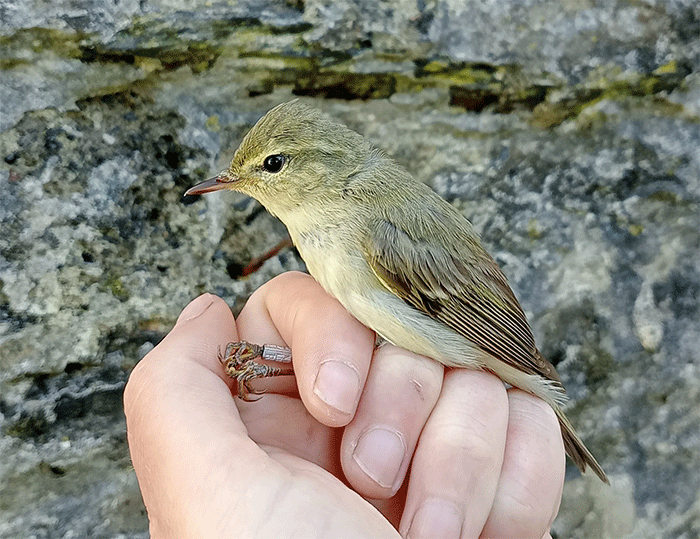
So it doesn’t come as a complete surprise that a bird trapped and ringed this week on Calf of Man (Isle of Man) on 20th should prove to be a Green Warbler; perhaps more surprising was the retrospective news that a singing bird present at Winterton North Dunes (Norfolk) on 16th was also a Green Warbler. Two individuals in the space of less than a week? While numerically still a rarity of considerable heft, the way things are going in the past decade or so, that status seems set to shift going forwards.
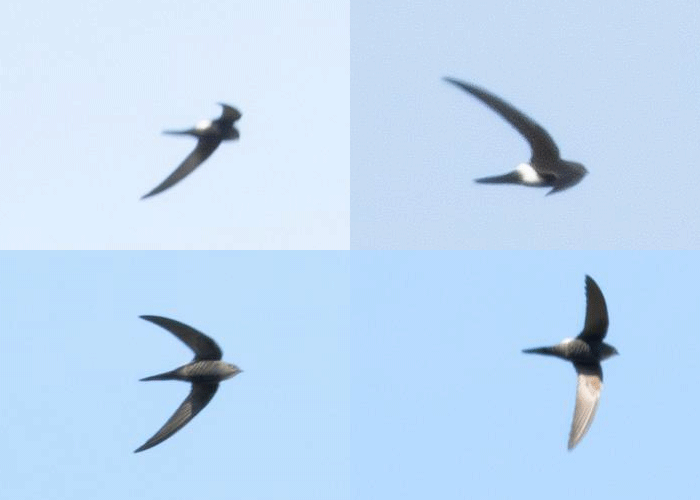
It’s not an entirely dissimilar story for Pacific Swift for, in the wake of the major unblocker at Cley (Norfolk) on 30th May 1993, the records of this elegant large swift have come, if not thick and fast, then certainly with some regularity, not least the returning bird that graced Shetland in 2022-2024. It’s certainly tempting to wonder if the bird seen heading north over Bardsey (Gwynedd) this week in the morning of 20th could be that individual back in Britain once more… but what’s for sure is that this tremendous fly-by bird was a county first for Gwynedd. Wales really is enjoying a purple patch lately.
Continuing that theme of eastern species arriving here with increasing frequency, our third headline bird of the week also fits that pattern and, this week, completes a hat-trick of quality birds on British islands – this being yet another meena Oriental Turtle Dove for North Ronaldsay (Orkney), seen on there on 22nd.
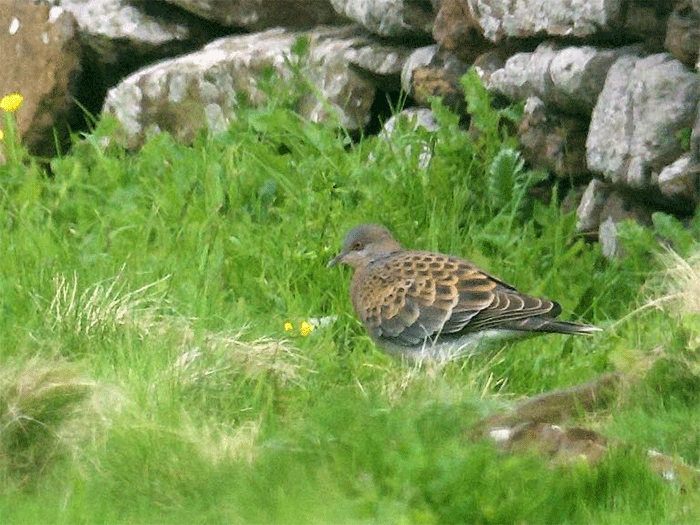
Their last was as recently as 28th-30th October 2023 – while for those of us of a certain vintage, Orkney as a whole lodges firmly in the memory for it was here that many unblocked ‘Rufous Turtle Dove’ during the long stay of a bird present at Stromness on 20th November – 20th December 2002. Since then they’ve been turning up regularly in Britain as a whole, not least on Shetland last year where the Hillwell area of south Mainland bagged not only a spring bird, but two more in the following autumn. Quite the sea change in their fortunes, that.
The brimming hot spell hasn’t (yet) translated into some decidedly tropical seabird wafting our way, but of course it’s very early days yet in terms of the seabird season. We’ve months to go yet. So, for now, we start with something altogether of cooler climes, the lingering second-summer White-billed Diver still to be seen in Orkney off Houton on 20th-25th.
Seven Wilson’s Petrel were seen off Galley Head (Co.Cork) from a pelagic on 23rd.
Sightings of Balearic Shearwater continued to be largely the domain of Portland (Dorset), where the peak count in recent days was 70 seen there on 22nd.
The merest scatter of large shearwaters were noted during the week. A Great Shearwater was seen from Porthgwarra (Cornwall) on 19th; and Cory’s Shearwater from Porthgwarra on 20th, and Isle of May (Fife) on 19th.
The passage of notable skuas was clearly done with now, with birds having much better things to do elsewhere than hang around Britain or Ireland. A couple of Pomarine Skua were seen at sea from vessels, respectively, plying the route between Malaig and Lochboisdale Highland & Caithness / Western Isles) on 19th, and off Kirk Michael (Isle of Man) on 20th.
By an outstanding margin, the most notable of the week’s long-legged beasties was the lingering Western Reef Heron in Conwy as the week began, still proving mobile around Conwy RSPB and the surrounding environs on 19th-20th. But thereafter… nothing. Until 24th, when it turned up again, this time in Pembrokeshire at Sandyhaven Pill, remaining there until 25th.
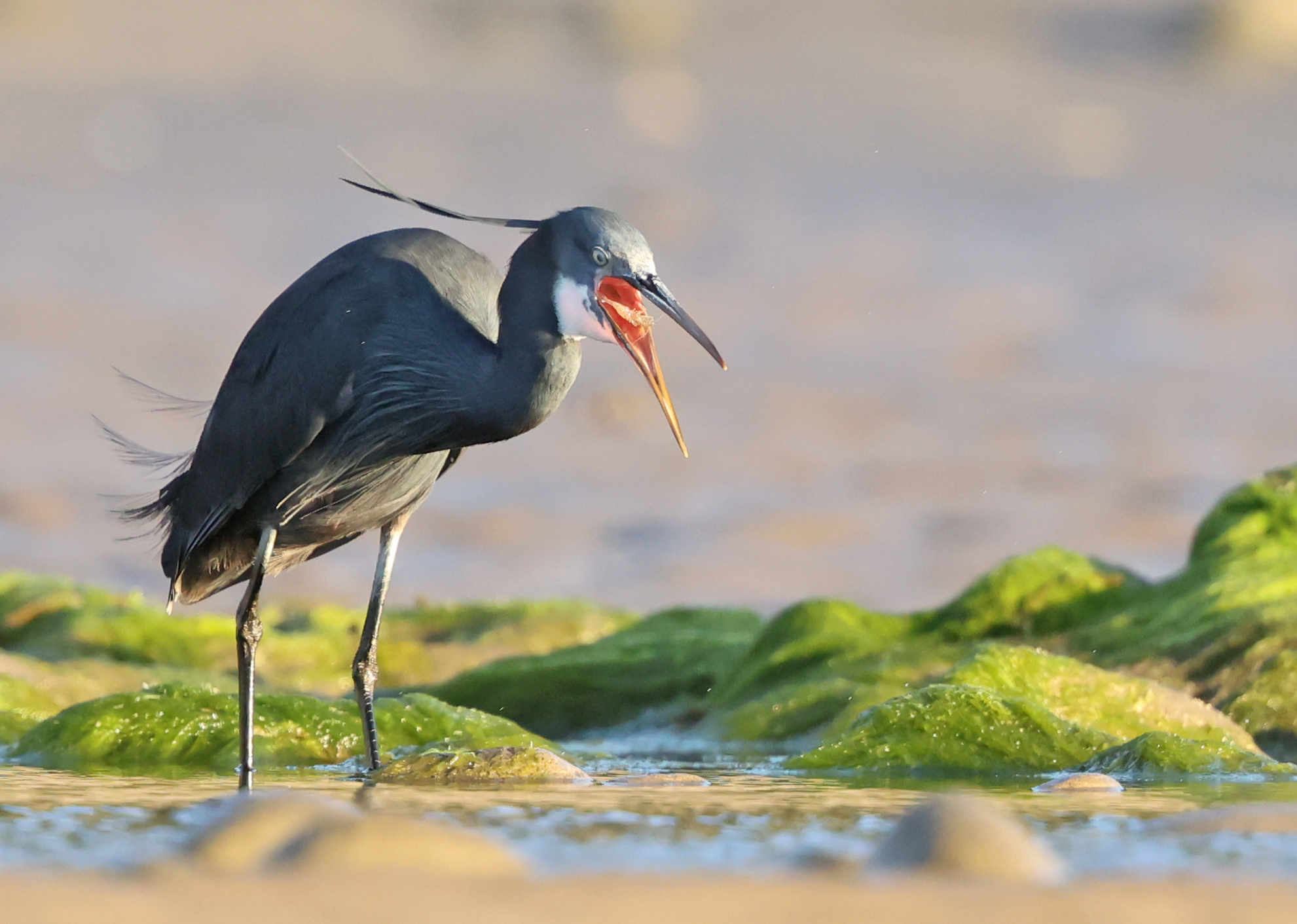
A Squacco Heron enlivened Pennington Marshes (Hampshire) on 23rd-24th.
In East Sussex a Night Heron was noted at night passing over Hastings on 19th and again on 20th.
On the whole, ducks were done with us now, but there were still one or two new faces popping up, and a few stalwarts hanging on.
Foremost of the former was a female Blue-winged Teal on Lough Beg (Co.Derry) on 22nd-23rd.
Aberdeenshire scored a Green-winged Teal on 19th-24th at Loch of Strathbeg RSPB, while another was seen again on Mull (Argyll & Bute) on 23rd, and a bird at Sandbach Flashes (Cheshire & Wirral) on 25th.
On Orkney an American Wigeon was present at Graemeshall Loch on 20th-21st.
The drake Lesser Scaup remained on College Lake (Buckinghamshire) on 19th-25th.
Up on Shetland, the drake Ring-necked Duck remained on Loch of Asta on 20th-24th. On 25th a drake was found on Nether Kinellan (Highland & Caithness).
The drake Ferruginous Duck was still hanging out on Draycote Water (Warwickshire) on 19th-21st.
A drake Surf Scoter was present off Blackdog (Aberdeenshire) on 24th.
And finally, still not done with us just yet, a drake White-winged Scoter remained off Kirkcaldy (Fife) still on 19th.
There was so very little to report on the shorebird front lately, we’ll not be lingering here for long. Over in Essex, the American Golden Plover appeared again at Old Hall Marshes RSPB on 22nd; and an adult was present at Spurn (East Yorkshire) on 25th.
Today's sightings featured a superb summer-plumaged American Golden Plover off The Warren screen which eventually flew south, Barnacle Goose south over Beacon Ponds, Quail and Dutch-ringed Caspian Gull around Kilnsea Wetlands. #Spurnbirds (1/2) pic.twitter.com/eZ1M5nBiFd
— Spurn Bird Observatory (@spurnbirdobs) June 25, 2026
Up in Northumberland, a fine Spotted Sandpiper made a fleeting appearance at Amble on 19th.
A Buff-breasted Sandpiper added more Nearctic variety, present on North Uist (Western Isles) for a while on 24th.
And in Lincolnshire, two Black-winged Stilt were present at Freiston Shore RSPB on 24th.
Once again this week, it was the terns that made most of the running, but we’ve one or two gulls to dispense with before we get onto them… Best of the gulls this week were Bonaparte’s Gull seen at Ballyhogue (Co.Wexford) on 20th, and at Blanket Nook (Co.Donegal) on 23rd-25th; and on Shetland on 25th at Scatsta.
Glaucous Gull meanwhile were seen again on Benbecula (Western Isles) on 20th, Westray (Orkney) on 21st-22nd, Stenness (Orkney) on 23rd-24th, on South Uist (Western Isles) still on 23rd and North Uist on 24th, at Lunt Meadows LWT (Lancashire & North Merseyside) on 24th, and also on the 24th at The Cunnigar (Co.Waterford).
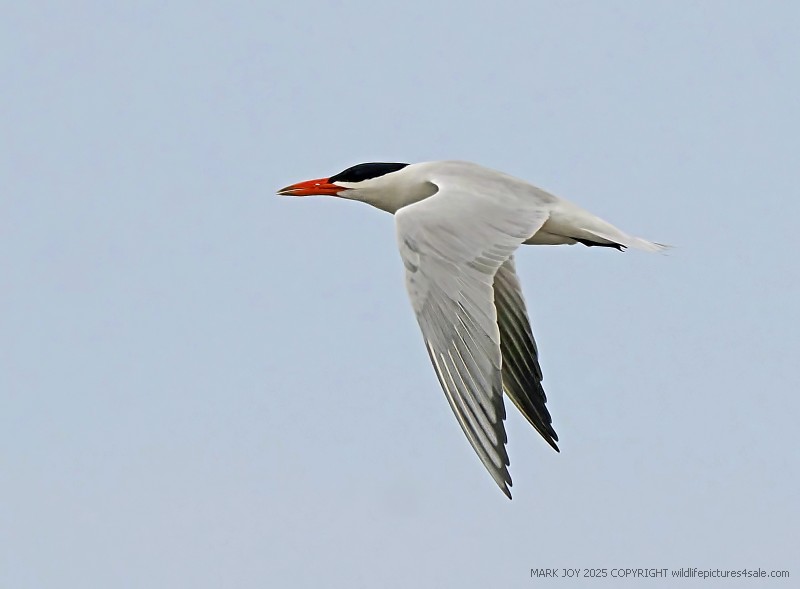
Onto the terns, the biggest news of the week in several senses was the Caspian Tern found on Shetland at Pool of Virkie on 19th. An agonisingly brief bird, it was seen by only the keenest and most local of observers before its departure. Locally, this was quite the mega – Shetland’s last was way back in 2014, a two-day bird in early June; and before that the islands have only four prior records, the first of which is technical in the sense it was a tideline corpse in 1976, and the most recent of which was a one-day bird on Fair Isle on 29th May 1987. Had this week’s bird only settled down, it would have been locally very well received. Elsewhere this week, East Yorkshire supplied sightings between 20th-23rd at and around the Hornsea Mere area; one was seen briefly in Cambridgeshire at Needingworth Quarry Lakes on 24th; and a further Scottish record came from Loch Leven (Perth & Kinross) on 25th.

A possible Gull-billed Tern was seen on 23rd at Stert Point (Somerset).
In Co.Dublin the Least Tern was again seen at Portrane on 21st.
In Northumberland the female surinamensis American Black Tern remained present at Long Nanny on 20th-25th and, in an extraordinary twist in her tale, has now hatched a chick with her Arctic Tern mate.
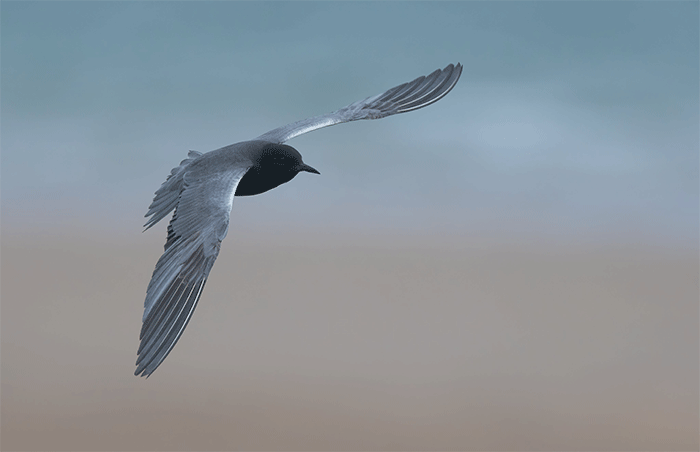
Finally, the recent adult White-winged Black Tern was still present at Tacumshin (Co.Wexford) on 22nd-25th.
Still hanging out in the shimmering Norfolk heat haze, the Black-winged Kite remained present at Sea Palling on 19th-25th.
A pale morph Booted Eagle was seen in Devon on 24th over Torquay – perhaps this was also one and the same as that reported at Soar (Devon) on 21st.
A male Montagu’s Harrier was seen outside Bedford (Bedfordshire) on 22nd.
Red-footed Falcon sightings began to wane, with two recent regulars again seen – at Westleton Heath NT (Suffolk) and Bempton Cliffs RSPB (East Yorkshire), both on 19th – and, in Kent, a female at Sandwich Bay on 22nd, and a first-summer male at Worth Marshes RSPB on 25th.
A Black Kite was seen on 19th at Blandford St Mary (Dorset).
And lastly, a Snowy Owl was seen on Sanday (Orkney) on 22nd.
The summer vibes were getting stronger on the passerine front, with ever less to report upon.
A Hoopoe was a quality garden bird in Swanage (Dorset) on 20th. A little further west, in Devon a Wryneck was present at Bennett’s Cross on 21st.
Back in Dorset, a female Red-backed Shrike was seen at Swineham Point on 21st-25th; a male was present on North Ronaldsay (Orkney) on 23rd; and a female on Fetlar (Shetland) on 25th.
A Golden Oriole was reported from Downton (Wiltshire) on 20th.
On Lundy (Devon) a Red-rumped Swallow was found on 22nd.
The recent Iberian Chiffchaff remained in song in Broxa Forest (North Yorkshire) on 19th; the Hardwick Hall CP (Co.Durham) bird was still present there on 24th; and another probable was heard at Crawshawbooth (Lancashire & North Merseyside) on 22nd.
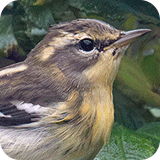
On 24th Greenish Warbler were found in Shetland on Fair Isle and Foula.
Foul weather dropped a Marsh Warbler onto Whalsay (Shetland) on 19th; and another was on Mainland in Ireland Burn on 25th.
In Somerset the territorial Great Reed Warbler remained at Shapwick Heath NNR on 19th-21st.
Also still present in Somerset, the recent Savi’s Warbler remained at Catcott Lows NR on 19th-21st; while another was heard at Alkborough Flats NR (Lincolnshire) on 20th.
Lincolnshire also scored an Icterine Warbler on 19th, trapped and ringed at Gibraltar Point NNR; while the recent singing bird remained on the outskirts of Lerwick (Shetland) on 19th-25th.
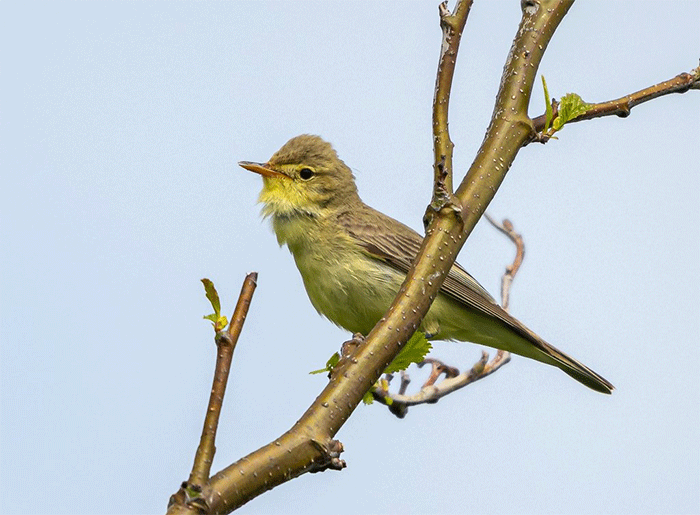
And it was Shetland to which we owe a final flourish of midsummer warbler wonder – a Paddyfield Warbler found at Sumburgh Farm on 20th.
The singing Red-breasted Flycatcher remained in Culloden Wood (Highland & Caithness) on 19th-25th; another was present on Tiree (Argyll & Bute) on 22nd.
More Red Breasted Flycatcher , Highlands Scotland 20/6/26 pic.twitter.com/wCay64uc4D
— John forbes (@Zipolly) June 21, 2026
The week began with a Rosy Starling still present, for the third day at least, on 19th at Tywyn (Gwynedd); followed by one present on Fetlar (Shetland) on 21st-23rd, another at Framlingham (Suffolk) on 22nd, and one on Orkney at Stromness on 24th.
Rosy Starling found yesterday (on Lambhoga) by Tom Rosas and (presumably the same bird) relocated today by Calum Scott @aberladybirder.bsky.social
— Paul Macklam (@Colonelbirder) June 22, 2026
The light was poor at 8pm when I finally found it (and it was distant) but it’s a very smart bird. pic.twitter.com/B7jyHuP4Rr
A Serin was present at North Foreland (Kent) on 20th, followed on 24th by two further birds, one on Portland (Dorset), and the other a most unusual Shetland record, on Fair Isle, the latter remaining on the isle on 25th.
A singing Common Rosefinch was reported from Auchmithie (Angus) on 12th, another was present on Harris (Western Isles) on 17th, and another singing bird at Pett (East Sussex) on 25th.
The resident Great-tailed Grackle remained at Speke Hall NT (Lancashire & North Merseyside) on 19th and again on 22nd.
And finally, in Co.Galway the long-staying Pied Crow remained just outside Galway on 19th.
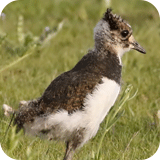
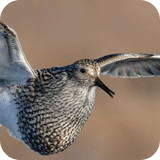
Overseas we head next, and our attention must be drawn to the Netherlands, where a duo of fine waders were brightening the week for Dutch birders – a Great Knot at Flauwers en Wevers Inlagen on 21st, and a White-tailed Lapwing at Eendragstpolder on 22nd.
In France, an Elegant Tern remained at Polder de Sebastopol on 22nd.
Heading north into Scandinavia, in Sweden the Wilson’s Snipe continued to display at Storsjo on 20th-22nd.
Denmark was particularly blessed this week with a singing Song Sparrow at Laesten Bakker on 22nd.
Up in Iceland, the drake White-winged Scoter remained off Njarovik on 21st.
Finally, an African Openbill was seen in Egypt at Safaga on 21st.
At the time of writing, western Europe is in the grips of yet another record-breaking heatwave, with the mercury soaring anew. There’s plenty to unpack there in the bigger picture, but the arrival of the current hot spell was, as we’ve seen, also the moment in which a couple of tasty waders dropped in to the Netherlands during the week just gone.
And the coming week certainly also has past British and Irish form where the late-travelling wader rarity is concerned… In 2020 there was the long-staying Greater Sand Plover that graced Tyninghame (Lothian) on 27th June – 6th July; while going back further, to 2004, an even longer-staying rarity appeared in Ireland, this being the Short-billed Dowitcher found at Lady’s Island Lake (Co.Wexford) on 30th June, and last seen on 15th August.
A mega rarity wader would certainly spice up the coming week, but we should also note the final week of June’s pedigree where scarce terns are concerned – it’s a great time for a hulking Caspian Tern, or the more elegant options of Gull-billed or White-winged Black Tern. Any of those represent an excellent local patch find, and offer some decent potential even for those working an inland beat.
Jon Dunn
26 Jun 2026
Many thanks to all this week's contributors for your photos and videos and to everyone who contributed throughout the year.
Get Breaking Birdnews First
Get all the latest breaking bird news as it happens, download BirdAlertPRO for a 30-day free trial. No payment details required, and get exclusive first-time subscriber offers.
Share