



Weekly birding round-up: 21 - 27 Nov
Very, very quiet times this past week, with a trickle of final autumn passerines passing through, and not a great deal to report upon, truth be told, apart from a late-running wader in Ireland. We need to get comfy in winter’s saddle, starting next week. It may be a long old ride until spring…
Found just as the week was drawing to a close, Co.Wexford pulled a Killdeer-shaped rabbit out of the hat at South Slob on 27th. And this was pretty big news from a county perspective, for Co.Wexford needs to look way back to 1st-8th April 1995 for its one and only previous record of this stripy plover.
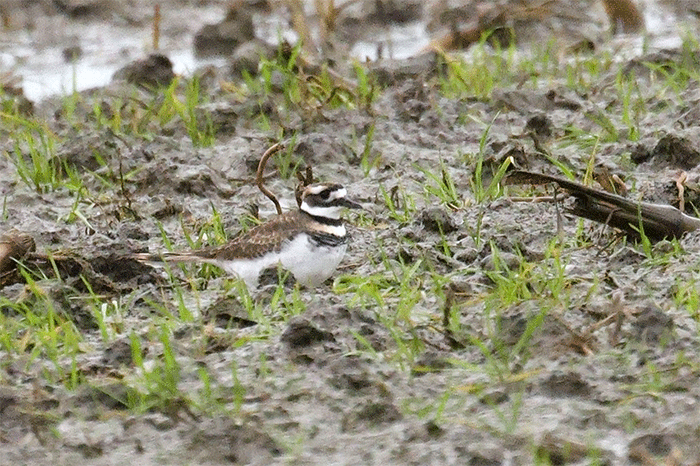
Scratch that – this was big news from an Irish perspective as a whole, for the last Irish record was over a decade ago, 29th March 2013 at Killybegs (Co.Donegal). This week’s late arrival would be a popular bird in the coming days should it settle down for a little while.
That scraping noise, that would be the sound of autumn’s barrel being thoroughly pared clean this week. Short of a (very) startling late surprise, it feels like winter will officially be upon us next week. But this week, the best of the precious few new birds was a female Desert Wheatear found in Dorset at Wyke Regis on 23rd-26th.

Only the fifth record for Dorset, this was to prove a quietly popular bird – two of the previous four records have been one-day birds, with the other two slightly longer-stayers being a two-day bird in 1997 on Studland Heath, and a four-day bird way back in 1991 on Portland. A chance for a number of locals to catch up with either their first county Desert Wheatear, or their first for some time.
Coleridge-quiet this week on the seabird front, as if someone had shot the albatross and we were paying the due price. The highlight in an otherwise deathly week was the ongoing presence of the Double-crested Cormorant in Ireland, seen again at Doon Lough (Co.Leitrim) on 22nd and 27th.
In Shetland, a White-billed Diver was seen off Ireland on Mainland on 25th.
Just a couple of Pomarine Skua were noted lately – off Cape Cornwall (Cornwall) on 23rd, and Gibraltar Point NNR (Lincolnshire) on 25th.
Around 100 Little Auk were logged during the week – a count of 37 in an hour from Sumburgh (Shetland) on the morning of 27th the best of them.
A Great Shearwater was seen from Pendeen (Cornwall) on 23rd; another in Hampshire on 26th off Warsash, Weston and Calshot; and five from Ballycotton (Co.Cork) on 27th.
I wouldn’t normally post such poor quality photos but a Great Shearwater as, I think, a first confirmed for Hampshire was quite an event today. Nice scope views off of Calshot but sadly too far for anything other than a couple of record shots. @HOSbirding @HantsIWWildlife pic.twitter.com/meop8NwfDy
— Simon King (@UKTwitcher) November 26, 2025
Cornwall also accounted for single Leach’s Petrel from St Ives on 23rd and 24th; and another was noted much further east, off Dungeness (Kent) on 23rd.
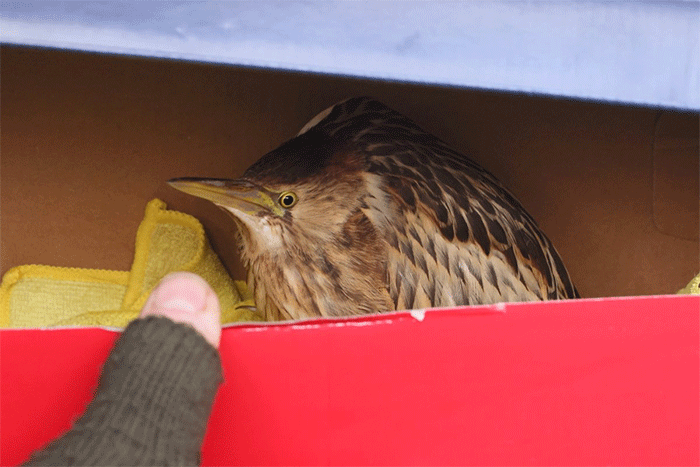
The long-legged beasties were considerably enlivened this week by the discovery of a Little Bittern at Royal Quays, North Shields (Northumberland) on 23rd – in a parlous state, it was taken into care.
A juvenile Purple Heron was seen at Ham Wall RSPB (Somerset) on 23rd.
And Glossy Ibis? Yes, still plenty of them to go around.
Onto the honkers and quackers, where we plunge onto the rarity duckpond with The Goose Formerly Known As Canada - two interior Todd’s Canada Goose remained at Lissadell (Co.Sligo) on 22nd; and a hutchinsii Richardson’s Cackling Goose was still present there on 22nd also. Further sightings of hutchinsii came at New Lake (Co.Donegal), where two were present on 22nd-23rd; on Islay (Argyll & Bute) on 21st; and at Burgh-by-Sands (Cumbria) still on 23rd.
The recent Aberdeenshire Ross’s Goose remained with Pink-footed Geese, seen this week at Fraserburgh on 24th.
The Red-breasted Goose was still hanging around Wallasea Island RSPB (Essex) on 21st-27th.
East Yorkshire’s recent Black Brant was still to be seen at Sammy’s Point on 24th-25th; another was seen in Essex at The Naze on 26th still.
In Dorset the recent drake Baikal Teal remained at Abbotsbury Swannery on 21st-24th.
Cornwall’s female Blue-winged Teal was still to be found at Hayle Estuary RSPB on 25th-26th.
Numbers of Green-winged Teal dropped a tad, down to eight birds reported lately. Highland & Caithness accounted for sightings at Alturlie Point on 21st-26th still, and Fort William on 24th; one was seen at Loch of Strathbeg RSPB (Aberdeenshire) on 21st; another at Rigg Bay (Dumfries & Galloway) on 22nd; and a Western Isles bird on South Uist on 25th. English birds were noted at Lackford Lakes SWT (Suffolk) on 21st-27th still; at Chew Valley Lake (Somerset) on 21st-25th; at Sandbach Flashes (Cheshire & Wirral) on 24th-26th; and at Potter Brompton Carr (North Yorkshire) on 26th still.
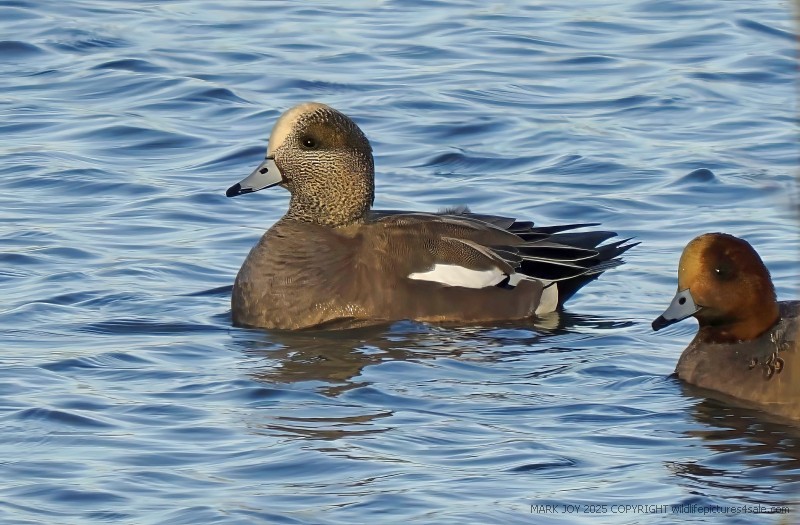
English records of American Wigeon came from Bishop Middleham (Co.Durham) on 22nd-27th still, Big Waters NR (Northumberland) on 21st, and at Eyebrook Reservoir (Leicestershire) on 23rd-27th. An Irish bird was present at Ballygilgan NR (Co.Sligo) still on 22nd.
Ireland was creaking at the seams with Ring-necked Duck this week, or at least Co.Mayo was. Overall, Britain and Ireland tallied just shy of 35 birds – but numbers at Urlaur Lough (Co.Mayo) rose from 11 present there on 24th to 13 the following day, and to 14 birds present by 26th.
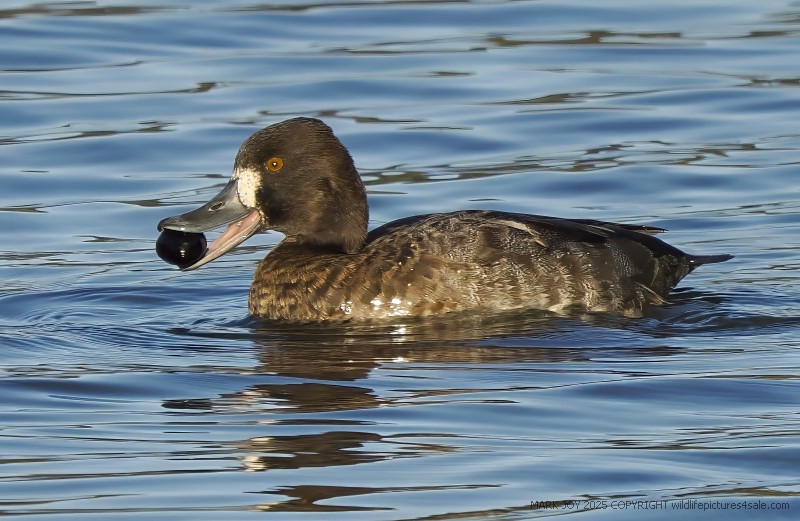
Two Lesser Scaup remained at Tacumshin (Co.Wexford) on 21st at least; while two were still to be seen at Helston (Cornwall) on 21st-25th. Single birds remained at Swithland Reservoir (Leicestershire) on 21st-26th, in Surrey at Staines Reservoirs on 21st-26th, on South Uist (Western Isles) on 22nd-27th, and at Abberton Reservoir (Essex) on 26th.
In Cambridgeshire a female Ferruginous Duck was present at Paxton Pits NR on 24th.
A drake White-winged Scoter
Lothian’s Gullane Point accounted for a Surf Scoter on 21st; further Scottish sightings came from South Uist (Western Isles) on 22nd, Barra (Western Isles) on 25th, and Dumfries & Galloway, where one was seen at Balcary Point on 25th, and two from Rascarrel on 25th also. A probable was seen on the sea off Titchwell RSPB (Norfolk) on 24th.
A female King Eider was found off Scalloway (Shetland) on 25th-26th.
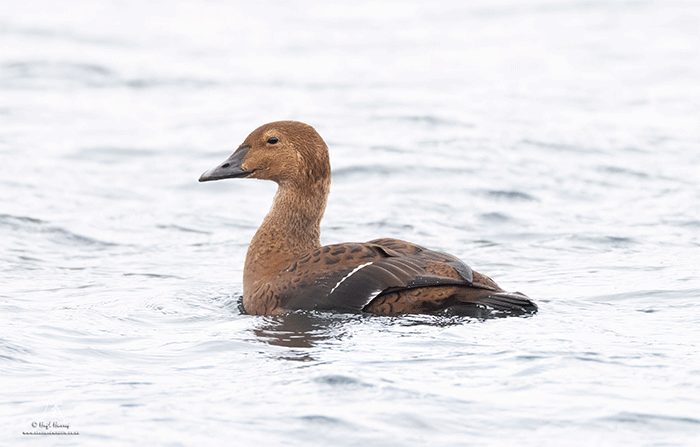
Finally, in Ireland the juvenile drake Harlequin Duck was seen again in Co.Donegal off Port Arthur Beach on 24th.
Ever less of the notable weekly waders to report now… In Somerset the German-ringed female Kentish Plover still present this week at Burnham-on-Sea on 21st-26th.
An American Golden Plover was noted passing over South Nesting (Shetland) on 24th; and the recent Titchwell RSPB (Norfolk) bird was again seen there on 26th.
In Co.Derry three White-rumped Sandpiper remained at Myroe Levels on 22nd.
A Semipalmated Sandpiper remained this week, for its sixth day, at Seafield (Co.Clare) on 22nd.
Absent from the news throughout the week, it took until 27th for the recent Temminck’s Stint to put in another appearance at Minsmere RSPB (Suffolk).
In Cornwall the Lesser Yellowlegs remained at Truro on 21st-25th.
Also hanging on this week, the recent Grey Phalarope remained on King George V Reservoir (London) on 21st-25th. Another was seen at Sunderland (Co.Durham) on 21st.
Find of the week on the bin bag botherer front was comfortably the adult Franklin’s Gull that dropped into Vatersay (Western Isles) on 23rd, as welcome as it was wholly a bolt from the blue.
When I drive around the island I get sheep in the road. Others though get Franklin’s Gull blocking their way. Vatersay, Caolas this afternoon pic.twitter.com/Kng2mY62Wv
— Ian Ricketts ???? (@TheBarraDood) November 23, 2025
Ireland accounted for adult Bonaparte’s Gull at Gormanstown Strand (Co.Meath) on 23rd-24th, and Ballyconneely (Co.Galway) on 25th.
The regular adult Ring-billed Gull remained at Blackrock (Co.Louth) on 22nd-23rd; the first-winter was still in Sligo (Co.Sligo) on 27th; and a second-winter was seen in Cornwall at Par Beach Pool on 24th.
Glaucous Gull remained fairly few and far between. One remained at Shewalton (Ayrshire) on 23rd-26th; one was seen at Pyewipe (Lincolnshire) on 23rd; another up on Unst (Shetland) on 24th, with another in the archipelago that day on Fair Isle; two on Westray (Orkney) on 25th; and one at South Shields (Co.Durham) on 26th-27th.
Apart from a bird on St Mary’s (Scilly) on 24th, it was Scotland we can thank for the week’s precious few Iceland Gull - on 21st at Doonfoot (Ayrshire) and Spey Bay (Moray); on 24th on Sanday (Orkney), with a further probable at Birsay on Orkney Mainland that day also; and passing Fair Isle (Shetland) on 26th.
The Northern Harrier show continued for another week in Co.Wexford, with both male and juvenile again seen at Tacumshin on 22nd, following the male alone there on 21st, and before the juvenile again at Cahore Marsh on 23rd, and the male once more at Tacumshin on 26th.
The adult female Pallid Harrier again seen this week at Llanrhidian Marsh (Glamorgan) on 21st.
A Rough-legged Buzzard was seen in Norfolk at Eccles on 22nd, and Happisburgh on 23rd-24th.
We’ll start the dwindling passerines section once more with Hume’s Warbler, with 12 of their kind seen again this past week. Fresh faces appeared at Sandwich Bay (Kent) on 21st-26th, at Southwold (Suffolk) on 21st-24th, at Great Yarmouth Cemetery (Norfolk) on 21st-24th, and at Marston Vale Millenium CP (Bedfordshire) on 22nd-26th. Settled birds remained at Winterton (Norfolk), where two were present on 21st still; at Easington (East Yorkshire) still on 21st-24th; in Norfolk on 21st-27th at Wells Woods, on 21st-27th at Holkham Pines (with two present here on 25th-26th), and on 21st at Holme NOA; and at Kingsdown (Kent) again on 23rd.

Numbers of Yellow-browed Warbler continued to dwindle, with some 30 birds noted nationwide.
Pallas’s Warbler vanished almost entirely, with just two reported this week – one at Titchwell RSPB (Norfolk) still on 21st, and the other on 25th at Slapton Ley (Devon).
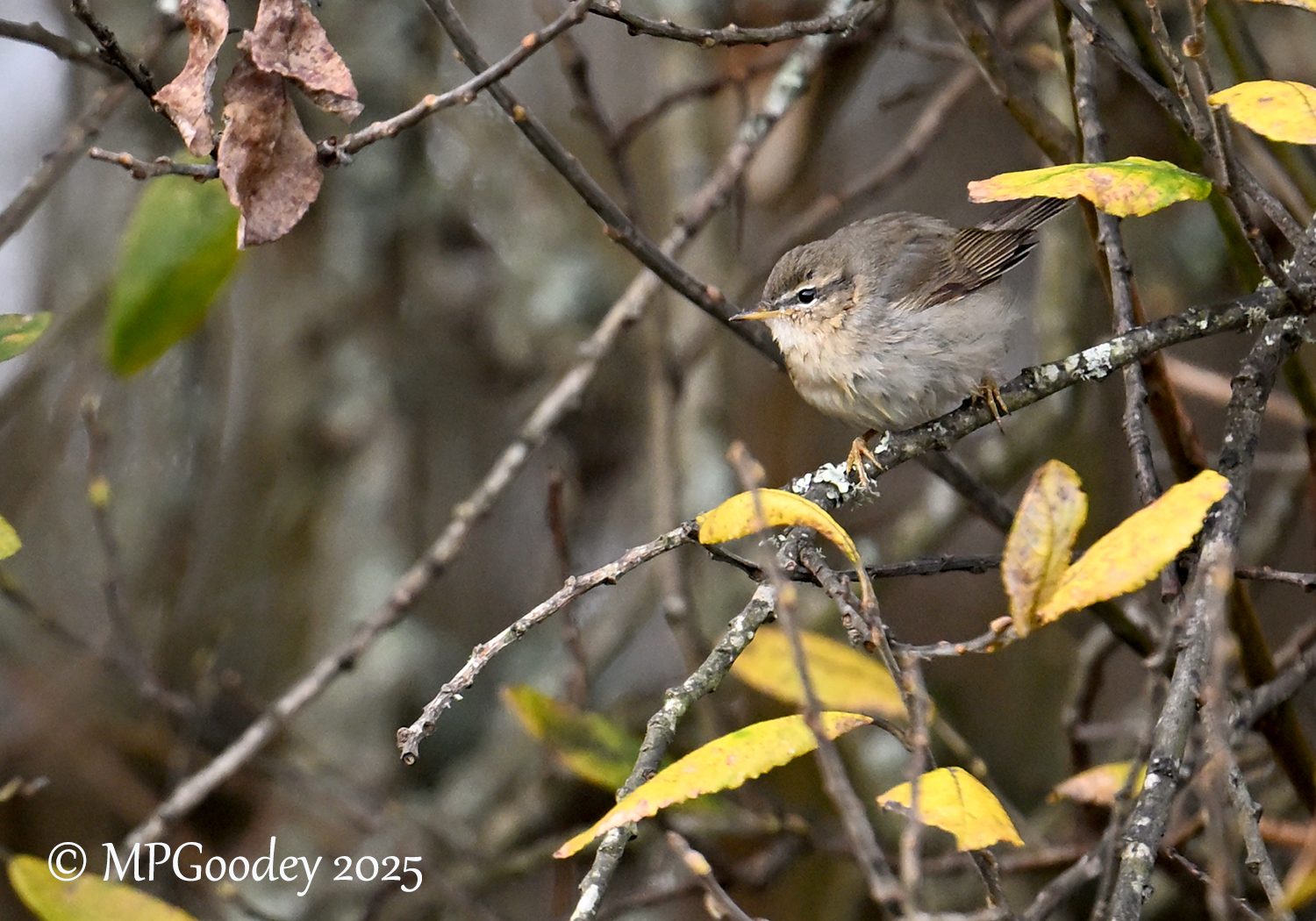
Eight Dusky Warbler were logged lately – at Swanpool (Cornwall) again on 21st; on Tresco (Scilly) on 21st-25th, and on St Mary’s on 22nd-24th; at Brancaster (Norfolk) on 21st-24th; at Southwold (Suffolk) on 21st; in Cornwall at Mevagissey on 22nd and Trenow Cove on 22nd-25th; and at Elmley NNR (Kent) on 22nd.
Great Grey Shrike remained in Hampshire at Beaulieu Road Station on 23rd, with another sighting that day at Markway Inclosure; and a further bird was seen in South Yorkshire at Thornseat Delf on 25th-27th.
Aberdeen (Aberdeenshire) accounted for most of the week’s 75 recorded Waxwing, with a peak count in the city of 36 birds on 21st.
A Penduline Tit was found in Somerset at Greylake RSPB on 26th-27th.
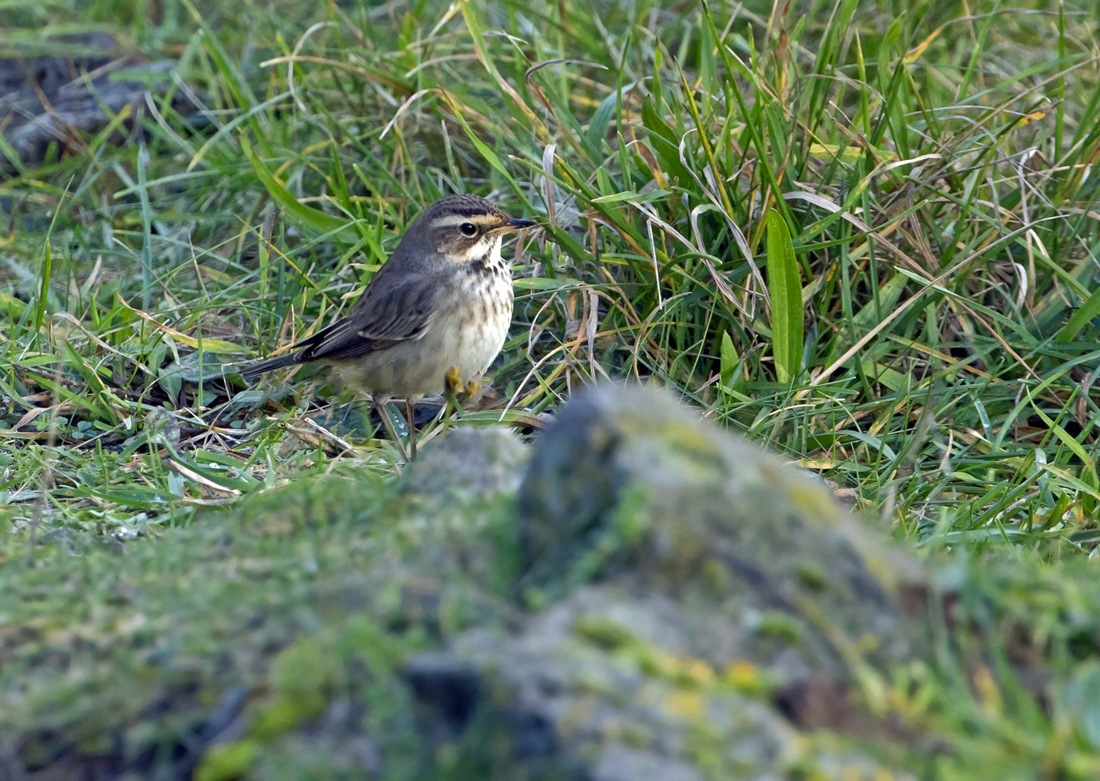
The recent Bluethroat remained at South Gare (Cleveland) on 21st-25th.
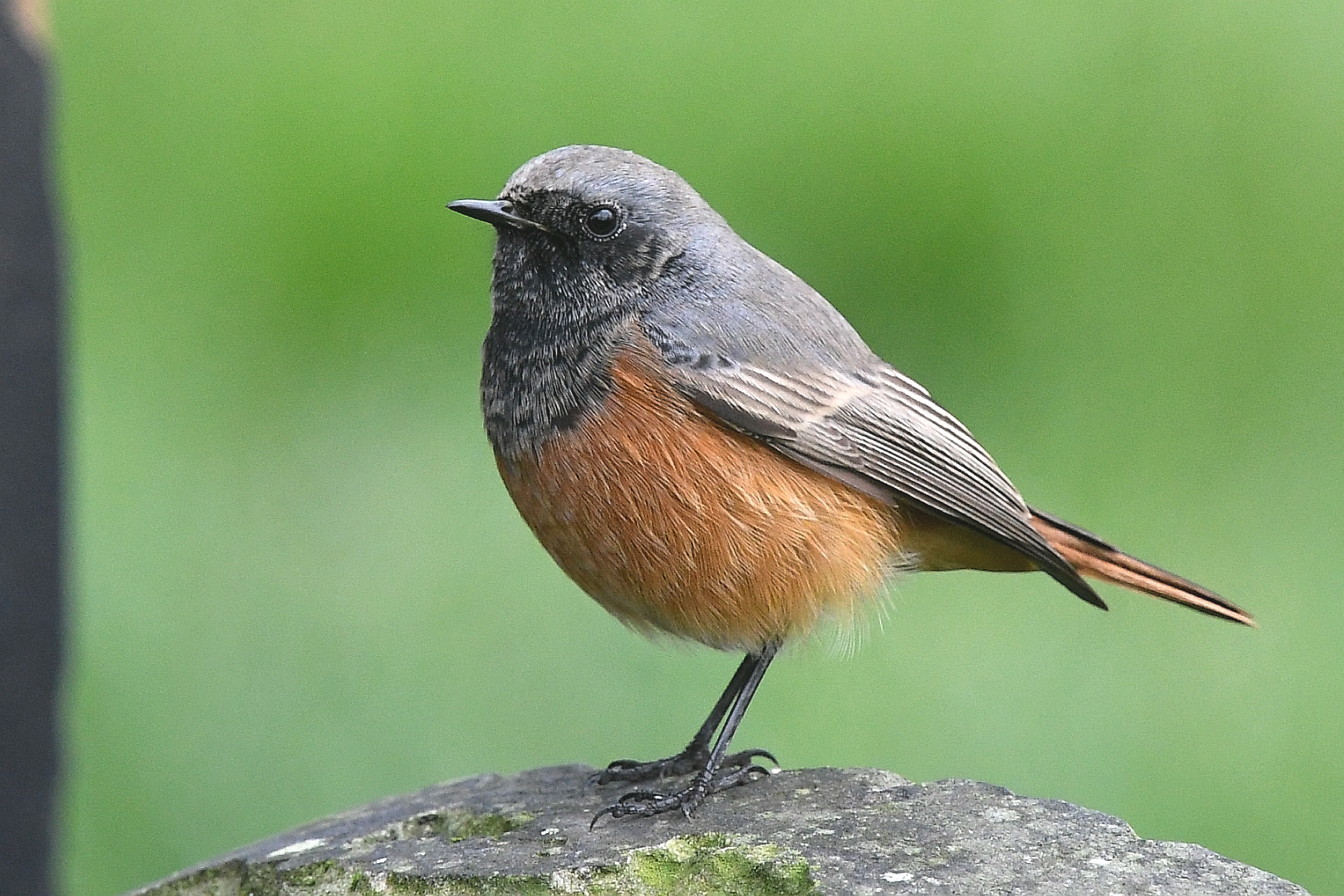
A male murinus / phoenicuroides / rufiventris Eastern Black Redstart was found in North Yorkshire on 27th at Scarborough.
The Red-breasted Flycatcher remained on St Mary’s (Scilly) on 21st.
A possible Isabelline Wheatear at Pembrey Harbour (Carmarthenshire) on 21st-22nd came to nothing more concrete.
Richard’s Pipit this week were seen at Brotton (Cleveland) on 22nd-26th, over Southwold (Suffolk) on 22nd, and near Saltfleet Haven (Lincolnshire) on 25th.
A Common Rosefinch was present on Mull (Argyll & Bute) on 23rd.
A Serin was seen in Kent at Dungeness on 21st.
In Shetland the Black-faced Bunting came out of the woodwork again on Fair Isle on 23rd, while on Mainland the recent Little Bunting remained at Scousburgh on 21st-22nd.
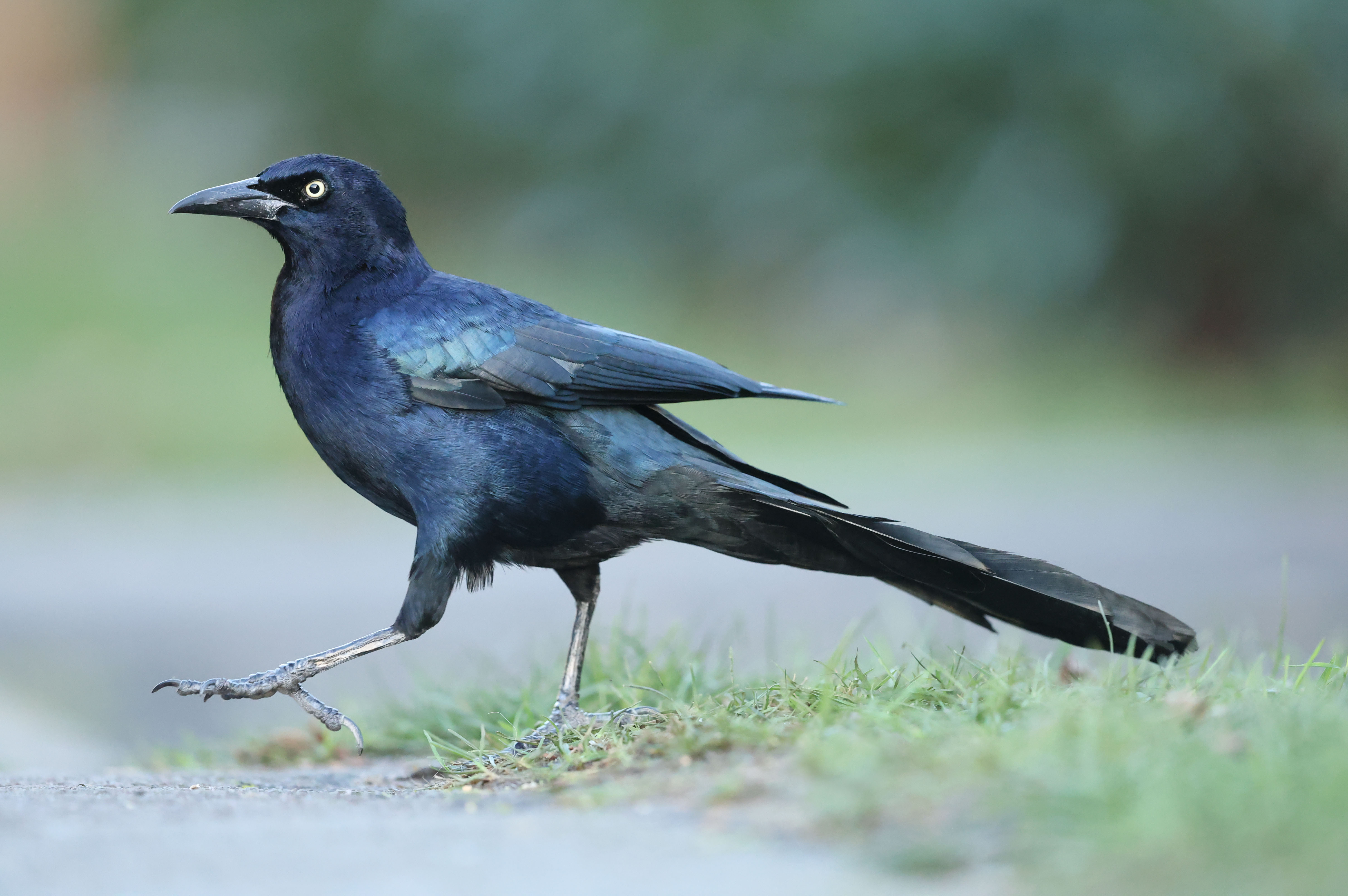
Finally, the recent male Boat-tailed Grackle in Hampshire was still sitting pretty in the gardens at Holbury on 21st-27th.
The overseas news this week kicks off to the east in Estonia, where a Black-throated Accentor was present on Saaremaa on 22nd.
Up on Iceland, the Brown-headed Cowbird remained in Reykjavik on 23rd.
Closer to home, in the Netherlands the drake Spectacled Eider remained off Texel on 21st-27th, the Western Swamphen still at Zevenhuizen on 23rd, and the Pygmy Cormorant at Natuurpark Lelystad on 23rd also.
Spectacled eider, Texel, ????.
— Andrew Wappat (@AndrewWappat) November 24, 2025
Having a good preen on the rocks and showing off those eye markings SO well. Kilometre out to Wadden Sea early this morning, before eventually coming to shore at Wagejot for 30 minutes. If only Redcar’s king eider had ever done the same @teesbirds1 ?? pic.twitter.com/xoYBk7ILVd
A Sociable Lapwing was seen in France on 24th-25th at Etang de Saint-Quentin-en-Yvelines. Yet another western European example of Black-faced Bunting was trapped and ringed this week, on this occasion at Noirmoutier-en-l’Ile on 26th.
Finally, on the Canary Islands, an Abyssinian Roller was present on Fuerteventura on 21st-22nd.
As we pass over the cusp into December in the coming week, both Hume’s Warbler and Desert Wheatear remain our best bet of something halfway decent. That said, now is surely the moment that investing time in scouring one’s local patch’s damp corners might just begin to yield a chance of a pioneering wintering Dusky or Yellow-browed Warbler. Neither’s likely to get many firing up the Quattro, but both are local patch gold, inland especially.
As is, should you be fortunate enough to have a decent stand of Great Reedmace on your patch to lure one in, a Penduline Tit - a few have been seen in England in the past fortnight, so there’s always a chance of one if the gods really smile upon you.

Jon Dunn
28 November 2025
Many thanks to all this week's contributors for your photos and videos
Get Breaking Birdnews First
Get all the latest breaking bird news as it happens, download BirdAlertPRO for a 30-day free trial. No payment details required, and get exclusive first-time subscriber offers.
Share





