Weekly birding round-up: 4 - 10 Apr 2023
Spring began moving smartly through the gears in the past week, with quality flying at us from all sides. The only fly in the ointment, perhaps, being the fleeting nature of most of those encounters – one day birds being firmly the order of the day, and hence remaining the preserve of their finders or, at best, those able to hustle along smartly to see them before they departed. In spring, you snooze, you lose.
A fair few of us of a certain vintage will have fond memories associated with Cornwall and Scops Owl, courtesy of the twitchable and showy individual at Morwenstow on 9th-11th April 1995. Indeed, the county has some significant pedigree in their regard, with seven accepted records to date, including one trapped and ringed lately at Nanjizal Valley on 28th May 2020.
Far from annual these days in a British or Irish context, any discovery of one of these charismatic little owls is always greeted with significant local and, often, national interest. The trick being that the owl in question needs to hang around long enough for more than its fortunate finders to appreciate it…
Alas, that wasn’t to be this week, with a bird flushed at Nanjizal Valley on 4th not being seen again; and, more galling still, a further unseen bird identified from a sound recording near Mizen Head (Co.Cork) on 4th also. There had clearly been a small arrival of small owls… but that’s small comfort for most until such time as one proves twitchable.
We’ve banged on in these parts for years about the desirability of Forster’s Tern and, in a British context, its awkward semi-blocker status. Many of us, again of a certain vintage, took the species for granted courtesy of the obliging individual that took up residency on the Ythan estuary (Aberdeenshire) on 3rd May – 1st August 1995 – it was practically a formality to turn up and see that bird and, better yet, it was followed by a first-winter down in Dorset on The Fleet and nearby on 26th December 1995 – 10th February 1996. Easy-peasy, then.
Since the turn of the century though, the species has become harder to come by in a British context. Records post-2000 are almost exclusively the preserve of Ireland. The best of them was an eleven day bird on the Hayle estuary (Cornwall) on 25th November – 5th December 2002, but after that, of the precious few individuals British birders have had a chance to see, none of them have hung around long.

If you happened to be a Somerset birder, the wait’s gone on even longer than most, as the county’s sole prior record dates back to February 1987, an adult bird that spent five days at Hinkley Point. 35 years is a long time to wait for another bite at the cherry… but, if you were quick out of the blocks this week, you had your chance once more.
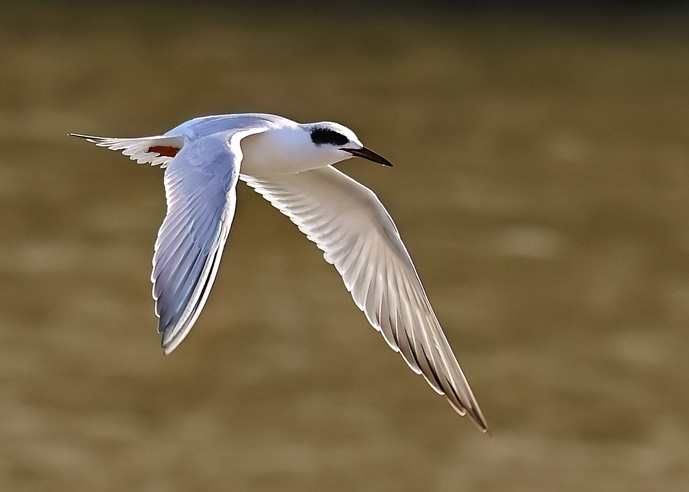
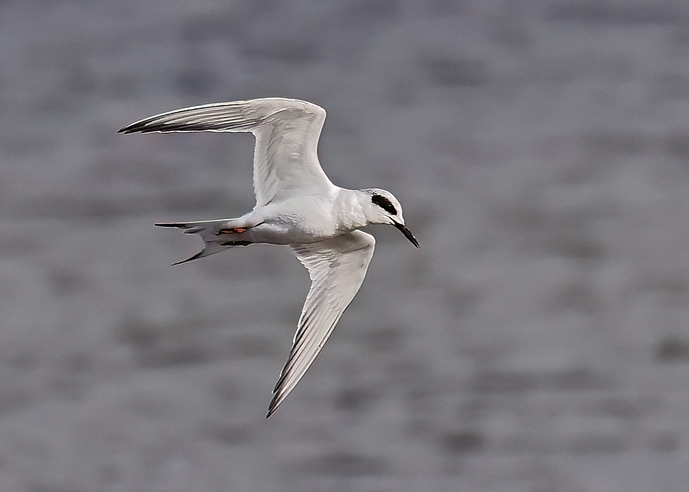
Found in the mid-afternoon of 6th sitting pretty on a buoy in Sutton Bingham reservoir, a first-winter Forster’s Tern would have disrupted many a working birder’s day. Mercifully it stuck around until just after 7pm, allowing locals time to connect before it headed off south, never to be seen again. Great for any Somerset or Dorset birder who happened to be in their home counties at the time…
Speaking of which, neither of this week’s Short-toed Treecreepers in Kent was hanging around long enough for any but the most determined and local of listers to catch up with them – one found on 7th at Fan Bay managed a couple of hours residency before vanishing, while a bird at Bockhill Farm on 8th was briefer still.
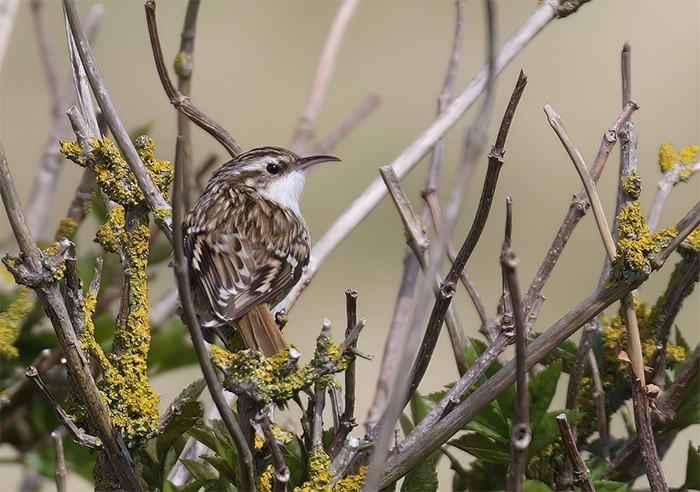
None of which will surely matter a jot to the finders, as this remains an enduringly satisfying bird to uncover in Britain – and, in fairness to Kent’s birding community as a whole, it’s not like they’ve been deprived of past birds to have a go at catching up with. It remains a perennial British birding trope that Kent has a near monopoly on Short-toed Treecreepers, with 28 of the 36 accepted British records owing themselves to the county.
If only it was always this easy to summon a bird… A text message exchange between Ed Carty and Aidan Kelly earlier in the day raised the prospect of the latter finding Co.Kerry’s first record of Purple Heron and, sure enough, a few hours later Aidan did just that at Lough Gill on 8th.
Amazing day’s birding in Co. Kerry today when within 10min at Lough Gill, I found county’s 1st ever Purple Heron & then topped it by flushing an American Bittern nearby. Text exchange with Ed Carty from a few hrs. before I found the birds????, and record pic of PH. @KerryBirdNews pic.twitter.com/VvOB2p8Ajn
— Aidan G. Kelly (@agk10k) April 8, 2023
In anyone’s book, adding a bird to the county list would constitute a good day’s work, but to follow that by finding an American Bittern nearby shortly afterwards? Well, that’s the stuff of dreams, dreams that came true at Lough Gill.
There have been two prior records of American Bittern in Co.Kerry, genuinely historic ones – in Tralee on 2nd November 1901, and near Tralee on 10th November 1925. It didn’t end well for either bird, with both being collected. So while Aidan’s American Bittern isn’t technically a county first, it’s as good as, and crowned a terrific day’s birding.
White-billed Divers began to pick up a modest head of steam this week off the Scottish coast – two remained off Roseisle (Moray) on 4th rising to three there on 9th, with four seen from Cullen on 4th; a single bird was seen from Lewis (Western Isles) on 7th; and three from Portsoy (Aberdeenshire) on 8th, with two there on 10th.
A Little Auk was seen from Burray (Orkney) on 7th.
Lastly, the adult Double-crested Cormorant was still settled at Doon Lough (Co.Leitrim) on 5th-9th.
As we saw in the headlines, the week was a notable one for wayward herons and their ilk. Night Herons were particularly notable, with a small influx underway that saw a bird make it as far north as Unst (Shetland) on 8th-9th. This though was just one of some 20 birds logged across Britain and Ireland. Starting on 4th in Co.Cork, a single bird was seen at Union Hall (Co.Cork), and two on Cape Clear (Co.Cork), and the singleton remained on 4th-7th on St Mary’s (Scilly); Cape Clear held onto one bird until 9th. Co.Cork landed another on 5th on Dursey Island. On 6th a single bird was found at Ventry (Co.Kerry), and one on the side of the River Calder at Ossett (West Yorkshire); with two birds settled at the latter site on 7th-10th.
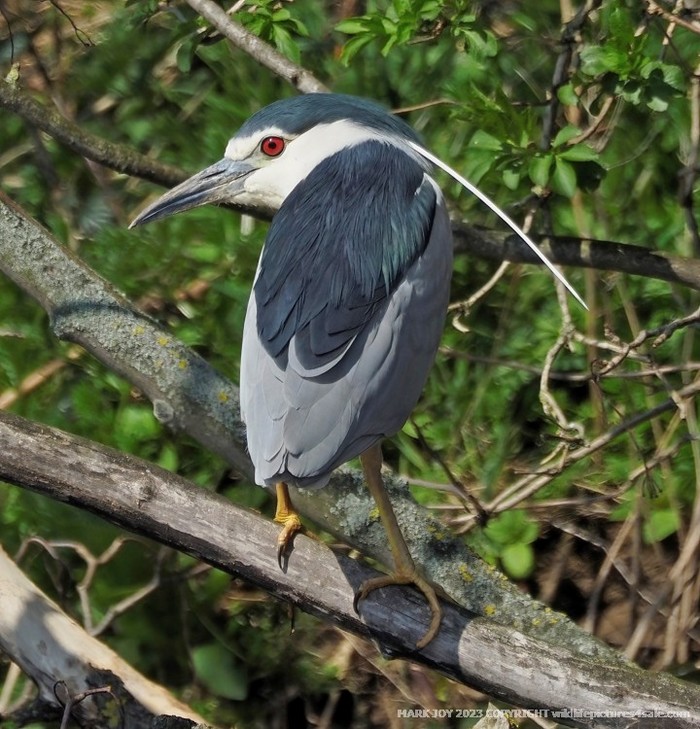
On 7th single birds were seen at Upper Manch (Co.Cork), Anderby Creek (Lincolnshire), and in a Pembrokeshire garden at St Brides – one of the ultimate garden ticks there; another lingered on 7th-8th on Great Saltee Island (Co.Wexford), and a possible bird was reported from Syston (Leicestershire). Two birds were found at Iford (Dorset) on 8th, with single birds that day also in Dorset over the road between Mudeford and Highcliffe, at Tregajorran (Cornwall), and on The Mullet (Co.Mayo). On 9th-10th the Iford birds remained in Dorset, with three birds seen here on 10th. Another was found on 9th-10th on Lewis (Western Isles), and one again at Tacumshin (Co.Wexford) on 9th-10th also. An additional bird was seen on 9th near Dernford Farm Reservoir (Cambridgeshire), in an area with no general access.
Where Night Herons went, Purple Herons followed, and Britain and Ireland was blessed with a decent arrival of them too in recent days. (Mizen Head (Co.Cork) had one of each on 10th). Two Purple Herons kicked the week off on St Mary’s (Scilly) on 4th, with sightings of singletons in the archipelago on 4th also from St Agnes, St Martin’s and Eastern Isles. One remained in Devon at Stover on 4th-6th. On 5th Cornish records came from Chapel Porth and Rosemullion Head; a further Cornish sighting came from Ruan Lanihorne on 6th-10th. Co.Wexford got in on the act with sightings at Tacumshin on 7th, and South Slob on 7th-8th and again on 10th. another was present on Cape Clear on 7th-9th; and as we saw in the headlines, Co.Kerry’s first was found at Lough Gill on 8th, and remained there on 9th-10th. A more easterly record came from Pagham Harbour LNR (West Sussex) on 7th-9th. On 10th two birds were found near Gwenter (Cornwall).

Our long-legged beastie stalwart was still being seen in decent numbers this week, with a shade over 20 Glossy Ibises recorded across Britain and Ireland. Starting in Ireland, four remained at Lough Aderra (Co.Cork) on 7th; three remained at Tacumshin (Co.Wexford) on 4th-9th; three were seen at Duncannon (Co.Wexford) on 8th; and one at Cahore Marsh (Co.Wexford) on 7th. The best of British sightings remained the four at Titchfield Haven NNR (Hampshire) still on 4th, with at least three still present on 9th; two were still present at Dungeness (Kent) on 5th-10th, with a single bird seen on 9th on Romney Marsh; at least one bird still at Fremington Pill (Devon) on 4th; one at Ham Wall RSPB (Somerset) still on 4th-10th; a single bird in Suffolk at Aldeburgh on 4th-7th; and a final bird was reported from a moving train at Bidston (Cheshire & Wirral) on 5th.

Starting the honkers and quackers with The Goose Formerly Known As Canada, though for how much longer as they’re drying up now, a sighting of a probable interior Todd’s Canada Goose in Cumbria at Campfield Marsh RSPB on 6th was followed by a confirmed bird again in Lancashire & North Merseyside at Banks Marsh NNR on 7th.
In East Yorkshire the Black Brant was still present at Kilnsea Wetlands NR on 4th-9th.
A drake American Wigeon was found on Orkney’s Mainland at Loch of Harray on 6th.
Three or four Green-winged Teals were logged this week – one still on Rogerstown estuary (Co.Dublin) on 5th-8th; another at Ballycotton (Co.Cork) on 4th-5th; the Campfield Marsh RSPB (Cumbria) bird again there on 9th; and a report of a bird at Aberlady Bay (Lothian) on 4th.
A Ferruginous Duck was seen in Norfolk at Hickling Broad NWT on 6th.
Some 30 Ring-necked Ducks were seen across Britain and Ireland, a wintering presence that wasn’t moving on just yet at least. Duos were seen this week in Glamorgan on Lisvane reservoir still on 5th, rising to three birds there on 10th; at Standlake (Oxfordshire) still on 4th-10th; on Lough Yganavan (Co.Kerry) on 8th; and on Kilkee reservoir (Co.Clare) still on 5th, with five birds again at the latter site on 9th.
It proved to be another excellent week for Lesser Scaups, with five confirmed birds noted and a further probable, a drake on Martnaham Loch (Ayrshire) on 8th. Confirmed birds were the female still on South Uist (Western Isles) on 6th-10th; the female still on Balgray reservoir (Clyde) on 6th-7th; the female still at Ham Wall RSPB (Somerset) on 4th-10th; and drakes on Dix Pit (Oxfordshire) on 7th-9th still, and at Worth Marshes (Kent) on 4th.
A dozen Surf Scoters were seen lately – three off Roseisle (Moray) on 4th; two still off Llanddulas (Conwy) on 4th-8th; a drake off Harris in Sound of Taransay on 6th; a drake seen from Ruddons Point (Fife) on 8th-10th, and one from Lower Largo on 9th; two in Aberlady Bay (Lothian) on 9th; one in Cobh Harbour (Co.Cork) on 10th; another in Dysart harbour (Fife) on 10th; and one off Benbecula (Western Isles) on 10th also.
Absent from the news for a while, the drake White-winged Scoter was again seen from Musselburgh (Lothian) on 7th; and a probable drake Black Scoter again in Northumberland, off Ross Back Sands on 8th.
The second-winter drake King Eiders were still present off Redcar (Cleveland) on 4th; and in the Port Seton area (Lothian) on 6th-7th, and between Aberlady Bay and Gullane Point on 9th.
And finally, coming late the weekly party, a drake Hooded Merganser was found on the River Kent at Kendal (Cumbria) on 10th, hanging out with the local Goosanders.
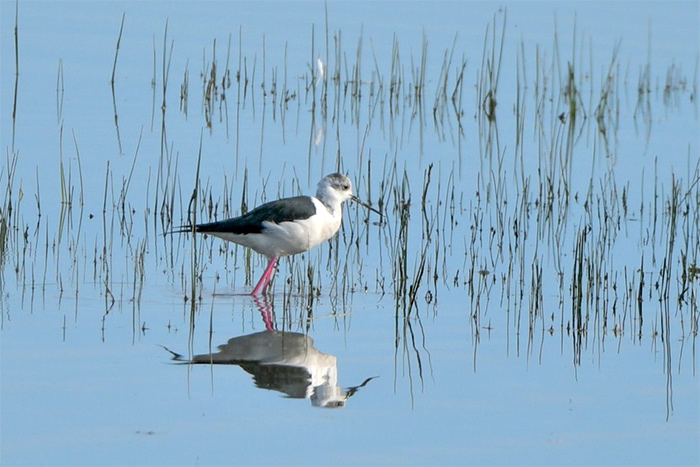
I’m not quite sure where the tipping point is concerned that marks the start of influx status, but several flocks of Black-winged Stilts in Britain and Ireland this week surely merit the use of the term. Ireland proved to be particularly blessed in their regard – five birds settled on Cape Clear (Co.Cork) on 4th-10th; a singleton at White’s Marsh (Co.Cork) on 4th-10th; another at Lough Donnell (Co.Clare) on 5th-10th; six birds at Ventry (Co.Kerry) on 6th-10th; two at Inish (Co.Wexford) on 7th-9th; singletons at Tacumshin (Co.Wexford) on 7th-10th, and Lisselan (Co.Waterford) on 7th-8th; two on 10th at The Cull (Co.Wexford), and a single at Lady’s Island Lake (Co.Wexford) later on 10th. This largesse almost missed Britain entirely, but Cornwall caught the edge of it – an unconfirmed report of three birds on 4th at Poldhu Cove was backed up by singletons at Maer Lake NR on 4th-10th, Coverack on 5th-6th, and Ruan Lanihorne on 7th-10th; and six birds at Walmsley Sanctuary CBWPS on 5th-10th.
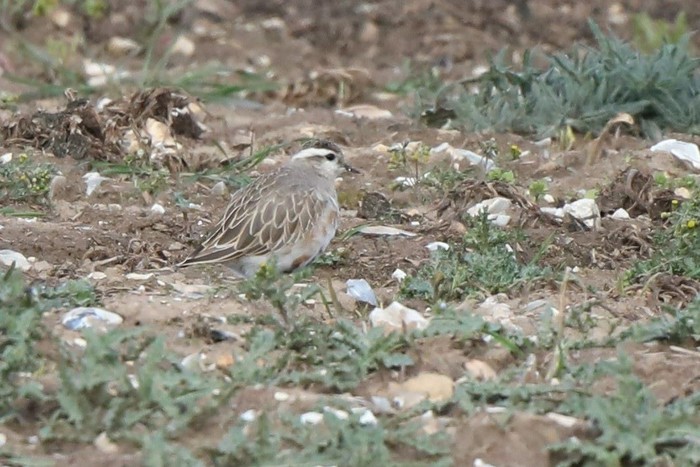
A Dotterel lingered in the beet fields between Great Ryburgh and Colkirk (Norfolk) on 6th-7th, and a trip of four birds was on Doune Hill (Argyll & Bute) on 7th.
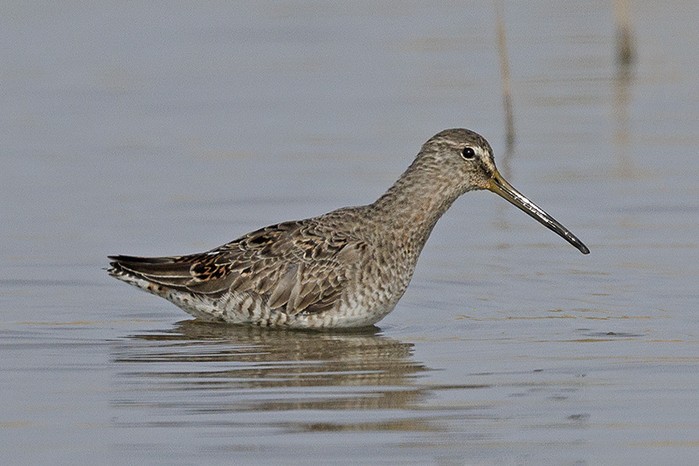
Recent Long-billed Dowitchers remained at Cley (Norfolk) on 4th-10th, at Burton Mere Wetlands RSPB (Cheshire & Wirral) again on 9th, and on Sanday (Orkney) on 7th-10th still.
An adult Lesser Yellowlegs was seen at Budleigh Salterton (Devon) on 6th-10th.
Finally, on 10th a Pectoral Sandpiper was found at Dundalk (Co.Louth).
The best of the gulls this week was still the adult Ross’s Gull in Aberdeenshire, present off Kinnaird Head and adjacent Cairnbulg on 5th-10th.
In Cornwall, a first-winter Bonaparte’s Gull was found on the Hayle estuary on 5th-9th, with another possible bird at Saltholme RSPB (Cleveland) on 8th, and an adult found on 9th on the Teign estuary (Devon).
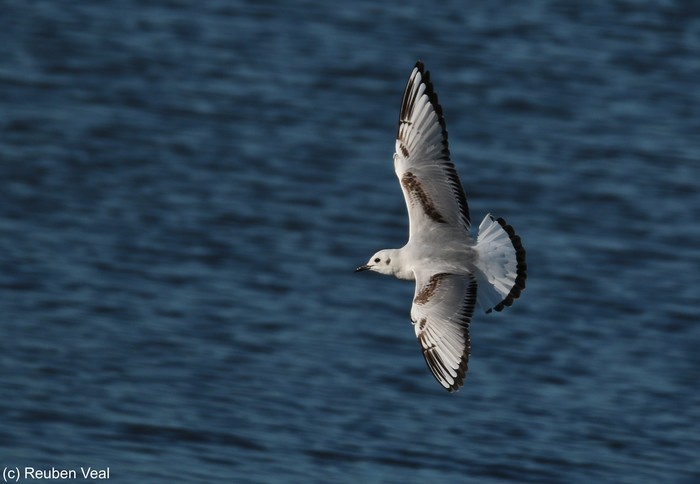
Just two Ring-billed Gulls were reported lately, these being an adult on Benbecula (Western Isles) on 6th, and one again at Cobh (Co.Cork) on 10th.
Absent from the news for a while, the first-winter American Herring Gull was again present at Fort William (Highland & Caithness) on 9th.
Numbers of Glaucous Gulls took another tumble, dropping to just a dozen birds over the course of the week; Iceland Gulls fared better, with 40 birds noted, of which seven on North Uist (Western Isles) still on 7th were the highest count.
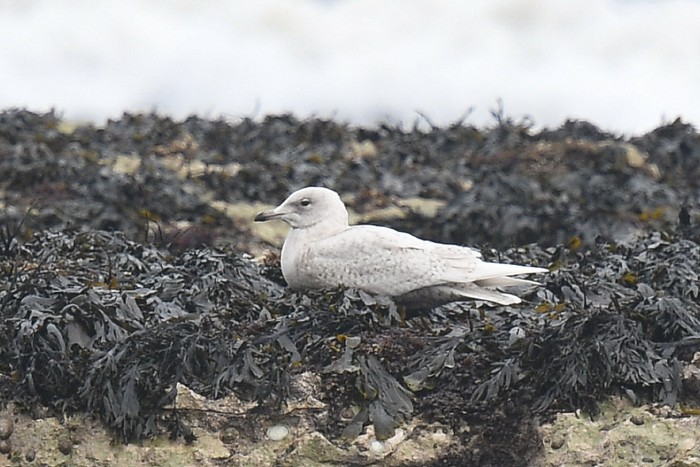
A second-winter Kumlien’s Gull proved locally popular at Widnes (Cheshire & Wirral) on 6th-8th; an adult was seen at Blennerville (Co.Kerry) again on 6th; and another adult at Bantry (Co.Cork) on 4th. On 10th the recent Shetland juvenile was seen on Unst again at Uyeasound.
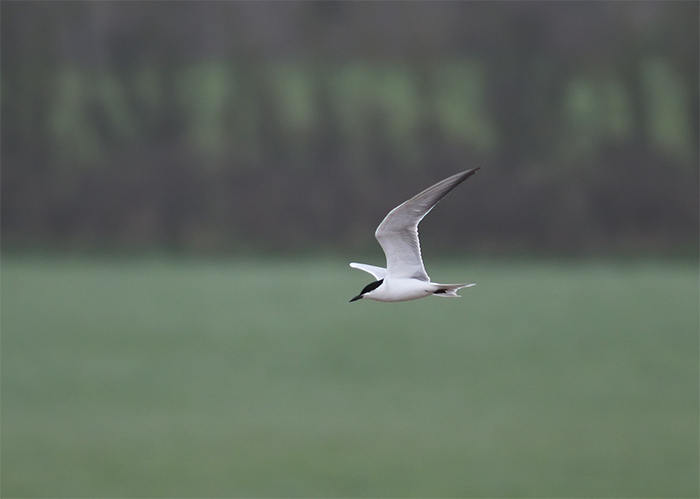
Finally, a Gull-billed Tern was seen at South Huish Marsh (Devon) on 7th-10th.
Into the headlines this week but for the elusive kernel of absolute certainty, a possible female Lesser Kestrel flirted with observers on St Mary’s (Scilly) on 7th-10th.
Also on Scilly, the ringtail Montagu’s Harrier settled down on St Agnes and Gugh on 4th-10th.
Suffolk enjoyed a little run of Rough-legged Buzzard sightings this week, with a bird seen on 4th over Ipswich, a probable also on 4th at Hollesley, and a further possible on 7th at Elmsett. Norfolk too had an unconfirmed report of a bird at Kelling Water Meadow on 8th. Northern stalwarts remained on Shetland Mainland at Black Gaet on 4th-9th, and on Orkney Mainland at Birsay Moors RSPB again on 5th.
The 5th marked a small arrival of Black Kites in southern counties – one in Cornwall at the Hayle estuary, another reported from Beachy Head (East Sussex), and a final bird seen at Ramsgate (Kent).
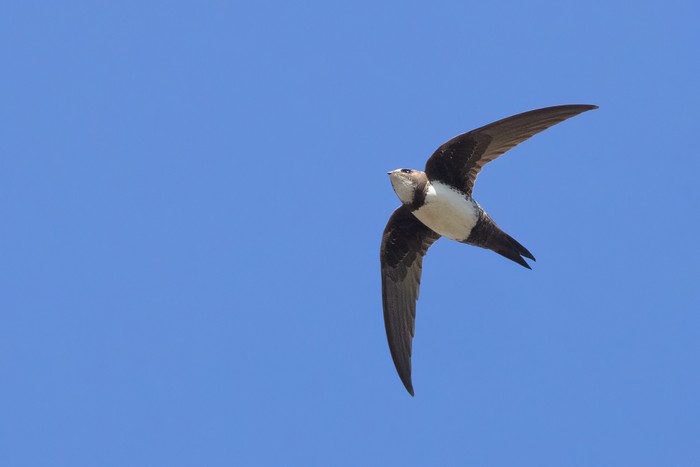
Alpine Swifts continued their recent unprecedented run of British and Irish form for still another week, with some 35 birds noted across the days. At any other time, this would be an exceptional tally but, compared with a couple of weeks ago, it’s a fairly muted offering. Several sites again scored multiple birds – three were seen at Delgany (Co.Wicklow) on 5th; and duos at Bridge of Don (Aberdeenshire) and Teignmouth (Devon) on 4th, St Ives (Cornwall) on 7th, and Glenarm (Co.Antrim) on 8th.
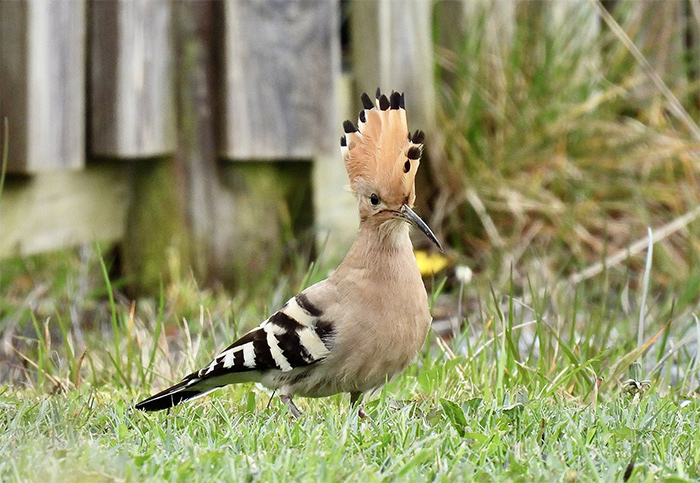
Hoopoes enjoyed another strong week, with double figures of their kind comfortably seen across the region. Birds remained at Old Head of Kinsale (Co.Cork) on 4th, Harman’s Cross (Dorset) on 4th-5th, and Ferryside (Carmarthenshire) on 4th-6th. New birds were found on 4th at Cemlyn Bay NWWT (Anglesey), near Londonderry (Co.Derry), and on 4th-10th on Portland (Dorset); on 5th on Portland, at Port Edgar (Lothian), near High Wycombe (Buckinghamshire), and at Perranporth (Cornwall); on 7th-8th at Torquay (Devon); and on 8th near East Prawle (Devon), at Rhoshirwaun (Gwynedd), at Landshipping Quay (Pembrokeshire), and on Cape Clear (Co.Cork). On 9th birds were reported from St Martin’s (Scilly) and Carnon Downs (Cornwall) and, on 10th, a further report of one seen from a moving vehicle came from Ixworth Thorpe (Suffolk).
Another welcome harbinger of spring checked in this week - Wrynecks seen on Scilly on 7th on Bryher and St Mary’s, and again on St Mary’s on 10th.
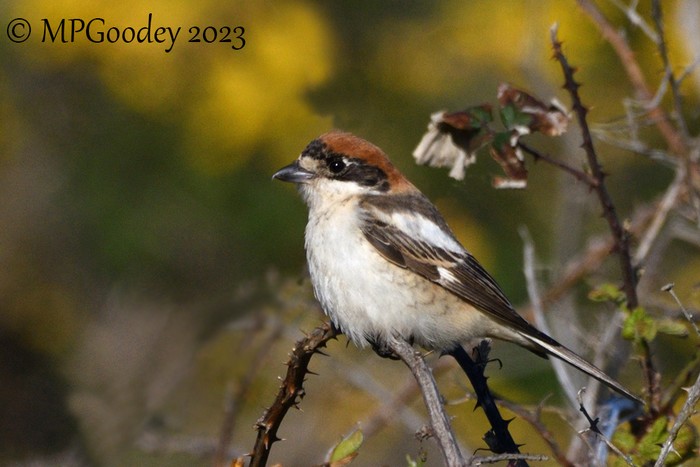
St Mary’s also landed itself a Woodchat Shrike on 6th-10th, with another found at Ballycusheen (Co.Cork) on 7th-10th, another on Scilly on Tresco on 10th, and the Nanjizal Valley (Cornwall) female still present there on 4th-10th – the latter joined in the county by birds found on 10th at Polgigga and near St Just.
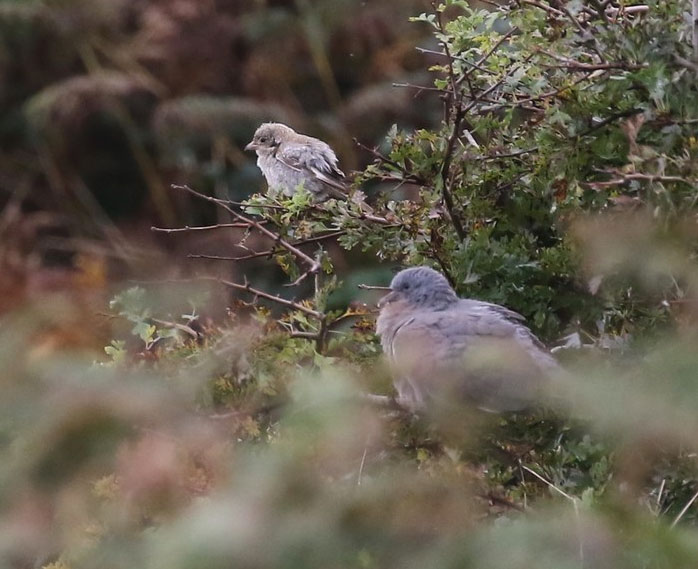
Great Grey Shrikes remained on their winter stations at Hothfield (Kent) on 4th-10th, Black Down NT (West Sussex) on 4th-7th, and at Shatterford (Hampshire) on 6th-7th.
A Penduline Tit made a fleeting appearance at Rye Meads RSPB (Hertfordshire) on 4th.
Eleven Waxwings remained in Inverness (Highland & Caithness) on 4th, while a single bird was seen that day also at Ballymena (Co.Antrim). Three more were found on 9th at Lossiemouth (Moray), with a single bird that day in Aviemore (Highland & Caithness). On 10th the week’s final bird was found at Rothiemurchus (Highland & Caithness).
A Red-rumped Swallow was found at Flamborough (East Yorkshire) on 5th; another was seen on 10th at North Foreland (Kent).
A Yellow-browed Warbler was singing on The Mullet (Co.Mayo) on 8th.
The Hume’s Warbler remained in Kent at Folkestone on 9th.
A possible Iberian Chiffchaff was trapped and ringed in an area with no public access at Kingfishers Bridge NR (Cambridgeshire) on 9th.
An unconfirmed report came of a Western Bonelli’s Warbler in Dorset at Ringstead Bay on 8th.
A Savi’s Warbler was found in song at Burton Mere Wetlands RSPB (Cheshire & Wirral) on 10th.
Norfolk remained the focal point for early Bluethroats this week, with male and female individuals still present on Blakeney Point on 4th, and additional birds found on 4th at Cley, and on 5th at Weybourne Camp.
The Richard’s Pipit was still present on St Mary’s (Scilly) on 4th-10th; better still, a Tawny Pipit was found on the island on 9th.

In Suffolk the Eastern Yellow Wagtail remained at Carlton Marshes SWT on 4th-10th. The first of the spring’s Blue-headed Wagtails checked in on 9th at St Gothian Sands LNR (Cornwall) and Grafham Water (Cambridgeshire).
Pretty much a weekly fixture now in Kent, several Serins were logged in the county this week – at Foreness Point on 4th; North Foreland on 5th; Dungeness on 5th, where three birds were hanging out with the local Linnets, and again a single bird there on 9th; and on 8th at Langdon Cliffs NT and Pegwell Bay. Away from Kent, the scraps from the table fell to St Catherine’s Point (Isle of Wight) on 5th; Pendeen (Cornwall) on 5th; Flamborough (East Yorkshire) on 7th-8th; Portland (Dorset) on 8th-9th; Frinton-on-Sea (Essex) on 8th; Cwmyoy (Gwent), where two birds were reported on 9th; and St Buryan (Cornwall) on 9th.
Short video of the Serin from the lucky birders garden pic.twitter.com/lw5E35gue8
— Flamborough Bird Observatory (@FlamboroughBird) April 8, 2023
Finally, in Cornwall the wintering Little Bunting remained at Metherell on 6th.
Starting the overseas news furthest from home, in Israel the sub-adult Yellow-billed Stork remained settled at Ma'ale Gilboa fishponds on 4th-10th.
"The most fun aspect in birding is the failure, along with the bitterness and dovetailed dark misery, which we wear like a victorious wreath...." @IshPiki tries not to enjoy a rare Yellow-billed Stork last week - what's his problem? Find out here: https://t.co/aKP5REiGYT pic.twitter.com/FfLrUONmfs
— BirdLife Israel (@BirdLifeIsrael) April 8, 2023
In Cyprus the male Diederik Cuckoo continued to linger at Famagusta on 4th-8th.
A Semipalmated Plover was again seen on Tenerife (Canary Islands) on 4th.
Spain’s Sora remained at El Astillero on 4th.
An Eastern Bonelli’s Warbler was seen in France at La Tour du Valat on 3rd-4th.Finally, in Sweden the Baltimore Oriole was still present this week in Förslöv on 4th-9th, and the male Siberian Rubythroat remained at Trollhattan on 4th-9th.
With the prior week ending with a Camberwell Beauty still present at Wisley Common (Surrey) on 3rd, having been present there since 27th March, it’s perhaps time to open our eyes to the possibilities of rarer migrant butterflies once more. The Wisley Common individual remained there as the new week began on 4th, and another was seen on 4th in Suffolk in Little Stonham.
After a week of poor weather I was surprised and delighted to find the Camberwell Beauty still at Wisley yesterday. Pic courtesy @surreywt pic.twitter.com/drhsXmrBQz
— Chris Wilkinson (@Birdsbuttsandn1) April 4, 2023
More promisingly from a recolonisation perspective, the past week featured a scatter of Large Tortoiseshell sightings. While sightings at some sites in Dorset and East Sussex have been tainted in recent years by persistent rumours of deliberate releases (or to use the term du jour,‘re-wilding’), the species’ recent run of good fortune on the near continent surely gives credence to most records. Recent sightings have come from East Sussex at Telscombe on 2nd, where three insects were seen in a garden, Birling Gap on 6th-7th, Caneheath and Ringmer on 7th, and Northiam on 9th; West Sussex on 5th at Perry Hill; on the Isle of Wight at Hill Heath on 4th and Shalfleet on 7th; Kent at Herne Bay and Orlestone Forest on 4th; and Blackheath (Suffolk) on 9th.
Large Tortoiseshell 9th April 2023.
— BC Suffolk Branch (@BC_Suffolk) April 9, 2023
Location: Blackheath Wenhaston.
Grid Ref: TM423746
Large Tortoiseshell was on the edge of SWT Church Farm Marshes & Blackheath, Wenhaston.
Jane Ferguson. pic.twitter.com/3Tez1o5RMT
A butterfly to look out for in the coming week(s), and one to keep our fingers crossed that it may yet find a toehold in southern England without the interference of well-meaning individuals.
Mid-April, and historic records tell us that almost anything starts to be possible at this juncture. Wayward waders from both sides of the pond, Palearctic and Nearctic passerines, great gulls, and the really eye-popping stuff like the returning Ancient Murrelet that checked in off the Devon coast again on 14th April 1991 – will we ever see its like again? – and the Great Blue Heron that appeared on Scilly on 14th April 2015, and went on to stay there until 6th May.
In short, the coming week can prove a fruitful time for the rarity-hunter. The past week’s not been a bad one for long-legged beasties of various kinds, and there will surely be more Night and Purple Herons bumped into during the week ahead. It’s also coming to the time of year when a Little Bittern doesn’t feel like an unreasonable punt.

Jon Dunn
11 Apr 2023
Many thanks to all this week's contributors for your photos and videos
Share