Small seabirds rely on crosswinds to navigate the open ocean
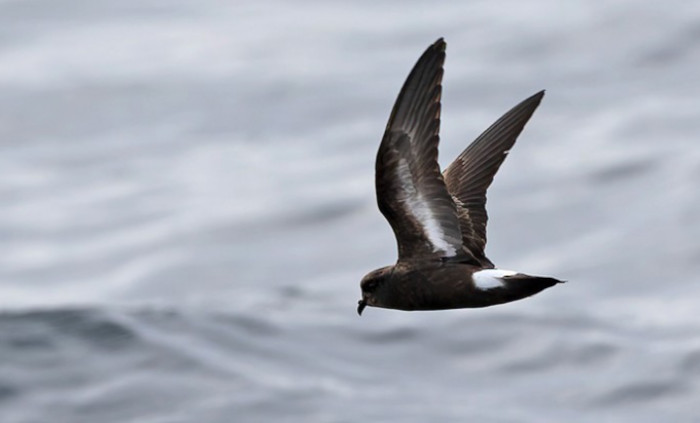
Storm Petrels are among the smallest and most mysterious seabirds. Until recently, the use of biologgers to track their movements was impossible. A new study published in Biology Letters reveals that they routinely travel hundreds of kilometers while deliberately seeking crosswinds, an unexpected strategy that slows their flight but may help them survive above the open ocean.
"These findings indicate that Storm Petrels face a trade-off between movement efficiency and information gain," said Francesco Ventura, a postdoctoral investigator at the Woods Hole Oceanographic Institution (WHOI) and a co-author of the study.
"Flying crosswinds slowed them down, but helped facilitate navigation and prey detection through smell. Overall, our study offers new perspectives on the adaptations required to sustain aerial life in the marine realm and highlights the adaptability of seabirds in exploiting the windscape through strategic flow negotiation."
"Storm Petrels are among the most secretive seabird species, yet they have long captivated sailors, giving rise to numerous myths and legends surrounding them," said Federico De Pascalis, lead author of the study and movement ecologist at the Italian Institute for Environmental Protection and Research (ISPRA). "Despite the fascination they have inspired, scientists have historically known far less about the flight behavior of small seabirds than larger species because tracking technology was too heavy for them to carry."
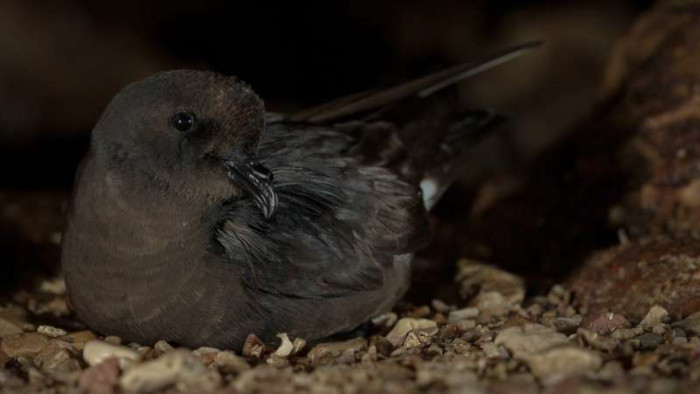
To overcome that challenge, researchers collected GPS data from 25 Storm Petrels using lightweight biologgers during the 2020 and 2021 breeding seasons in Sardinia, Italy. These tracking devices weighed just 3.3% of the birds' body mass and showed no measurable effects on mass gain, hatching success, or foraging trip duration.
"By linking GPS positions with wind conditions at sea, researchers were able to uncover how the tiny seabirds strategically use the atmosphere during flight," De Pascalis continued. "Wind influences nearly every aspect of a seabird's life over the ocean, from how they fly and forage to where they travel and survive. But we still do not fully understand how different species, especially birds of different sizes and flight styles, respond to those changing wind conditions."
Researchers are now investigating whether seasonal and year-to-year changes in wind conditions alter the energetic cost of flight and ultimately affect breeding success and survival. This work is part of a larger, WHOI-led, collaborative research initiative called "Soaring Across Scales."
Caroline Ummenhofer, a physical oceanographer at WHOI and principal investigator of the project, concludes: "We aim to understand the ubiquitous impacts of wind on seabird ecology at multiple scales, including the energetic costs of flight of individuals to large-scale population movements and demography."
These findings underscore the tight coupling between the ocean and atmosphere, and how the smallest seabirds are shaped by that relationship. By reading and responding to wind at sea, Storm Petrels could reveal new information about how energy and nutrients are distributed across the open ocean.
Woods Hole Oceanographic Institution
13 May 2026
Get Breaking Birdnews First
Get all the latest breaking bird news as it happens, download BirdAlertPRO for a 30-day free trial. No payment details required and get exclusive first-time subscriber offers.
Share this story