Skylarks and Powerlines: No Cause for Alarm, Say Scientists
As renewable energy infrastructure expands across Europe, concerns over its impact on wildlife remain at the forefront of conservation debates. One such concern has been whether the Eurasian Skylark - a songbird known for its love of open landscapes - actively avoids powerlines, potentially leading to habitat loss. However, a new study suggests that these fears may be overblown.
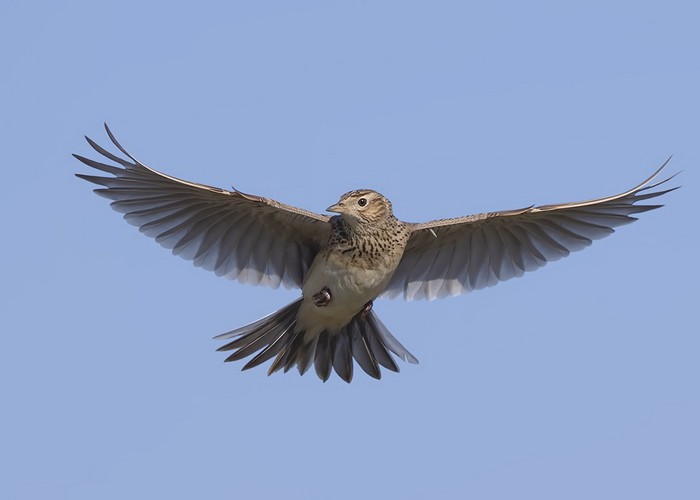
Researchers in Germany set out to investigate whether Skylarks steer clear of powerlines and their towering pylons in agricultural landscapes. The findings, published in Bird Conservation International, reveal that Skylarks show no significant avoidance of powerlines - contradicting earlier studies that had suggested the opposite.
A Songbird at Risk
The Eurasian Skylark, once a common sight across European farmlands, has suffered dramatic population declines in recent decades. The intensification of agriculture - marked by larger field sizes, increased pesticide use, and fewer fallow areas - has reduced suitable nesting sites, making the species a focus of conservation efforts.
As part of the European energy transition, high-voltage powerlines are being constructed to transport renewable energy from wind and solar farms to urban centres. Conservationists feared that these new structures might create additional pressures on Skylark populations by forcing them out of their remaining habitats.
The Study: Testing the Powerline Hypothesis
To test whether Skylarks avoid powerlines, researchers surveyed farmland north of Frankfurt in 2020. They mapped Skylark territories and used statistical models to determine whether powerlines or pylons influenced where the birds settled. Surprisingly, neither powerlines nor pylons played a significant role in Skylark territory selection.
Instead, the study found that Skylarks were more likely to establish territories further away from roads and settlements, supporting previous research suggesting that human activity, rather than power infrastructure, is the real deterrent. The presence of winter grain was also a strong predictor of Skylark territories, likely because the crop provides suitable vegetation cover during the breeding season.
Implications for Conservation and Energy Planning
These findings could have major implications for conservation policies and infrastructure planning. Current regulations in Germany assume that Skylarks avoid powerlines, leading to strict restrictions on placing conservation measures - such as wildflower strips - near power infrastructure. This study suggests that such regulations may be unnecessary and could even hinder conservation efforts by limiting the available space for habitat restoration.
While the research provides reassurance that powerlines do not significantly impact Skylark populations, it also highlights a more urgent issue: the continued loss of farmland habitat due to modern agricultural practices. The researchers argue that conservation efforts should focus on maintaining diverse, small-scale farming landscapes with suitable nesting conditions rather than worrying about the placement of powerlines.
A Brighter Future for Skylarks?
Despite their remarkable ability to thrive in human-altered landscapes, Skylarks continue to face challenges. Their long-term survival will likely depend on how agricultural policies evolve in the coming years. While energy infrastructure is often blamed for wildlife declines, this study suggests that the real culprit may be industrialised farming.
As the push for greener energy continues, it is crucial that conservation strategies are based on robust scientific evidence. The new findings suggest that, at least for Skylarks, powerlines may not be the threat they were once thought to be. Instead, the song of the Skylark may continue to ring out across the fields - powerlines and all.
Read the full paper here.
4 Mar 2025
Share this story