Six Whooper Swans killed in power-line collision near Turriff
Four adults and two juveniles died beside the River Deveron. New Arc Wildlife Rescue wants to discuss marking the wires to prevent another collision.
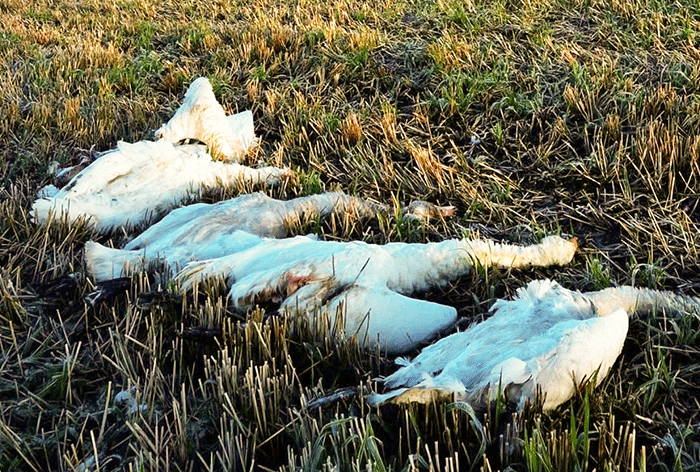
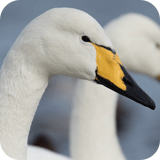
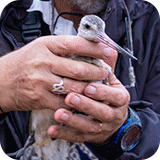
Six Whooper Swans died after their flock struck overhead power lines beside the River Deveron, just north of Turriff in Aberdeenshire, on Sunday 22 November. A landowner who lost power to his property that morning found the birds. Five were dead when New Arc Wildlife Rescue arrived. The sixth was so badly injured that the rescuers had to put it to sleep.
New Arc has reported the collision to NatureScot and says it will contact Scottish and Southern Electricity Networks about the stretch of line where the birds died. The charity wants to discuss fitting bird diverters to the wires. No work at the site has yet been announced.
The danger for wintering Whooper Swans often lies on the short flight between feeding and roosting sites. Birds arriving in Britain from Iceland spend much of the day on farmland, grazing or taking grain and potatoes left after harvest. Towards dusk, flocks leave the fields to roost on open water. A wire strung across that route can put the same birds at risk on the way out and again on the way back.
“Every year, we attend numerous incidents involving swans, geese and gulls injured or killed following collisions with overhead power lines.” New Arc Wildlife Rescue
A pole or pylon may stand out clearly while the wire between it and the next one all but disappears against a hillside. In poor light a flock may not pick it out until it is close, and a heavy swan needs room to climb or turn. That helps explain why casualties can be concentrated along one short section of a line while birds cross safely elsewhere.
Bird diverters make the wire itself easier to pick out. Fitted at intervals along a span, they give approaching birds a series of visible points to steer clear of. A dark marker shows up against pale sky; a light one is easier to see against trees or a dark slope. From the air, the background can change as a flock approaches, which is why contrast and movement matter.
The network has acted on reports of this kind before. At Caversham Lakes near Reading, SSEN worked with the Swan Sanctuary to identify where local swans crossed its overhead lines. Engineers fitted diverters along their flight path in 2020. The work there was targeted at the places the swans actually used, rather than the entire length of the line.
New Arc is asking anyone who finds dead or injured birds beneath overhead wires to report the location. In Scotland, details can be sent to the network operator and recorded using NatureScot's bird collision form. A precise location helps distinguish repeated strikes at one span from separate incidents along the same line.
24 November 2026
Get Breaking Birdnews First
Get all the latest breaking bird news as it happens, download BirdAlertPRO for a 30-day free trial. No payment details required and get exclusive first-time subscriber offers.