Rock Pipits to be tracked in new Scottish migration study
New Motus tracking project in Fife set to unlock migration mysteries of coastal birds
Innovative tracking begins
A pioneering bird tracking project has been launched in the East Neuk of Fife through a partnership between the Scottish Ornithologists’ Club and the Tay Ringing Group. The initiative aims to shed new light on how birds move throughout the year, particularly species whose journeys remain poorly understood. The project makes use of the Motus Wildlife Tracking System, a global network of automated receivers designed to detect signals from tiny radio tags fitted to individual birds.
Studying Rock Pipits along the coast
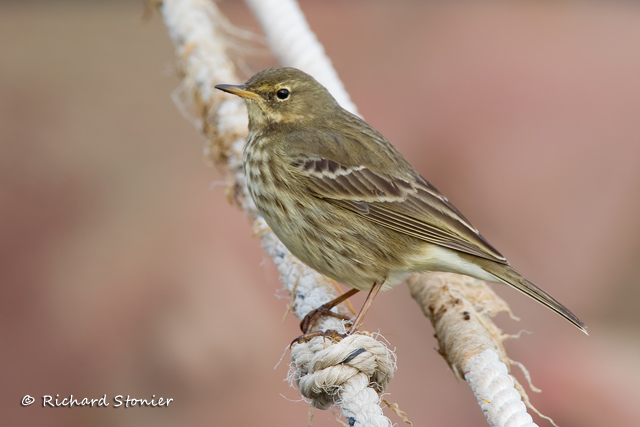
The study focuses on the Rock Pipit Anthus petrosus, a familiar but surprisingly enigmatic coastal bird found along Scotland’s rocky shores. While many Rock Pipits breed locally and remain year-round, winter numbers increase as birds arrive from Scandinavia. By tagging individuals and following their movements, researchers hope to clarify seasonal movement patterns and understand how Scottish birds are linked to populations elsewhere in northern Europe.
First Motus-tagged birds in Scotland
Licensed bird ringers from the Tay Ringing Group have fitted Motus tags to two Rock Pipits at Crail, marking the first time birds in Scotland have carried these transmitters. Each tag weighs just 0.3 g and emits a unique signal that can be detected by receivers up to 10 km away. These detections allow scientists to build a detailed picture of individual movements over time without the need to recapture the birds.
Early results already revealing surprises
Even at this early stage, the project has demonstrated the potential of the Motus network. The receivers have detected the first foreign-tagged bird recorded in Scotland – a Blackbird Turdus merula that travelled more than 500 km overnight from Norway to Fife. The record highlights how rapidly birds can move between countries and how much remains to be discovered about their movements.
Expanding Scotland’s tracking network
At present, the three Motus receivers installed for this project are the only ones operating in Scotland. The partners hope that demonstrating the value of this technology will encourage others to install additional receivers, strengthening national and international coverage. A wider network would greatly improve understanding of migration routes, survival, and habitat use at a time when many bird populations are facing increasing environmental pressures.
January 2026
Get Breaking Birdnews First
Get all the latest breaking bird news as it happens, download BirdAlertPRO for a 30-day free trial. No payment details required and get exclusive first-time subscriber offers.
Share this story