Researchers Pinpoint the Perfect Pace for Migrating Thrush Nightingales
Wind tunnel experiments show that thrush nightingales reach peak energy efficiency at speeds used during migration, reshaping our understanding of avian flight
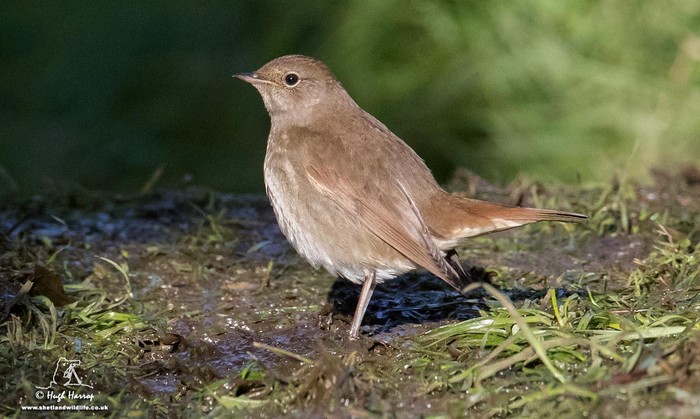
Testing the efficiency of flight
Flying is one of the most energy-intensive forms of movement in the animal kingdom, yet it allows birds to cross continents during migration. Until now, scientists assumed that birds converted fuel into flight power at a constant rate across all speeds. A new study published in Current Biology challenges that view, showing that thrush nightingales are most efficient at intermediate flight speeds – the very speeds they use for long-distance migration.
Researchers at Lund University measured both the metabolic energy birds used and the mechanical power they generated while flying in a wind tunnel. This allowed them to calculate energy conversion efficiency – the proportion of chemical energy turned into useful flight power. Rather than being constant, efficiency followed an inverted U-shape, peaking at around 15 per cent when the birds flew at 7–8 metres per second.
A match between physiology and ecology
The fact that peak efficiency coincides with the speeds used during migration suggests that natural selection has finely tuned birds’ flight performance. These are the speeds at which the cost of flight is minimised and the distance travelled per unit of fuel is maximised.
The results also reveal that efficiency drops at both slower and faster speeds, meaning that hovering, slow manoeuvring, or high-speed dashes come at an additional energy cost. This pattern mirrors what is known from human locomotion, where stride length and pace influence energy efficiency.
Challenging long-held assumptions
For decades, flight models have assumed a flat efficiency of about 23 per cent. But the new study found actual whole-animal efficiency was lower, topping out at 15 per cent in thrush nightingales. Muscle efficiency was slightly higher, close to 20 per cent, but still below the values used in models.
This matters because flight models underpin predictions about how far and how fast birds can travel on migration. The discovery that efficiency is lower and variable across speeds may explain why some theoretical estimates fail to match the extraordinary real-world journeys of long-distance migrants.
Implications for migration research
Although the study focused on thrush nightingales, the findings are likely relevant to other small birds that rely on sustained flapping flight. Birds that perform extreme non-stop migrations, such as some waders, may show different adaptations, with efficiency potentially increasing over multi-day flights.
The researchers argue that more experimental work across species is needed to refine models of avian flight. Understanding these physiological limits is vital for predicting how birds will cope with climate change, shifting wind patterns and longer migratory journeys in the future.
September 2025
Share this story