


Hundreds of seabirds found dead around UK coasts after winter storms
RSPB calls for urgent delivery of seabird protection measures as Puffins, Guillemots and Razorbills among species reported in recent ‘wreck’
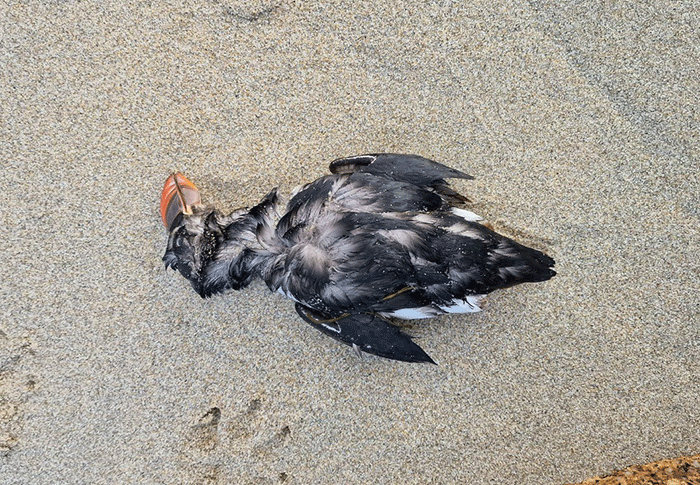
Seabirds washed ashore from Cornwall to Scotland
Hundreds of seabirds have been found dead along coastlines in recent weeks following a period of severe winter storms, prompting renewed concern for already declining populations.
Reports have come from Cornwall and Devon, north-east England, and northern and eastern Scotland. Across the wider region, many thousands more seabirds have been recorded dead along the coasts of Portugal, Spain, France and the Channel Islands.
BirdTrack data reveals sharp rise in reports
An increase in recorded seabird deaths beginning in late January was highlighted through BirdTrack, the online bird recording scheme run by the British Trust for Ornithology with support from the RSPB.
Since the start of February alone, 150 dead Puffins, 27 dead Guillemots and 52 dead Razorbills have been logged via the scheme, along with almost 100 other seabirds including divers and sea ducks. These figures represent reported birds and the true number affected is likely to be considerably higher.
Storm conditions and disease not ruled out
While the precise cause of the seabird wreck has yet to be confirmed, recent winter storms are thought to have created extremely challenging feeding conditions at sea. Prolonged rough weather can prevent seabirds from accessing prey, leaving them weakened, exhausted and vulnerable to starvation.
Avian Influenza has not been ruled out as a possible contributing factor. Members of the public who encounter dead wild birds are advised not to touch them, but to report sightings to the relevant authorities for possible collection and testing, and to log them through BirdTrack to aid monitoring.
A population already under strain
The longer-term population impact of these losses will not become clear until birds return to breeding colonies in the coming months. However, the context is already troubling.
Across the UK, 62% of seabird species are in decline, rising to 70% in Scotland. When the first UK Birds of Conservation Concern Red List was published in 1996, only one seabird species appeared on it. Today, ten of the UK’s 25 breeding seabird species are Red-listed, including Puffin and Kittiwake.
Calls for urgent delivery of agreed strategies
Seabird Conservation Strategies have already been agreed by governments in England, Wales and Scotland. The RSPB says the priority now must be urgent implementation and proper resourcing.
In practical terms, this includes better management of fisheries so seabirds can feed safely, measures to prevent seabirds becoming entangled in fishing gear, strengthening and completing marine protected area networks, and ensuring breeding islands remain free from invasive predators.
Concerns over offshore development
The charity also stresses that new offshore wind developments must be carefully planned to avoid the most sensitive feeding areas. Concerns have been raised about the location of some proposed projects in areas used by globally important seabird populations.
Building resilience in a changing climate
Mass seabird wrecks following severe winter weather are not new. However, conservationists warn that populations already weakened by unsustainable fishing, disease and climate-driven shifts in prey availability are less able to absorb such shocks.
The RSPB says that while extreme weather events cannot be prevented, building stronger and more resilient seabird populations is possible. Without urgent action to reduce existing pressures, events like this winter’s wreck risk having an increasingly significant impact on Britain’s seabird colonies.
February 2026
Get Breaking Birdnews First
Get all the latest breaking bird news as it happens, download BirdAlertPRO for a 30-day free trial. No payment details required and get exclusive first-time subscriber offers.
Share this story





