Released Bearded Vulture found dead, probably killed by Golden Eagle
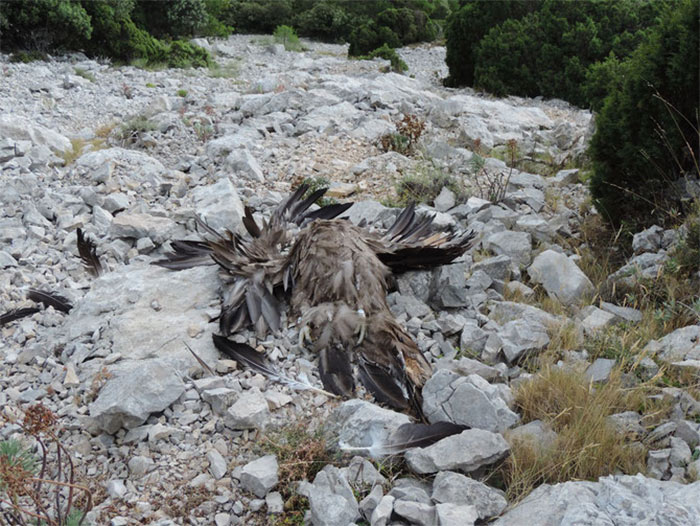
Unfortunately, the captive-bred Bearded Vulture Cocó had a short-lived life in the wild. After she was released in Maestrazgo on 12 June 2020, the project team found her carcass on 9 August.
Releasing Cocó and Celest
This year, we released two Bearded Vultures in Maestrazgo as part of the collaborative efforts to bring the species back to the region.
The young vultures, baptised Cocó and Celest by schoolchildren, were both females. Cocó hatched on 15 March at the Specialised Bearded Vulture Breeding Unit at the Recovery Centre Vallcalent in Lleida, and Celest hatched on 13 March at the Bearded Vulture Captive Breeding Centre of Guadalentín in Jaén, and both were raised in Guadalentín by Bearded Vulture pairs. The Vulture Conservation Foundation manages both facilities following agreements with Generalitat de Catalunya and Junta de Andalucía respectively.
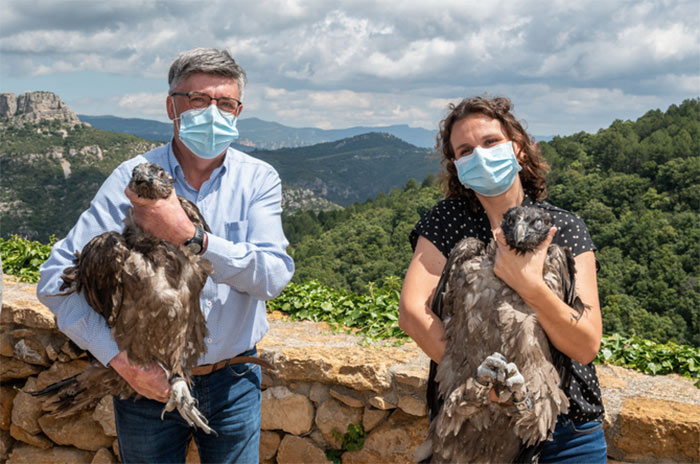
On 12 June, the project team and the regional secretary of Climate Emergency and Ecological Transition, Paula Tuzón, released the two young Bearded Vultures with the hacking method in Castellón, which has been home to the reintroduction project 'Benvingut de nou, Crebalòs' since 2018.
Coco's adaptation to the wild
The hacking period this year has been a bit complicated. Although both birds soon adapted to the place and often ate without difficulties, from the beginning, there was clear domination of Celest over Cocó, with some slightly violent interaction.
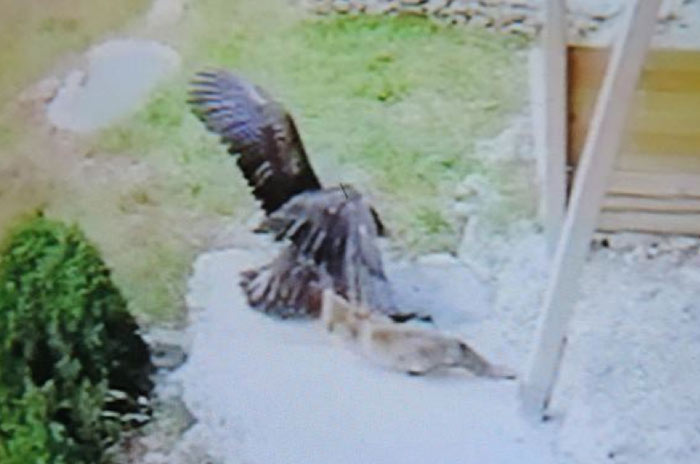
But the most significant issue was caused by the attacks of a fox. Over the past years, a fox would also enter the hacking site, steal some food and leave, but this year it was attacking Cocó every time, which was the one that occupied the lower and more accessible nest. Although Cocó has always defended herself, during one of the last occasions, the animal grabbed her by the wing, pulling out some feathers. To prevent similar incidents, the team placed an electric shepherd's net half a meter away from the hacking, which was very effective since foxes could no longer access the enclosure.
Despite these setbacks, on 22 July, Celest made a first short flight that took her to an area not far from the hacking and then walked up to the rock behind it. Cocó followed suit the next day, flying quite effortlessly for her first attempt.
What killed Cocó?
On 9 August, just a couple of months after exploring the wild of Maestrazgo, the project team found Cocó dead.
The week before, Cocó was seen eating several times and flying, also alongside Celeste. On Saturday, 8 August, the field team could not see Cocó. This situation happened before when both birds found a dead goat near the release site and spent a lot of time away from the hacking site.
However, since the GPS signal was very fixed to the same location, it signified that something was wrong. The team rushed to the location and, unfortunately, found the carcass of Cocó in La Creu on 9 August. After the Environmental Agents retrieved the body, it was transferred to the Center for Recovery of Fauna of El Saler in Valencia where the necropsy was performed.
The most likely cause of death, based on the wounds observed, is the attack of another bird, probably a Golden eagle. It should be noted that on day 4 August, both Cocó and Celest had an attack by a young eagle in the same place, but this time they were unharmed. This occurrence is not unusual both for reintroduced and wild-hatched Bearded Vultures. The Picos de Europa reintroduction project suffered two casualties due to eagle attacks, and several wild Andalusian birds experienced similar interactions as well.
Vulture Conservation Foundation
1 September 2020
Share this story