Proposed Lewis wind farm proposal will kill eagles and other protected species
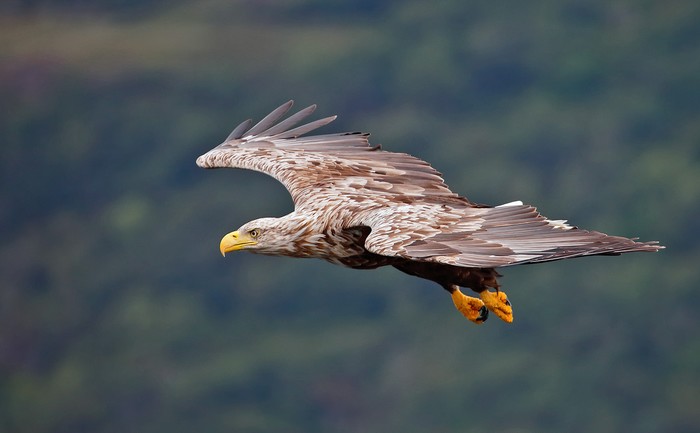
A 33-turbine wind farm proposed near Stornoway is predicted to have significant negative impacts on important bird populations on Lewis, including establishing hen harriers and white-tailed eagles.
RSPB Scotland has submitted an objection to the application, due to the likely scale of impact on birds through risk of collision, displacement and disturbance. The charity is seeking the removal of six turbines.
The proposal would be an alternative to the wind farm consented on the same site in 2012, which has not yet been built. It would be for larger turbines, up to 180 metres in height, with an increased development footprint.
Bird surveys carried out for the new application recorded more bird activity in the area compared to the surveys for the previous application.

These are all species of conservation concern with nationally or internationally important populations on Lewis. Population modelling predicts that this number of collisions would have a significant impact on the size of future populations of these species across Lewis.
In addition to these predicted collisions with turbines, birds are also at risk from displacement and disturbance. Several turbines are proposed close to the nesting and roosting areas of red-throated diver and hen harrier. These species are sensitive to disturbance and usually nest and roost away from areas of human activity and development. RSPB Scotland is concerned that by placing turbines so close to breeding and roosting sites, these bird territories could be lost completely or birds attempting to nest would be disturbed, which could result in nest abandonment. There are established guidelines for ‘disturbance free’ areas around nest sites of sensitive species, but RSPB Scotland is concerned that this guidance has not been followed by the developer, Lewis Wind Power.
RSPB Scotland is particularly concerned about the effect on a new population of hen harriers that has established in the area since 2015. This is the first recorded population of hen harriers to breed on Lewis and now stands at approximately 10 pairs. Hen harriers are nationally scarce, and their population is declining, with the Scottish population estimated to be just 460 pairs. The fortunes of hen harriers elsewhere in Scotland make their appearance on Lewis even more important. RSPB Scotland fear that the current wind farm proposal threatens their future on the island.
In 2018 the remains of a dead golden eagle that had collided with the neighbouring Pentland Road Wind Farm were found. Then in 2020, a white-tailed eagle was rescued by the Scottish SPCA near the same wind farm with severe injuries thought to have been caused by a turbine collision. This bird subsequently died in captivity due to the extent of its injuries. These two suspected eagle collisions have been recorded just a few years into the operation of this small, six turbine wind farm.
Robin Reid, Conservation Officer for the RSPB on the Outer Hebrides said: “We are concerned about what will happen to bird populations across Lewis if this proposal goes ahead in its current form. We know that white-tailed eagles, golden eagles, red-throated divers and hen harriers are susceptible to wind farm impacts and this is highlighted by the recent eagle collisions recorded at the Pentland Road Wind Farm. Whilst it has been exciting to witness the recent appearance of hen harriers nesting on Lewis, which were reported on last year, this proposal now threatens further expansion of harriers on the island. We are supportive of renewable energy development, as it is needed to combat the climate emergency, but proposals must be at a scale and located in areas where they do not have a detrimental impact on wildlife.”
21 January 2021
Share this story