Nightjar Migration Distances Could Increase by Over 40%
New study finds climate change and land-use pressures may dramatically lengthen journeys between breeding and wintering grounds.
Changing conditions across continents
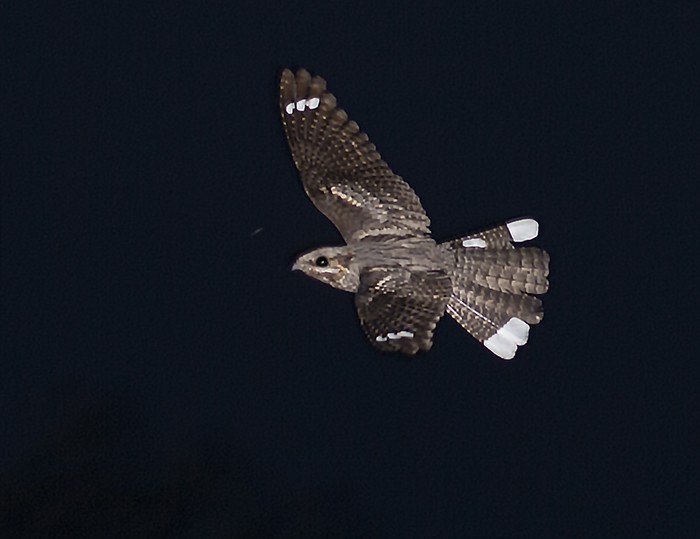
Climate change and large-scale land-use shifts could drastically reshape the migratory landscape for the European Nightjar Caprimulgus europaeus, according to new research combining GPS-tracking data with advanced habitat modelling. While warmer, wetter conditions in some regions might expand suitable habitat during the breeding and wintering periods, the study warns of severe habitat losses along critical migration corridors – especially in the Sahel – by the end of the century.
Researchers used over a decade of GPS tracking from 117 tagged Nightjars, supplemented with open-source occurrence data, to model habitat suitability for four stages of the annual cycle: breeding, autumn migration, wintering and spring migration. These models were run under multiple combinations of climate and socio-economic scenarios, projecting conditions to 2081–2100.
Autumn migration emerges as a weak linkLosses of suitable habitat were most severe during autumn migration, with combined climate and land-use changes projected to shrink stopover areas by up to 49% under high-emission scenarios. These declines were driven largely by climate change, with the Sahel region – a vital refuelling point before crossing the Sahara – predicted to experience hotter, drier conditions and reduced vegetation productivity.
Such habitat loss would force Nightjars to travel longer distances between safe stopovers, potentially increasing energy demands and mortality risk. Under the worst-case scenario, barrier distances between suitable stopover zones on either side of the Sahara could lengthen by over 40%.
Breeding and wintering gains mask hidden risks
In contrast, breeding and wintering habitats showed projected increases in area under most climate change scenarios – up to 72% more breeding habitat under the most extreme warming pathway. However, land-use change alone tended to reduce suitable habitat, especially where cropland expansion or conversion of open woodlands is expected.
Importantly, the apparent stability or growth in total habitat masks high turnover: large areas are predicted to be lost while new ones emerge elsewhere. This redistribution could disrupt migration routes and make it harder for birds to find and exploit newly suitable areas, especially given the species’ reliance on learned or innate migration paths.
Implications for conservation
The study highlights the need for targeted conservation in key stopover regions, especially in and around the Sahel, to ensure future migratory connectivity. Protecting both current and projected future habitats – including potential corridors and refuges – will be essential if Nightjars are to adapt to shifting environmental conditions.
By modelling the full annual cycle rather than just breeding or wintering periods, the research underscores how climate and land-use changes interact differently at each stage, and why conservation planning must account for these seasonal dynamics.
August 2025
Share this story