


New Steamerduck species confirmed in Chile
Bioacoustic evidence and subtle differences in bill colour reveal that a Chiloé population is distinct from the Magellanic Steamerduck

A distinct species hidden in plain sight
A new species of Steamerduck has been formally described from southern Chile, resolving a long-standing uncertainty within the genus Tachyeres. Birds from the Chiloé and Aysén regions have now been recognised as a separate species, Tachyeres ketru, rather than part of the widespread Magellanic Steamerduck Tachyeres pteneres.
Despite being known for decades, this population was consistently grouped with T. pteneres due to their near-identical size, structure and overall plumage.
Vocalisations provide the clearest separation
The study places particular emphasis on bioacoustics, showing that vocal differences offer a reliable way to separate the taxa. While some calls are broadly similar across the genus, key contact calls differ consistently in structure and pattern, providing diagnostic evidence for species status.
These findings support earlier suggestions that sound may be critical in resolving relationships within Tachyeres, where visual differences are often minimal.
Subtle but consistent physical differences
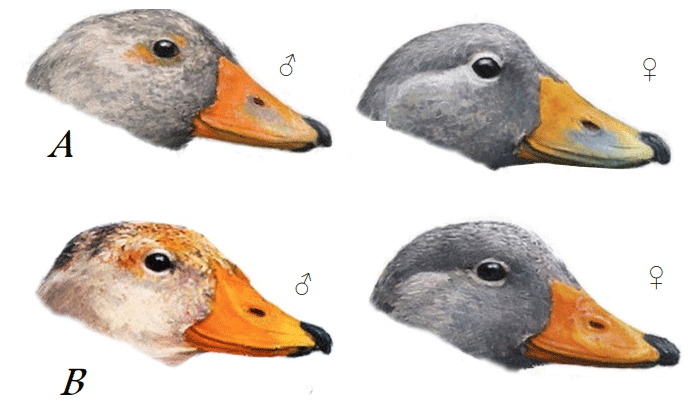
Alongside vocal evidence, the study highlights clear differences in the colouration of the bill. Birds from Chiloé and Aysén show sexual dichromatism, with greyish or greenish patches beneath the nostrils, particularly pronounced in females.
In contrast, T. pteneres shows a more uniform bill colour without such dichromatism. These differences are consistent across the population and are not linked to seasonal moult.
Why it remained overlooked
The study suggests that the distinction went unrecognised largely because traditional taxonomic methods were insufficient. Measurements such as body size, wing structure and weight overlap widely between Steamerduck taxa and do not provide clear separation.
In addition, museum specimens often fail to preserve the true colour of bare parts such as bills, obscuring one of the key distinguishing features of the newly described species.
Recent genetic work has also complicated the picture, showing unusual patterns within the genus, including variation in flight ability within what may be single species.
A geographically and ecologically distinct population
The new species is endemic to southern Chile, occurring from around Valdivia south to the Taitao Peninsula. This peninsula appears to act as a natural boundary separating it from T. pteneres further south.
The two species also occupy different coastal environments. Tachyeres ketru is associated with sheltered bays and inland channels rich in macroalgae, while T. pteneres is more typical of exposed coasts with stronger wave action.
Implications for Steamerduck taxonomy
The findings add to a growing body of work reshaping understanding of the genus. The study also revises earlier assumptions about key reference material, replacing a neotype previously assigned to T. pteneres that in fact corresponds to the newly described species.
By combining vocal, morphological and ecological evidence, the research demonstrates how cryptic diversity can persist undetected even in relatively well-studied birds.
A case for listening more closely
The confirmation of Tachyeres ketru highlights the importance of bioacoustics in modern ornithology, particularly for groups where visual differences are limited.
It also serves as a reminder that even large and familiar species may conceal overlooked diversity, only revealed through careful, multi-disciplinary study.
Read the full paper here
March 2026
Get Breaking Birdnews First
Get all the latest breaking bird news as it happens, download BirdAlertPRO for a 30-day free trial. No payment details required and get exclusive first-time subscriber offers.
Share this story





