New Science Shows Even Modest Road Traffic Disrupts Key Icelandic Bird Habitats
Scientists report significant drops in breeding bird density close to roads, despite relatively low traffic volumes
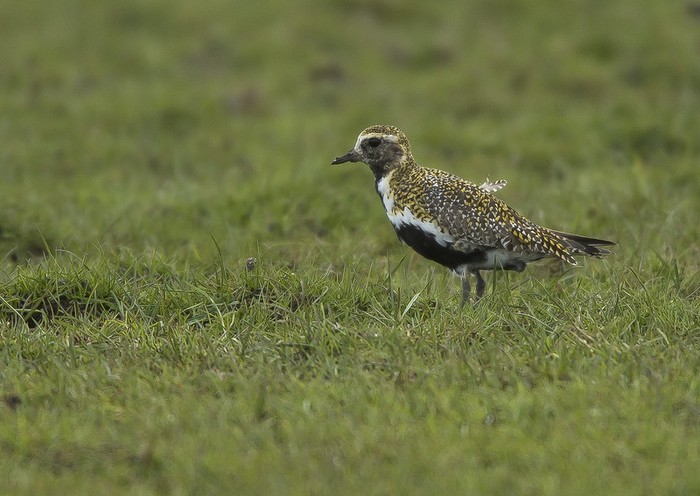
A new scientific study has revealed that even low-traffic roads in Iceland’s open lowland landscapes can significantly reduce the abundance of ground-nesting birds – including internationally important populations of breeding waders.
Researchers surveyed 400-metre transects running perpendicular to low-traffic roads (defined as =15,000 vehicles per day) across southern Iceland. The work, carried out in 2018–19, used decades of knowledge from Iceland’s raptor and wader research community to pinpoint how bird densities change with distance from roads.
The results show a clear pattern: bird numbers increase steadily as you move away from the road. On average, total abundance rose by 6% with every 50 metres of distance, levelling out only once surveys were more than 150–200 metres from the road edge. Within this 200-metre zone, densities were roughly 20% lower than farther away.
Four species were particularly affected – Whimbrel, Golden Plover, Dunlin and Meadow Pipit – all found in significantly reduced numbers close to roads. Dunlin also declined more sharply on roads carrying heavier traffic within the “low-traffic” category. Other species such as Black-tailed Godwit, Snipe, Redshank and Redwing showed either no response or, in the case of Redwing, occasional higher densities around busier stretches.
Because roads now reach deep into Iceland’s lowlands, these local effects add up. The study estimates that 17.4% of lowland Iceland lies within 200 metres of a road. If bird densities are already 20% lower within that zone, road proximity may have caused an approximate 3.5% reduction in overall lowland bird abundance to date – a figure likely to rise as the network expands.
The authors highlight several possible reasons for the declines. These include increased mortality from vehicle collisions, disturbance from noise and human activity, changes in vegetation structure around road verges, and altered predator access. For species like Whimbrel and Golden Plover, which nest in open habitats and rely on good visibility to detect predators, even modest roadside changes to topography or vegetation could be enough to make habitat less suitable.
The results underline a wider conservation challenge. Iceland hosts around 1.5 million breeding pairs of waders, most of them in the lowlands. Even modest losses or behavioural displacement linked to infrastructure could therefore have population-level consequences.
The study concludes that protecting significant areas of open lowland habitat from further roadbuilding – alongside understanding how predators, vegetation and human activity interact with roadside disturbance – will be key to limiting impacts on this internationally important bird community.
December 2025
Get Breaking Birdnews First
Get all the latest breaking bird news as it happens, download BirdAlertPRO for a 30-day free trial. No payment details required and get exclusive first-time subscriber offers.
Share this story