Lynx captured after illegal release in Highlands
Two lynx that were unlawfully released in the Highlands have been successfully recaptured by the Royal Zoological Society of Scotland (RZSS).
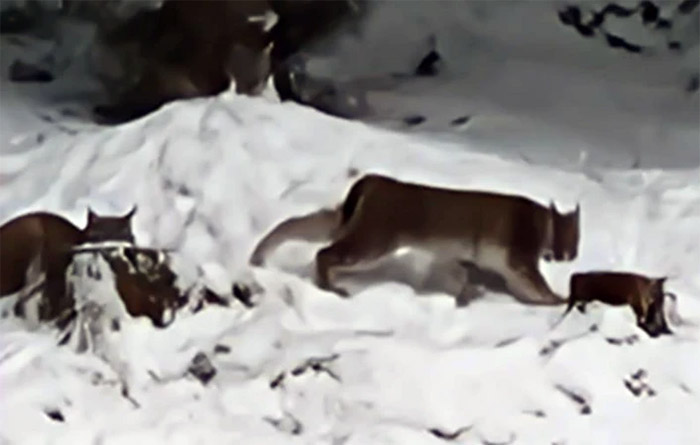
The alert was raised around 16:20 on Wednesday when the animals were sighted in the Drumguish region, close to Kingussie. RZSS experts collaborated with local police to humanely trap the lynx overnight.
They are currently being housed in quarantine at Highland Wildlife Park before their transfer to Edinburgh Zoo. The organization has denounced the illegal release as "extremely irresponsible," emphasizing that the lynx would likely have perished in the wild. Fortunately, the two lynx appear to be in good health and have been named 'The Killiehuntly Two.'
Police Scotland is appealing for anyone with information regarding the circumstances of the cats' release to reach out via their non-emergency line.
Historically, lynx were native to Britain but were driven to extinction.
David Barclay, manager of the RZSS Saving Wildcats team, mentioned that they employed live trail cameras near baited traps to capture the animals. "It was a long night for our dedicated keepers, who took turns monitoring for any signs of activity," he stated.
"Seeing the lynx captured safely and humanely made the sleepless night worthwhile. Due to biosecurity regulations, the cats will need to remain in quarantine for 30 days, after which we will transfer them to Edinburgh Zoo for further health assessments."
Barclay noted that there is a possibility the lynx may eventually return to Highland Wildlife Park, which is located near their capture site, although he cautioned that it is too early to confirm this. Highland Wildlife Park is already home to two adult Northern Lynx, named Switch and Neon, a subspecies of the Eurasian Lynx. The lynx were closely monitored in the Drumguish area before being captured by specialized keepers.
RZSS chief executive David Field expressed the charity's strong disapproval of the lynx release, stating it was condemned "in the strongest possible terms." He remarked,
"This was an extremely irresponsible action, and the likelihood of the lynx surviving in the wild is very low due to insufficient preparation. Their abandonment poses a significant risk to the animals, the public, the community, and the environment."
He also extended gratitude to the local residents, estates, farmers, and conservation partners who assisted both the charity and the police with valuable information.
9 January 2025
Share this story