


Kamchatka Gull added to the Irish and Western Palearctic lists
The Irish Rare Birds Committee has accepted the first record of Kamchatka Gull which also represents the first accepted record of the taxon for the Western Palearctic.
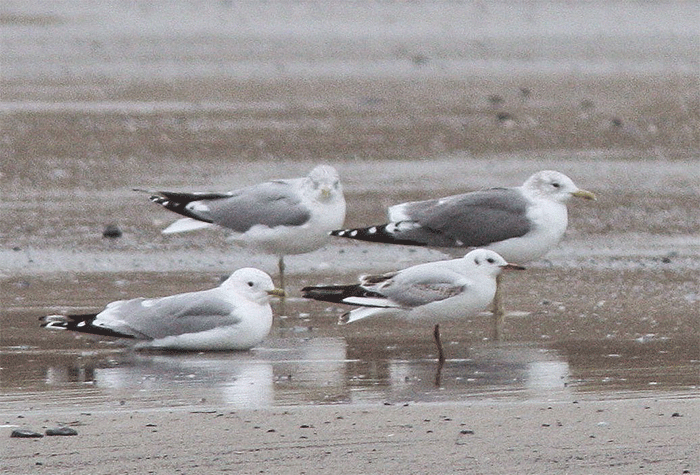
Following a recent review of additional images supplied by the finder, David O'Connor, the IRBC has concluded that a Common Gull present at Black Rock, Co.Kerry on the 6th of March 2014, showed a suite of features supporting identification as Kamchatka Gull (Larus canus kamtschatschensis) and as such, has been accepted as the first Irish (and Western Palearctic) record of that taxon.
Using criteria set out in an identification paper on the subject (Adriaens & Gibbins, 2016), a combination of features present on the Kerry Bird, including details in the primary pattern, bill pattern and colour of the upperparts, helped exclude nominate Common Gull (L. canus canus) and Russian Common Gull (L. canus heinei) and Short-billed Gull (L. brachyrhynchus).
This sighting of Kamchatka Gull at Black Rock, Co.Kerry complements records of other East Asian and Pacific gull taxa observed in Ireland during the early part of 2016 (Glaucous-winged Gull at Castletownbere, Co.Cork and Vega Gull at Duncannon, Co.Wexford).
April 2026
Get Breaking Birdnews First
Get all the latest breaking bird news as it happens, download BirdAlertPRO for a 30-day free trial. No payment details required and get exclusive first-time subscriber offers.
Share this story





