Hidden cameras show cuckoos do not carry eggs in their beaks
New video evidence from cavity nests in Finland overturns a long-standing idea about how Common Cuckoos place eggs in host nests.
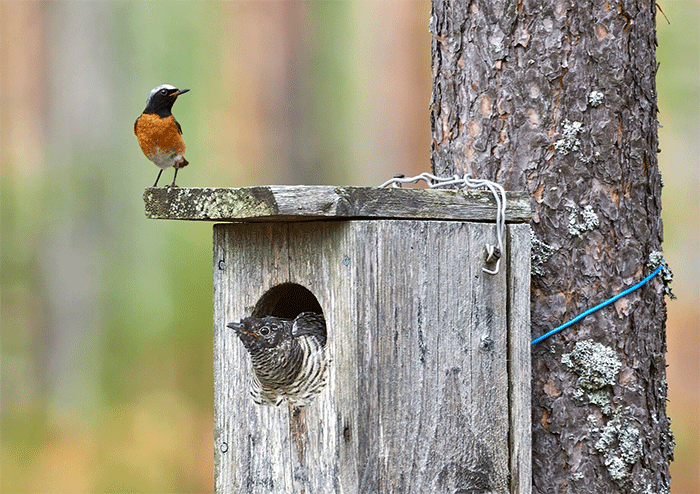
Hidden cameras have overturned one of the longest-running assumptions about Common Cuckoos, showing that the birds do not carry eggs in their beaks when laying in difficult-to-access nests.
An international research team used video monitoring to record more than 60 egg-laying events over four breeding seasons in Finland. The study focused on Common Cuckoos parasitising Common Redstarts, which nest inside enclosed tree cavities and nestboxes rather than open cup nests.
The footage showed that female cuckoos used two different methods. In some cases, they laid from outside the cavity entrance, effectively projecting the egg into the nest. In others, they entered the cavity before laying directly inside.
Both approaches carried risks. Laying from outside reduced the chance of becoming trapped inside the cavity, but increased the likelihood of missing the nest. Entering the cavity improved accuracy, but brought the danger of damaging the nest structure or becoming stuck.
The findings reject the old idea that cuckoos may transport eggs in their beaks to place them into host nests. The theory has persisted since the time of early naturalists, including Aristotle, largely because cuckoo egg-laying in concealed nests is so difficult to observe directly.
The study also highlights the flexibility of Common Cuckoos as brood parasites. Cavity-nesting hosts such as Common Redstarts should, in theory, be harder to exploit than open-nesting species, but the new footage shows that cuckoos can use more than one laying strategy to overcome those defences.
For researchers, the work underlines the value of continuous video monitoring at nests. Behaviours that have been debated for centuries can now be tested directly, revealing that even one of Europe’s best-known birds still has surprises to offer.
April 2026
Get Breaking Birdnews First
Get all the latest breaking bird news as it happens, download BirdAlertPRO for a 30-day free trial. No payment details required and get exclusive first-time subscriber offers.
Share this story