Henderson Petrel may breed in French Polynesia
Museum skins and scattered sightings suggest the Endangered seabird may have bred in the Tuamotu and Gambier islands for at least a century, but direct proof is still missing.
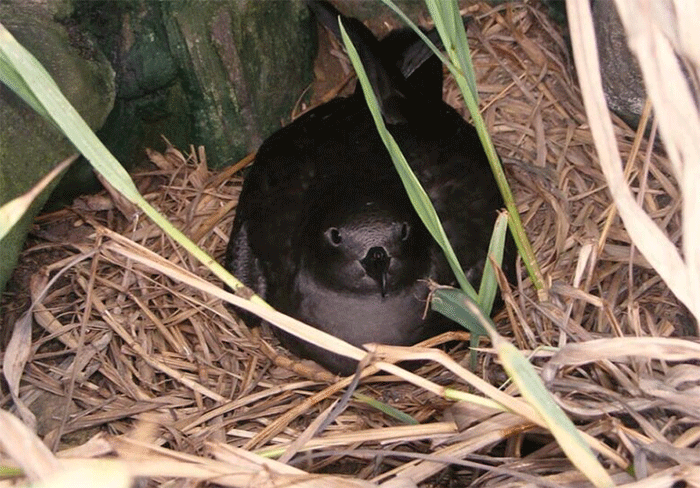
Two century-old museum specimens and a small number of later records have revived the possibility that Henderson Petrel breeds, or has bred, on remote islands in French Polynesia, far from its only confirmed large colony.
Ornithomedia are reporting on a short paper by Vincent Bretagnolle, Eric Vanderwerf, Jean-Francois Butaud and Thibault Ghestemme in Marine Ornithology. The authors reassessed records from the Tuamotu and Gambier archipelagos, including two dark petrels collected in June 1922 on Tenarunga and Vanavana in the Acteon group.
Those skins had been treated as dark-morph Herald Petrels. Re-examination identified them as Henderson Petrels because they lacked the pale underwing patches expected on dark Herald Petrels. The dates are important: June falls within the Henderson Petrel's known breeding season on Henderson Island, raising the possibility that the birds were local breeders rather than distant visitors.
More recent evidence is suggestive but sparse. A juvenile was photographed on Morane in the Gambier group on 9 March 2003, and a probable Henderson Petrel was filmed on Tenararo in the Acteon group on 13 September 2013. The juvenile record is particularly interesting because its age could indicate a nearby origin, although a photograph alone cannot establish where it hatched.
The authors and Ornithomedia are careful about the limit of the evidence.
There is still no direct proof of nesting, such as eggs or chicks.
Ornithomedia - translated from French
Confirmed breeding remains centred on Henderson Island in the Pitcairn group, where an estimated 20,000 pairs were reported in 2015, with a much smaller presence around Motu Nui off Easter Island. The new synthesis does not demonstrate a colony in French Polynesia, estimate its size or show that any population detected in the 1920s survives today.
Instead, it identifies a coherent set of records that justifies targeted fieldwork. The paper recommends searches across the Acteon, Gambier and southern Tuamotu groups, including difficult-to-access atolls, and also notes Moruroa and Fangataufa as possible survey priorities. Night-time acoustic work, searches for burrows and thermal or camera surveys could provide evidence that opportunistic daytime observations have missed.
Henderson Petrel is classed as Endangered. On Henderson Island, introduced Polynesian Rats take eggs and chicks, and eradication attempts have shown how difficult it is to remove invasive mammals from large, rugged islands. Any undiscovered colony would therefore need a rapid assessment of predators and other pressures as well as a breeding count.
The specimens also show the value of museum collections in resolving records long after they were made. Plumage similarities among dark Pterodroma petrels can obscure identification in the field, while skins allow underwing pattern and structure to be checked directly. Contemporary genetic sampling could provide another useful test if birds are encountered during new surveys. For now, the French Polynesian case remains a strong breeding hypothesis rather than a new confirmed range.
3 Nov 2026
Get Breaking Birdnews First
Get all the latest breaking bird news as it happens, download BirdAlertPRO for a 30-day free trial. No payment details required and get exclusive first-time subscriber offers.