Government approves Hornsea Three Offshore Wind Farm
The UK Government’s decision to green light plans for a major offshore wind farm has sparked concerns about the potential impact on seabirds.
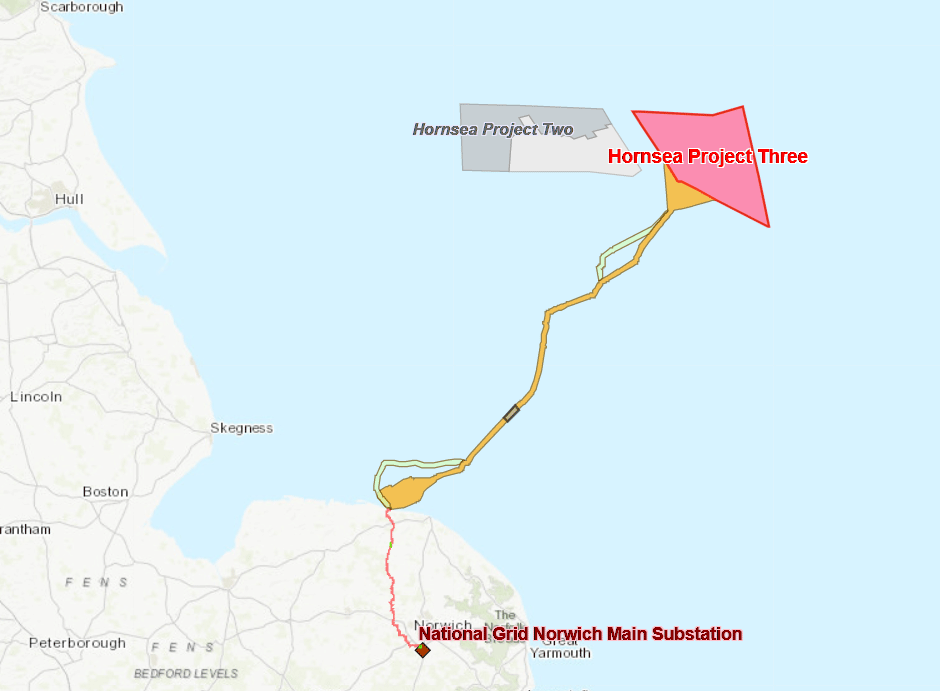
It was recently announced that the Secretary of State for Business, Energy and Industrial Strategy, Alok Sharma had granted development consent to Ørsted for its 2.4 gigawatt (GW) Hornsea Three project.
The wind farm will be built in the Southern North Sea off the North Norfolk coast and will produce enough green energy to power around 2 million homes.
The approval was given after Orsted promised to spend $20 million to build artificial nesting sites for Kittiwakes, a species which is protected under the Wildlife and Countryside Act 1981.
The Royal Society for the Protection of Birds (RSPB) claimed Hornsea Three will threaten the UK’s population of Kittiwakes,
Martin Harper, the group’s director for global conservation, said: “the decision is nothing short of a gamble . . . The government has accepted that the expansion of offshore wind farms in this part of the North Sea will be damaging to seabird numbers in the surrounding area and is putting its faith in an unproven compensation scheme,"
“It may be a decade or more by the time we know if it has been successful, by which time Hornsea Three and many more projects may have been constructed and the damage to Yorkshire Kittiwake colonies could be irreversible. Industry alone cannot reconcile the challenge of increased deployment and threats to nature. These are a symptom of poor planning and must be urgently addressed by the government.".

Mr Sharma’s decision letter stated: “Having secured the necessary compensation for the possible adverse effects of the Development on the Flamborough and Filey Coast Special Protection Area and the North Norfolk Sandbanks and Saturn Reef Special Area of Conservation and The Wash and North Norfolk Coast Special Area of Conservation, he concludes that the adverse impacts identified by the Examining Authority, including the significant harm it identified in respect of offshore ecology, do not outweigh the significant benefits of the Development in respect of contribution it would make to meeting the identified need for renewable electricity generation.”
The Wildlife Trusts welcomed the news of the compensation scheme whilst also expressing their concerns.
”The Wildlife Trusts support actions to tackle climate change. We welcomed the Government’s commitment to implement the Paris agreement (2015), the commitment to achieve net-zero 2050 and the declaration of a climate emergency. However, it must be recognised that as a society, we also face an ecological emergency; this and the climate emergency are inextricably linked. Healthy ecosystems play an essential role in carbon storage. Climate change cannot be stopped unless we stop destroying important natural habitats and take action to restore ecosystems. In short, we cannot tackle climate change unless we halt the biodiversity crisis.”
”That is why we are pleased that the government has followed the rules and approved Hornsea Three offshore wind farm with the essential proviso - that compensation will be made for harmful impacts of the development to two Special Areas of Conservation (SACs) and one Special Protection Area (SPA). However, The Wildlife Trusts have serious concerns regarding the compensation currently being offered and we are looking forward to working with both BEIS and Orsted to develop compensation which will allow the marine environment to recover.”
Joan Edwards, Director of Marine Conservation and Public Affairs at The Wildlife Trusts said “The government has made the right decision in opting to compensate for damage to internationally-important areas at sea. But the challenge now is for all involved, including BEIS, Defra, The Crown Estate, industry and ourselves, to have a rational conversation on what we do next to ensure that the ambitious target of 75-100GW of offshore wind farm energy can be delivered whilst also securing recovery in the marine environment too. If we don’t succeed in securing serious compensation for the damage to nature we will be taking our concerns to the newly formed Office of Environmental Protection.”
7 January 2020
Share this story