Golden Parakeet Faces Imminent Extinction Risk
New modelling predicts 80–100% habitat loss for one of the Amazon’s most iconic birds by 2070, prompting urgent conservation action
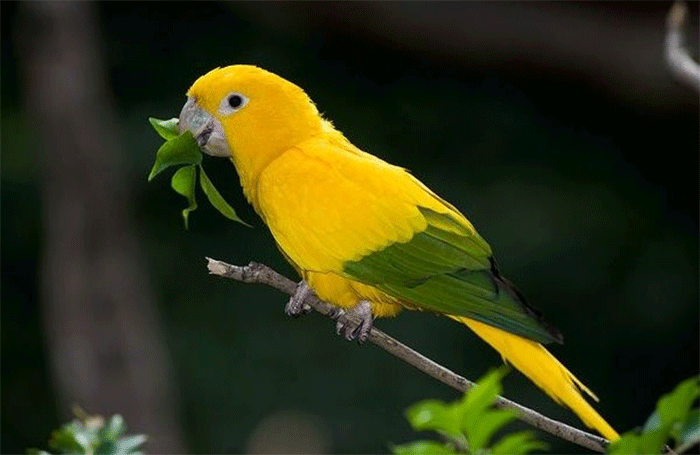
Amazonian Flagship Species on the Brink
The Golden Parakeet (Guaruba guarouba), an iconic and endemic parrot of the Brazilian Amazon, could lose up to 100% of its climatically suitable habitat by 2070, according to a new study published in Global Ecology and Conservation. Researchers modelled the species' current and future distribution under two climate change scenarios. Even under the more optimistic pathway, 80% of suitable habitat would vanish - enough to reclassify the species as Critically Endangered under IUCN Red List criteria. Under the worst-case scenario, the bird would face total habitat loss and be considered functionally Extinct.
This vibrant yellow parakeet is already listed as Vulnerable due to deforestation and wildlife trafficking. It is found only in a narrow part of the eastern Amazon, including the Belém area of endemism, which has already suffered severe forest loss and holds fewer legal protections than other regions. The study’s authors used ensemble species distribution models combining occurrence data, bioclimatic variables, and land cover projections to forecast habitat suitability into the future.
Protected Areas Falling Short
The study found that just under half of the Golden Parakeet’s current habitat lies within existing protected areas, including Indigenous Lands. But the species’ climate-suitable range is projected to contract drastically, leaving only a few small remnants, many of which are outside the current reserve network.
In the optimistic scenario, only 28% of the remaining suitable habitat would still be within protected areas, while in the pessimistic scenario, none would remain. The authors highlight three key areas that could act as climate refugia: the Gurupi Mosaic (including Alto Turiaçu and Rebio Gurupi), the Caxiuanã National Forest, and the Juma Sustainable Development Reserve. These areas are also crucial for other forest species under similar threat.
Climate Change, Deforestation and Trafficking Combine
Habitat degradation in the so-called “arc of deforestation” is being accelerated by climate shifts. Rising temperatures and altered rainfall patterns diminish fruit availability and render tree cavities - essential for nesting - inhospitable due to increased humidity and pathogens. These conditions reduce breeding success and force populations into smaller, fragmented areas.
On top of habitat loss, illegal trapping remains a major threat. The parakeet's bright plumage and rarity make it a target for wildlife traffickers. These pressures, combined with climate-induced habitat shifts, dramatically raise the extinction risk. The species’ current population is estimated at around 10,000 mature individuals, with a continuing decline projected.
Policy Recommendations and Urgency
To prevent extinction, the authors call for immediate expansion of protected areas into the identified climate refugia, especially those currently unprotected. They also advocate for ecological corridors to maintain connectivity and gene flow between populations. Conservation plans must combine in-situ and ex-situ strategies, particularly in areas likely to remain climatically suitable.
Furthermore, the study underscores the need for stronger policies against deforestation and wildlife trafficking, along with public education campaigns to raise awareness about the ecological role of parrots in seed dispersal and forest maintenance. Brazil, home to the largest number of threatened Psittaciformes, ranks as a global conservation priority for the group.
Conserving a Symbol of Amazonian Biodiversity
The Golden Parakeet is not only a flagship species for Amazonian conservation but also a vital ecological agent. Its fate encapsulates the broader challenges faced by many Amazonian endemics, which are simultaneously battling shrinking habitats, warming climates, and human exploitation.
Researchers urge decision-makers to use this study as a blueprint for targeted conservation action, reinforcing the value of predictive modelling in identifying future biodiversity hotspots and guiding resource allocation before it is too late.
August 2025
Share this story