


Forest Birds Face Deadly Threat from Window Collisions
New research reveals that seasonally fruit-eating species such as thrushes and sparrows are disproportionately vulnerable to glass strikes, with collisions continuing well into winter.
Collision deaths peak in autumn migration
Researchers studying bird-window collisions at the University of Victoria in British Columbia have found that hundreds of birds die each year when striking campus buildings. The study, published in *PeerJ* by Viviane Zulian and colleagues, shows that fatalities are highest during autumn migration, but substantial losses continue through early winter, especially among forest birds that switch to fruit-based diets outside the breeding season. An estimated 885–1,342 birds are killed annually across the campus between mid-September and early February, with the true figure likely higher when including birds that leave no trace or later die from injuries.
Forest and frugivorous species most at risk
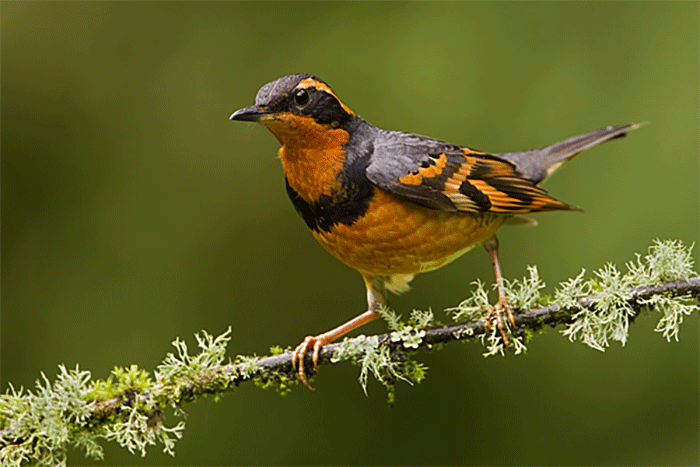
Thrushes, sparrows, kinglets, warblers, and robins were among the most frequent victims. In autumn, Golden-crowned Kinglets, Hermit Thrushes, Varied Thrushes, and Swainson’s Thrushes proved especially vulnerable. Early winter saw similar risks for Varied Thrushes, Hermit Thrushes and American Robins, while Anna’s Hummingbirds and robins topped the late-winter toll. Many of these species rely heavily on berries and fruit in the colder months, a behaviour that may increase their exposure to glass façades.
Why winter risks matter
The findings challenge assumptions that winter brings relatively little collision mortality. The authors suggest that altitudinal migrants descending from snowy uplands, combined with the draw of fruiting vegetation near glass buildings, keep risks high. As lead author Krista De Groot of Environment and Climate Change Canada explains, “Our results show that non-breeding season mortality can be substantial, particularly for forest species that track fruit resources. This is a conservation issue that extends beyond migration peaks.”
Potential impacts on declining populations
Several species most affected by collisions are already in decline. Hermit Thrushes and Golden-crowned Kinglets have shown steep population losses across Canada, while Varied Thrushes and Swainson’s Thrushes are also decreasing in parts of their range. If window-strike mortality is additive to natural losses, it may be contributing to these declines. The study highlights the need to consider bird-window collisions as a year-round conservation concern, not just a migration issue.
Mitigation and solutions
The researchers emphasise that cost-effective measures exist to reduce collisions, such as applying patterned markers or films to glass, or integrating bird-friendly design into new buildings. “The absence of definitive proof that collisions drive population declines should not delay action,” the authors conclude. With building expansion set to double globally by 2060, they argue that addressing this threat is urgent if vulnerable species are to be safeguarded.
September 2025
Share this story





