Finders in the Field: Killdeer, Ripley, Hampshire
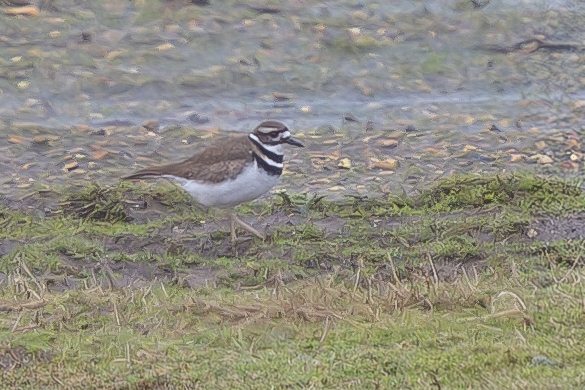
On the 21st January I watched the rain lash down and wondered if I should sit in the hide at Blashford, or try Ripley to see if I could catch up with a few year ticks. Ripley farm reservoir has produced some interesting birds in the past most notably a Baikal Teal. I decided to head to Ripley.
On finding a relatively sheltered spot behind a hedge, I scanned a flock of finches then, on finding little of interest, I moved on to the ducks. As I scanned across the top of the bank, I spotted a charadrius plover, back on between two Lapwings. Presuming I had found Ringed Plover I was pleased enough as it would have been my first of 2026, and it’s not a common bird at the site.
Views were not great but when compared to the Lapwings it looked quite large, and the face pattern looked wrong for Ringed Plover. The realisation that this was something odd was starting to dawn on me. I spent an agonising 15 minutes waiting for the bird to move.
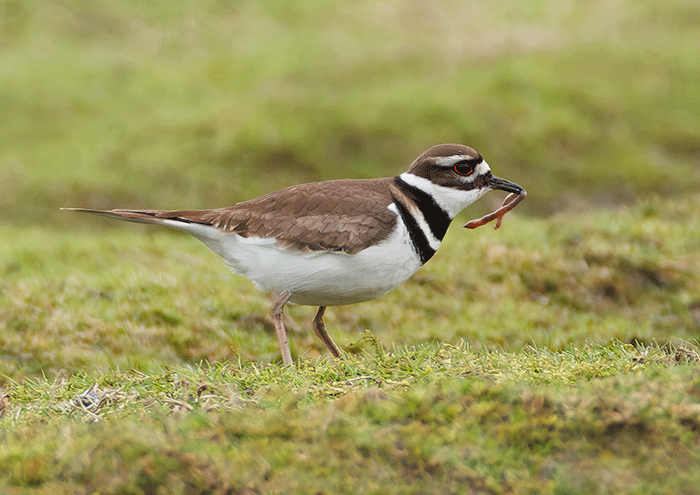
Finally, it turned and there it was, a double breast band. A Killdeer, only Hampshire’s second record.
I put the info out on the Hampshire Going Birding site, knowing it would be picked up more widely. I tried to get photos on my phone, not easy in the rain through the scope. My fear being that it would fly before it could be corroborated.
My state of mind was not improved when a Black-headed Gull started to aggravate it and then it flushed. This was helpful as it displayed the final identification features such as full wing bars and bright orange rump, but not helpful in that I could not relocate it immediately.
Finally, a very cold and wet hour and a half after the original sighting, Dave Taylor appeared and was able to confirm the identification. Apparently, the original report was thought by some to have been a typo!
The bird has proved incredibly popular with some estimates that over 1000 birders have been to see it, helped by it staying over the weekend.
As for me, having missed a couple of these birds in the 80’s and 90’s, to get a self-found tick was rather special and a superb start to 2026.
January 2026
Editoral note (13/Feb): We are pleased to publish this photograph of the Hampshire Killdeer by Adrian Webb. A previous version of this finders account included a Killdeer image that was incorrectly credited and published without Adrian’s permission. Once the error was identified, the image was removed. We apologise to Adrian for that mistake and are grateful to him for providing this photograph and for allowing us to publish it here.
Share this story