First year of Wildcat reintroduction project hailed a success
NatureScot-backed research confirms that breeding and release has delivered high survival and early breeding success for Scotland’s Wildcats.
Strong results from the first year
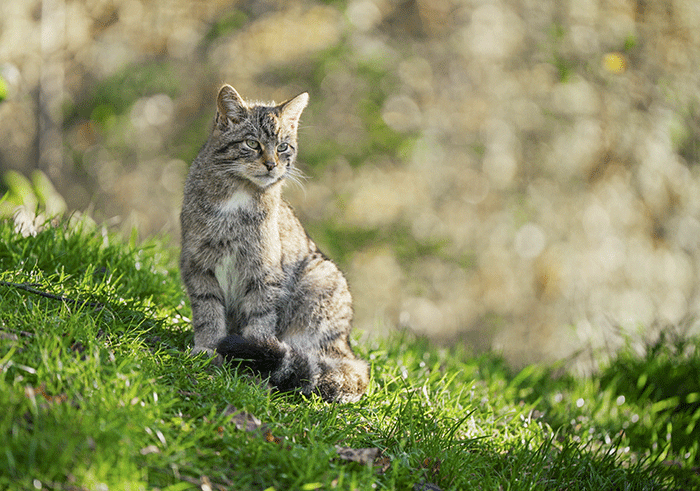
New research has confirmed that the first year of Scotland’s Wildcat reintroduction project has exceeded expectations, with released animals surviving and adapting well to life in the wild.
The study, published in a special edition of IUCN’s Cat News, found that 95% of Wildcats released into the Cairngorms National Park survived their first ten months, providing strong evidence that breeding-for-release can play a key role in Wildcat conservation.
Carefully planned releases
Approved under licence from NatureScot and led by the Royal Zoological Society of Scotland, the Saving Wildcats partnership released 19 Wildcats into the Cairngorms during summer 2023. The animals had been bred and prepared for release at a specialist centre at Highland Wildlife Park before entering the wild.
All released cats were initially fitted with GPS radio collars, allowing close monitoring of their movements, health and survival.
Survival exceeded expectations
Researchers found that all but one of the released Wildcats survived their first ten months. Health checks carried out after release revealed very few signs of injury or disease, while the animals increased their bodyweight by an average of 20% during the monitoring period.
Since the project began, a total of 46 Wildcats have now been released, with females in the wild successfully producing litters of kittens in both 2024 and 2025.
A species once on the brink
In 2019, Wildcats were described as being on the brink of extinction in Britain, with remaining populations too small, too fragmented and too heavily hybridised with domestic cats to be viable.
The new findings suggest that carefully planned breeding and release, combined with ongoing management, can begin to reverse that decline.
Hybridisation remains a major challenge
The research also confirms that interbreeding with domestic cats continues to pose a serious threat to the long-term recovery of Wildcats.
To tackle this, Saving Wildcats has worked alongside Cats Protection to trap, neuter, vaccinate and return 132 feral domestic cats since the project began, reducing the risk of hybridisation in release areas.
NatureScot welcomes the findings
Dr Martin Gaywood, NatureScot’s Species Project Manager and a co-author of the study, said: “We’ve made huge strides for Wildcat conservation in Scotland, and we now have the science and evidence to back up our theory that Wildcats can be restored through careful planning, breeding and release.”
He added: “To see Wildcats surviving so well in the wild and reproducing successfully is incredibly rewarding for everyone involved and completely exceeded our expectations for the first year of the project.”
Success – but challenges remain
Despite the encouraging results, project partners stress that the road ahead remains uncertain.
Dr Gaywood said: “The road ahead is still uncertain, and challenges remain with issues such as predation on gamebirds and the threat of hybridisation with domestic cats, but we remain dedicated to the long-term recovery of this culturally and ecologically significant species.”
Groundbreaking work continues
Dr Helen Senn, Saving Wildcats project lead at RZSS, described the programme as a landmark for UK conservation.
She said: “The Saving Wildcats project has been truly groundbreaking, being the first in the UK to reintroduce a cat species. Studies like this help illuminate just how successful the project has been so far – against all odds.”
She added that further releases, alongside continued management of threats, will be vital if Wildcats are to survive and thrive once more in Scotland.
December 2025
Get Breaking Birdnews First
Get all the latest breaking bird news as it happens, download BirdAlertPRO for a 30-day free trial. No payment details required and get exclusive first-time subscriber offers.
Share this story