


First White-tailed Eagles released on Exmoor
Six young birds have been released in Exmoor National Park in the first phase of a three-year programme to expand the species' range in south-west England.
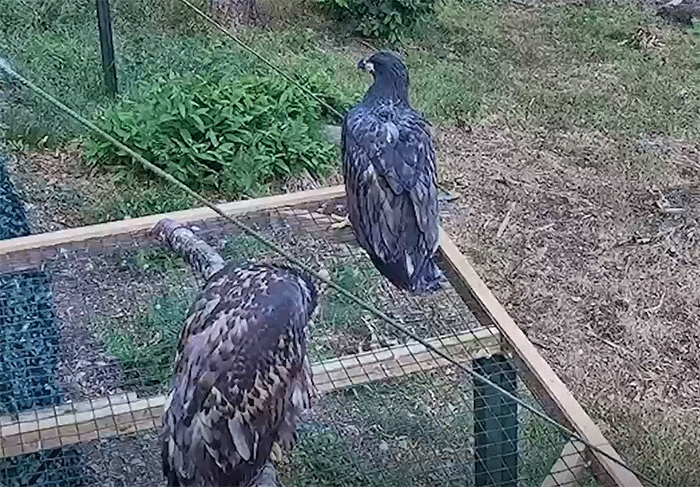
Six young White-tailed Eagles have been released in Exmoor National Park, marking the first reintroduction of the species there more than two centuries after it disappeared from the region following persecution.
The release is the latest stage of the programme led by the Roy Dennis Wildlife Foundation and Forestry England to restore White-tailed Eagles to southern England. The project began on the Isle of Wight in 2019 and is now being expanded into south-west England in partnership with Exmoor National Park Authority.
Since 2019, 45 White-tailed Eagles have been released from the Isle of Wight. Several have since established breeding territories, and in 2023 the project recorded the first White-tailed Eagle chick to fledge in the wild in southern England since 1780.
The Exmoor licence allows up to 20 young eagles to be released over three years, while releases from the Isle of Wight will also continue. The aim is to reinforce the developing population and help extend its breeding range westwards.
Exmoor was selected after satellite-tracking data from birds released on the Isle of Wight showed that the National Park was repeatedly visited by young eagles. The species is also known to have bred historically along the Exmoor coast, where extensive woodland and abundant marine fish provide suitable foraging and potential nesting habitat.
Earlier this year the six young birds were collected from the wild in Scotland under licence from NatureScot and transported to Exmoor. They were then cared for by the project team in purpose-built release pens while becoming accustomed to their new surroundings.
Before release, each eagle was fitted with a satellite transmitter so its movements can be followed closely. The young birds are expected to range widely across Britain and potentially into continental Europe before they reach breeding age at around four or five years old.
Zoe Smith of the Roy Dennis Wildlife Foundation described the release as an important moment in the restoration of the species to the south-west.
After so many years absent from this landscape it is a special moment to be returning them on Exmoor.
Zoe Smith, Roy Dennis Wildlife Foundation
A feasibility study and public surveys were carried out before the Exmoor phase began, and a steering group including local organisations and community representatives is helping to guide the project.
White-tailed Eagle is Britain's largest bird of prey, with adults capable of reaching a wingspan of around 2.5 metres. The species was formerly widespread in Britain before centuries of persecution drove it to extinction, with reintroduction work later restoring populations in Scotland and Ireland before the southern England project began.
The Exmoor releases are being carried out under licence from Natural England, with the project team continuing to monitor both the newly released birds and the growing population already established across southern England.
7 Aug 2026
Get Breaking Birdnews First
Get all the latest breaking bird news as it happens,
download BirdAlertPRO
for a 30-day free trial. No payment details required and get exclusive first-time subscriber offers.
Share this story




