


First Puffin chick in 30 years seen at Dorset colony
The discovery of a young Puffin at Dancing Ledge has provided fresh hope for the survival of the last regular breeding colony on the mainland coast of southern England.
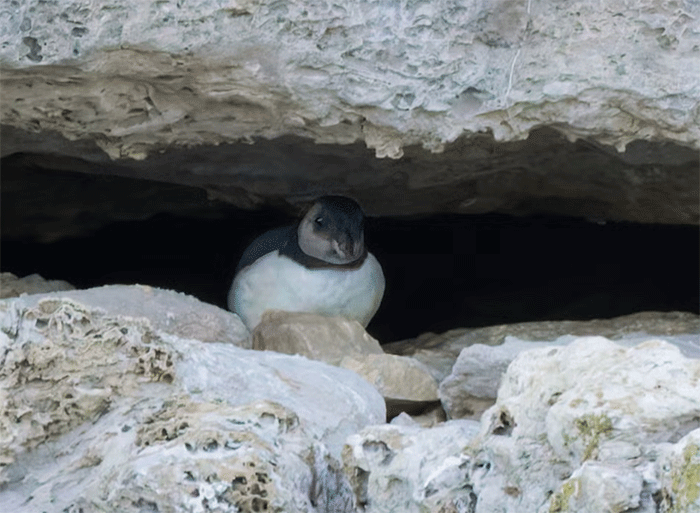
A Puffin chick has been seen at the beleaguered colony on the Isle of Purbeck for the first time in 30 years, confirming that at least one pair has successfully raised young this summer.
The puffling was photographed peering from a nesting crevice at Dancing Ledge, near Swanage, on 7 July. It was estimated to be about 38 days old and is thought to have left the colony for the open sea shortly afterwards.
The sighting follows 15 weeks of monitoring by 13 volunteers from the Purbeck Natural History Forum. Six adult Puffins returned to the colony this spring, representing the three remaining pairs at what is the last known regular nesting site for the species on the mainland coast of southern England.
Adults were subsequently seen carrying fish into at least two separate nest sites, raising hopes that more than one pair had hatched a chick. Deliveries to one of the sites stopped during June, but feeding continued at the second until early July.
Marine ornithologist Dr Richard Caldow and his team chartered a boat on the evening of 7 July in the hope that the increasingly mature chick would emerge from the deep cliff crevice. After three hours, the puffling appeared behind one of its parents shortly after 7 pm.
“Seeing the puffling was a great thrill,” said Caldow. “Every chick matters. One puffling alone won’t save this colony, but one is a whole lot better news than none.”
Puffins were formerly much more numerous along the Purbeck coast, with about 80 birds recorded during the 1950s. The colony has since declined to just three pairs, while repeated breeding failures had raised fears that the species could disappear from Dorset altogether.
The successful nesting attempt demonstrates that the remaining adults can still produce fertile eggs, hatch them and find sufficient food to rear a chick to fledging age. Puffins normally raise only one chick each year, making even occasional breeding success significant for such a small and ageing population.
The young bird is now likely to be well out at sea and independent of its parents. It is not expected to return to land for at least two years and would be unlikely to breed before 2030. Whether it eventually returns to Purbeck or joins another colony is unknown.
The National Trust has been working with local ornithologists to establish why breeding has failed so regularly at Dancing Ledge. Solar-powered motion-sensitive cameras have been installed inside the nesting area, where the Puffins use fissures extending around two metres into the cliff.
Possible causes have included predation by rats, corvids or Peregrine Falcons, as well as changes in food availability and the effects of climate change. The cameras will be recovered after the breeding season and the resulting images examined for evidence of nesting activity and chick losses.
Although the appearance of one puffling does not secure the colony’s future, it represents the first definitive evidence for three decades that Puffins can still breed successfully on the Purbeck coast.
July 2026
Get Breaking Birdnews First
Get all the latest breaking bird news as it happens, download BirdAlertPRO for a 30-day free trial. No payment details required and get exclusive first-time subscriber offers.
Share this story





