Finders-in-the-Field: Asian Desert Warbler, Holy Island June 2020
Monday, 15th June will live long in my memory. I’d taken the day off work to pin down some merlin nests in The Cheviots however, heavy fog put the mockers on that.

Rather fortuitously, just as I was leaving the fells, my friend Richard Drew rang me to say he’d had a subalpine warbler on The Snook, Holy Island. A great bird and with the chance it could be a Moltoni’s warbler, I headed for Snook. Thankfully, a forgiving 3.9m tide allowed me just enough of a buffer to get onto the island ahead of the incoming sea.

A couple of phone calls later and I had soon joined Richard and our friend Neil Osborne. Unfortunately, the bird had evaporated so together, we hatched a cunning plan to systematically cover the Snook radiating out from the bush that Richard had briefly seen the bird sing from. Richard’s impression that the bird had rufous tertials had set my mind wondering about the possibility of a spectacled warbler and a playback later of spectacled song sparked a flame of recollection with Richard. But surely, a bird of such enormity was really just daft overly wishful thinking! After over 4 hours and not a sniff of the bird, we split up to cover other parts of the island.
Later that evening, still troubled by the mystery bird and certain that the misty conditions would not have encouraged any birds to leave, I decided to return to Snook. My thinking was that if the bird had sung early doors then maybe, just maybe, it could sing again in the evening?

After an hour or so, at just before 8pm in poor light and rolling fog, I picked up the twitching of a branch on one of the willows in the centre of the Snook. I quickly got my bins on the movement to be greeted by a small drab Sylvia warbler with a pale iris. My heart missed a beat as my brain shouted DESERT WARBLER! Crikey, a monster rarity. I quickly rattled off a burst of photos and checked that I wasn’t hallucinating and it really WAS a desert warbler. Sure enough, the camera backed me up and it was the expected Asian nana flavour. Wow! Deep breath. The bird then gave several rattling calls which I tried to capture on my phone and whilst I was checking to see if I’d actually recorded the call, the bird began to sing and I quickly fumbled around with my phone and managed to record the song. The full suite of evidence, if Carlsberg did rarities! – I could put the news out with absolute confidence.
I rang Richard to break the news to him first then rang Neil who didn’t answer because he was in the bath. I then put the news out via the usual channels and the ‘mega alert’ got Neil out of the bath! As the enormity of it started to sink in, I tried to calm down and enjoy the bird but it had decided to go mobile, a frantic ten minutes ensued before it thankfully settled in a small hawthorn. Phew! I then babysat the bird until all who could make it before dusk did so and saw the bird.
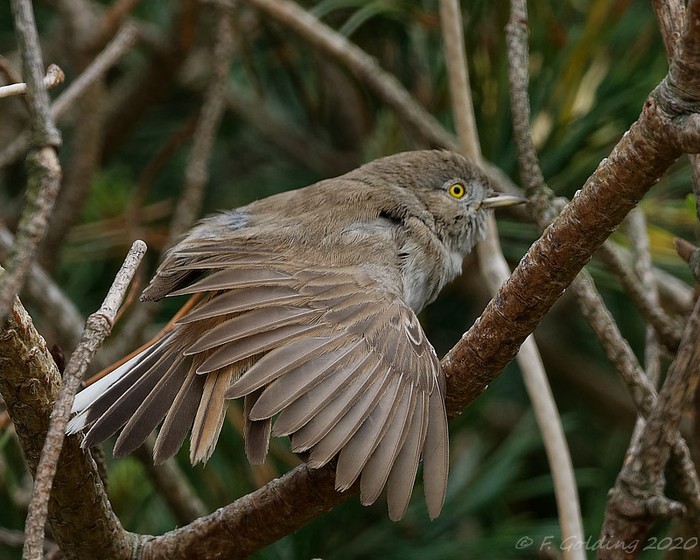
A stunning bird on my local patch and a first for Northumberland, absolute magic – a team effort that paid big dividends. The initial image of those cadmium irises will forever be burnt on my retinas.
If you enjoyed seeing this bird, you may wish to make a donation to MIND in memory of the late and great Tim Cleeves who would have just loved seeing that bird on Holy Island.
Mike Carr
18 June 2020
Mike has very kindly donated his fee for writing this piece to MIND
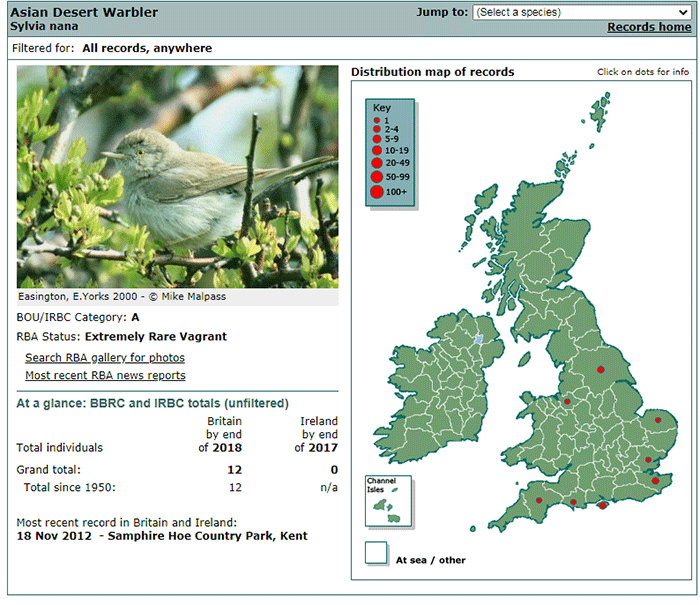
Previous Asian Desert Warbler Records
Share this story