


Extinct moth rediscovered after 73 years by accident
A Butterfly Conservation ecologist has spoken of her amazement after she accidentally rediscovered a moth that was thought to be extinct in England for 73 years.
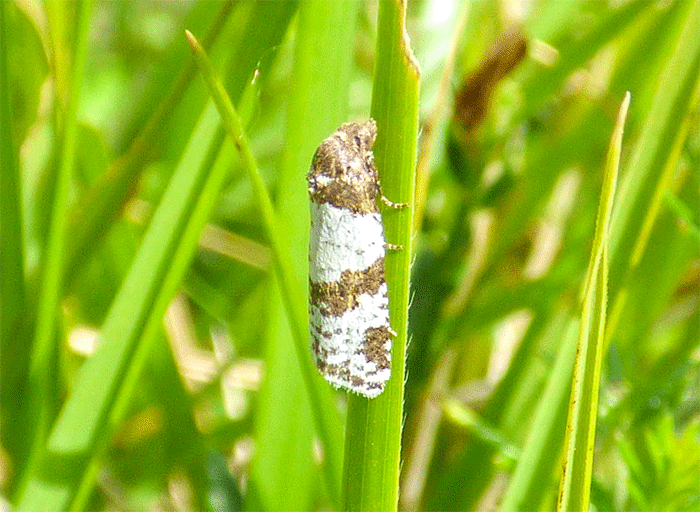
Rebecca Levey stumbled on an entire colony of Dover Twist moths in Kent while conducting a survey for other species with volunteers.
The Dover Twist has not been recorded in England since 1952, and the only place in the UK where it has been seen since then is the island of Tiree off the north west coast of Scotland, where it is known as the Tiree Twist.
Now Rebecca has discovered an entire population at the opposite end of the country.
Rebecca said: "I was absolutely blown away. It's the kind of discovery you dream of making, but you never expect it to actually happen. With so many butterflies and moths in trouble across the UK, it’s fantastic to find this tiny little species bucking the trend."
The Dover Twist, Periclepsis cinctana, is a miniscule moth with a wingspan of just 16mm, but its cream and brown patterns help it stand out.
It only lives on chalk grassland, a habitat which has disappeared across the UK in the past century, making it highly vulnerable.
The last sightings in England were recorded in Kent in the 1950s, but because it has only been seen on Tiree in the past 73 years it has become known as the Tiree Twist.
Rebecca stumbled on the hidden population at Lydden Temple Ewell nature reserve, managed by Kent Wildlife Trust, last Wednesday while surveying with volunteers.
By the end of the day the team had found 13 moths, then they returned on Friday and counted a total of 24.
Rebecca said that Butterfly Conservation's Scotland team wrote an article about the moth in 2022 and she recognised it instantly from their photos.
She added: "After a 73 year gap in sightings, I'm so pleased to share that we now know it is still in Kent and I'm sure it'll be keeping me busy in the near future as we begin the task of uncovering the exact habitat it needs as part of Butterfly Conservation's work helping to save our most threatened moths."
Rebecca also contacted Dave Shenton, Kent Wildlife Trust’s local wildlife sites officer and Kent County Moth Recorder, who arrived quickly and confirmed the identification.
Dave said: “This is mind-blowing. I couldn't quite believe what I was seeing. Has it been hiding in plain sight here all these years?”
The good news comes after Butterfly Conservation revealed that 2024 was the fifth worst year on record for butterflies across the UK, with more than half of species in significant long-term decline for the first time.
The results of the charity's Big Butterfly Count 2024 were also the worst ever.
The wet spring and cooler-than-average summer were partly to blame, but the effect of bad weather only compounds decades of human habitat destruction, pollution and pesticide use which have battered populations across the UK.
The charity is urging people across the country to join its Big Butterfly Count this year from July 18 to August 10 to get the best-possible picture of how bad the situation is.
July 2025
Share this story





