Europe's Buzzards Are Losing Their Colour Diversity
New research suggests intermediate plumage is becoming dominant across the continent, reducing the striking variation long seen in Common Buzzards
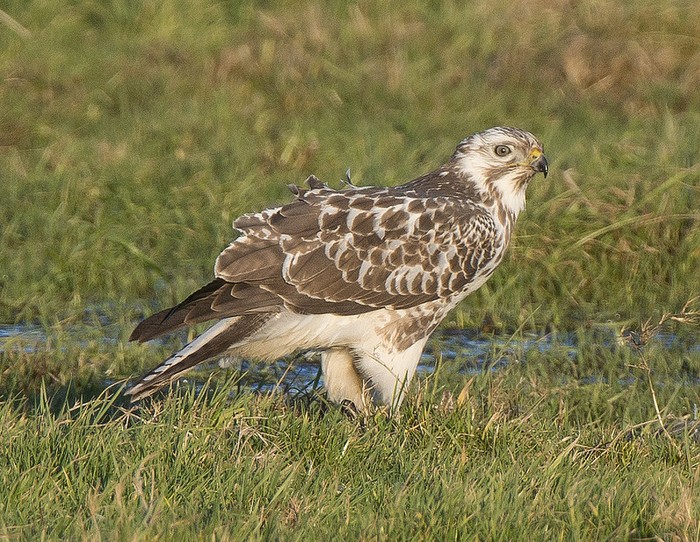
A raptor famous for its variety
Across Europe, the Common Buzzard Buteo buteo has long been celebrated for its remarkable range of plumage colours. Some birds are almost chocolate-brown, others strikingly pale with white underparts, while many fall somewhere between these extremes. This diversity has made the species one of the most visually variable birds of prey on the continent.
But new research analysing tens of thousands of records from across Europe suggests that this colour diversity is beginning to fade. Intermediate-coloured birds are becoming increasingly common, while both very dark and very pale buzzards appear to be declining.
The findings come from a large international study that combined more than 99,000 observations collected between 2000 and 2022, mostly through citizen science projects and online bird-recording platforms.
Mapping colour across a continent
The study examined how buzzard plumage varies geographically across Europe. Researchers grouped birds into three broad categories – dark, intermediate and light – based on a seven-point scale used by birders to describe plumage tone.
The results revealed clear regional patterns. Light-coloured buzzards are most common in north-central Europe, particularly in areas such as the Netherlands, Belgium and northern Germany. Darker birds occur more frequently in Iberia and parts of western France, while intermediate birds dominate in south-eastern Europe and the British Isles.
These patterns suggest that buzzard colour may be influenced partly by environmental factors such as sunlight, habitat and climate.
Sunlight and forests may shape colour
One of the strongest relationships identified in the study involved ultraviolet radiation. Buzzards tended to be darker in regions with higher UV exposure, suggesting darker plumage may help protect feathers and skin from intense sunlight.
There was also weaker evidence that habitat plays a role. Darker buzzards were slightly more common in areas with greater forest cover, possibly because darker plumage offers better camouflage in wooded landscapes.
However, environmental factors explained only a very small proportion of the overall variation in colour across Europe. This suggests that historical processes, such as how buzzards recolonised Europe after the last Ice Age, may also be important in shaping today’s patterns.
A steady shift towards the middle
While regional differences remain, the study found a clear continent-wide trend over the past two decades: intermediate-coloured buzzards are becoming more common.
Between 2000 and 2022, both dark and pale birds declined in relative numbers, while intermediate birds increased significantly. According to the analysis, intermediate morphs were about one-third more common in 2022 than at the start of the century, while dark and light morphs both declined.
This change means that the overall variety of colours seen within buzzard populations is slowly shrinking.
Why intermediate birds may be winning
Previous studies have suggested that buzzards with intermediate plumage may have higher survival or breeding success than either extreme. If true, natural selection could gradually favour these middle-toned birds.
The new study suggests habitat change may also contribute. Regions where forest cover declined showed stronger increases in intermediate birds and sharper declines in darker morphs, hinting at a possible link between landscape change and plumage trends.
What losing colour diversity could mean
Although Common Buzzards remain widespread and abundant across Europe, the researchers note that declining colour variation could have evolutionary consequences.
In many species, colour variation is linked to genetic diversity and adaptability. If the range of plumage types narrows over time, it may reduce the species’ ability to respond to future environmental change.
For now, the Common Buzzard remains one of Europe’s most familiar raptors. But the study suggests that the palette of colours birders see in the field may be slowly becoming less varied.
March 2026
Get Breaking Birdnews First
Get all the latest breaking bird news as it happens, download BirdAlertPRO for a 30-day free trial. No payment details required and get exclusive first-time subscriber offers.
Share this story