


Bird flu outbreak dramatically increases risks to migrating Rough-legged Buzzards
Long-term tracking reveals how disease can turn migration from low-risk to high-risk period for birds
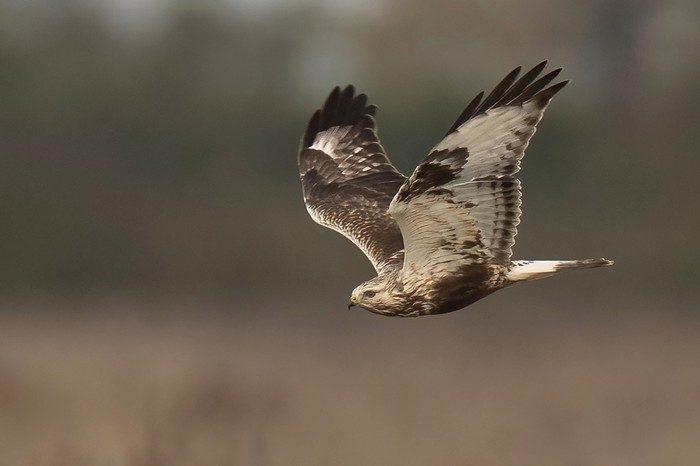
Migration not always the most dangerous time
Migration is often seen as the riskiest period in a bird’s annual cycle, but new research suggests that this is not always the case - until additional pressures come into play.
A major study tracking nearly 200 Rough-legged Buzzards across North America has shown that, under normal conditions, migration - particularly in spring - can actually be safer than other times of year. However, this balance shifts dramatically during disease outbreaks such as highly pathogenic avian influenza.
A decade of tracking reveals new insights
The research, based on GPS data from 186 birds collected over more than a decade, provides one of the most detailed pictures yet of survival across the full annual cycle of a migratory raptor
By analysing when and where birds died, researchers were able to compare typical conditions with those during a major outbreak of avian influenza in North America between 2022 and 2023.
Spring migration usually carries lower risk
One of the most striking findings was that, in normal years, mortality risk during spring migration was actually lower than during winter or autumn.
This runs counter to the long-held assumption that migration is always the most dangerous phase. Instead, the study suggests that these birds may adopt energy-efficient strategies in spring, reducing risk as they move north towards breeding areas.
Avian flu changes the picture completely
During the avian influenza outbreak, however, this pattern reversed. Mortality risk increased sharply during both spring and autumn migrations, making these periods more dangerous than the stationary seasons of summer and winter.
The findings show how disease can fundamentally alter the cost of migration, turning what is normally a relatively safe phase into a high-risk period.
In total, deaths caused by avian influenza in a single year matched the number of deaths from human-related causes recorded across the entire 12-year study period
Wider pressures beyond disease
Outside of the outbreak, the highest mortality was recorded during late autumn migration and winter. These deaths were often linked to human-related factors, including collisions and persecution, particularly at more southerly latitudes.
The study highlights how different pressures act at different times of year - with human impacts most evident in winter, and disease capable of reshaping risks during migration.
Differences between males and females
The research also found that female birds were more likely to die during the avian influenza outbreak, while no such difference was seen in normal years.
This may reflect differences in behaviour or condition, with females potentially more exposed to infection or less able to cope with the combined stresses of migration and disease.
A changing cost of migration
Overall, the study shows that the risks associated with migration are not fixed, but can vary depending on environmental conditions and additional stressors.
Rather than migration always being inherently dangerous, it may only become so when birds are already under pressure - whether from disease, food shortages or human impacts.
The findings underline the importance of considering the full annual cycle when assessing threats to migratory birds, and highlight how sudden events such as disease outbreaks can rapidly alter survival patterns.
April 2026
Get Breaking Birdnews First
Get all the latest breaking bird news as it happens, download BirdAlertPRO for a 30-day free trial. No payment details required and get exclusive first-time subscriber offers.
Share this story





