Egg Size and Colour Repeatable Across Years in Common Terns
New long-term research shows that egg colour, size and shape are largely individual trademarks – and shaped by age and laying order
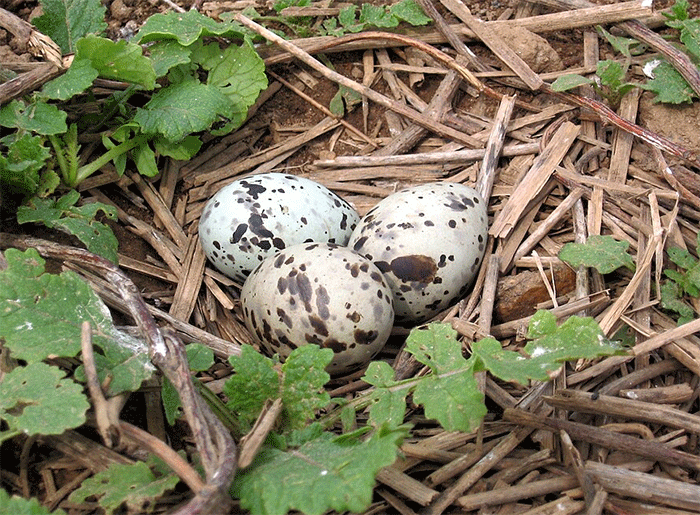
Understanding a female’s signature
Common Terns are famous for their elegant flight, sharp calls and lifelong site fidelity – but their eggs also tell a story. A new four-year study of more than 1,500 eggs from a long-monitored colony in northern Germany has shown that individual females consistently lay eggs with distinctive patterns, sizes and shapes. These traits, once thought to vary randomly, are in fact highly repeatable and appear linked to female quality, age and reproductive strategy.
Researchers found that each female produces eggs with a recognisable “signature”, from the degree of spottiness to the balance of pigments that affect hue and brightness. These characteristics remained remarkably stable both within a single clutch and across years. Such consistency suggests a strong individual component, whether genetic or shaped early in life, rather than eggs being heavily influenced by short-term environmental factors.
Age brings subtle but important shifts
As females aged, their eggs became slightly larger – a change that can bring advantages for chicks, which tend to hatch heavier from larger eggs. Spottiness also increased with age, though the study revealed an additional twist: females that produced very heavily spotted eggs were less likely to still be breeding in older age groups.
This pattern hints at a possible link between spottiness and physiological stress. One of the key pigments that creates dark spotting is associated with oxidative processes in the body. The researchers suggest that females producing highly spotted eggs may be under greater physiological strain, potentially reducing their long-term survival prospects.
Laying order drives changes in size and shape
While colour traits stayed consistent across a clutch, egg size and shape varied systematically with laying order. In two- and three-egg clutches, later eggs were smaller, less elongated and less pointed. These patterns are common in many seabirds and are thought to be part of a natural brood-reduction strategy: if food becomes scarce, the smallest and last-hatched chick is more likely to perish quickly, improving the survival chances of its siblings.
In Common Terns, which sometimes produce more chicks than they can raise in poor food years, this subtle reshaping of eggs plays a role in managing the risks of an unpredictable marine environment.
Inside an extended phenotype
Taken together, the findings show that egg characteristics are not arbitrary decoration but a meaningful extension of a female’s biology. They reflect her age, condition and evolutionary strategy, offering clues to how she allocates energy and how her chicks may fare once they hatch.
The study’s authors call for further work to identify the selective pressures shaping these traits – from camouflage against predators to signalling eggshell strength or reflecting the female’s health. What is already clear is that the eggs of Common Terns provide a window into their complex reproductive ecology and the hidden decisions shaping each breeding season.
December 2025
Get Breaking Birdnews First
Get all the latest breaking bird news as it happens, download BirdAlertPRO for a 30-day free trial. No payment details required and get exclusive first-time subscriber offers.
Share this story