Demoiselle Cranes poisoned in central Mongolia
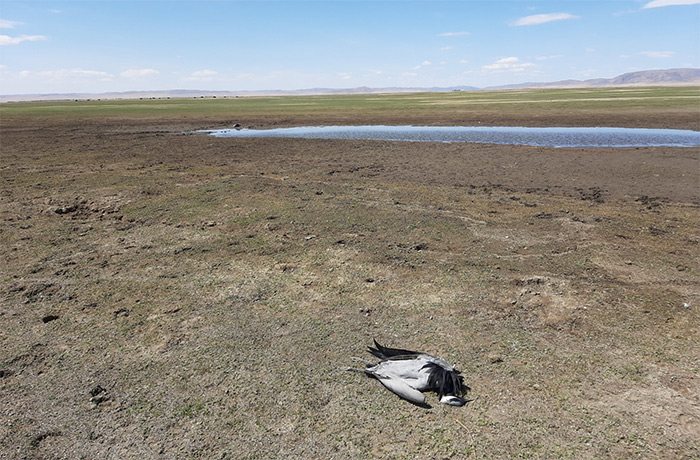
The risk of accidentally poisoning non-target wildlife is a less spoken environmental problem in Mongolia. Birds often become the victim of such non-target poisoning. Recently an incident that involved an agricultural chemical called - Bromadiolone - killed Demoiselle Cranes and Ruddy Shelducks in central Mongolia.
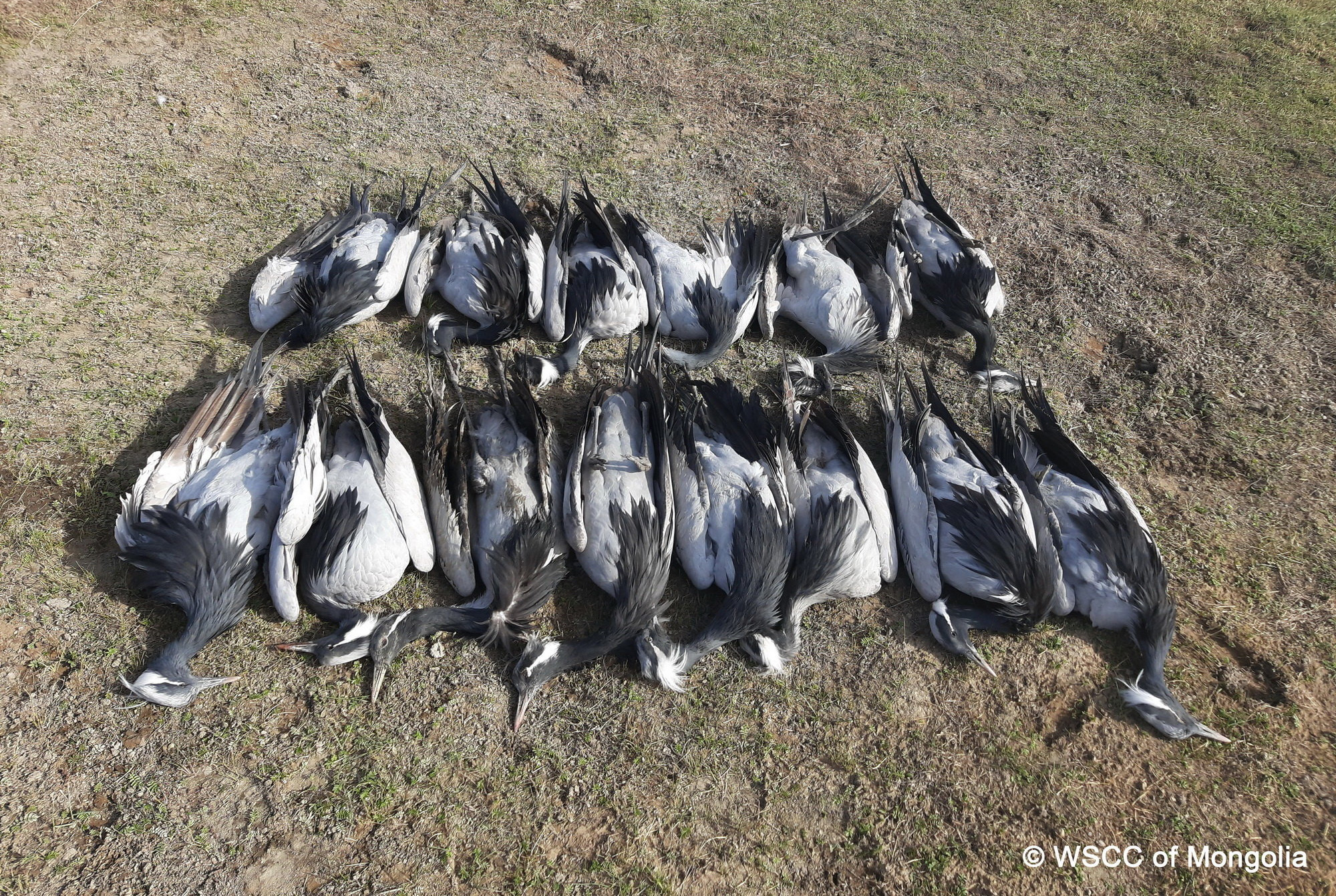
On 9 May 2020, we received information that a large number of Demoiselle Cranes were found dead near Kherlen and Bayan-Ulaan villages of Delgerkhaan soum, Khentii aimag. In response to a request from the local community, we sent two researchers the following day to work with the local authorities to examine the area and dead birds. During the examination, the joint team, comprised of people from the local authority and our researchers, found a total of 15 dead Demoiselle Cranes and 1 dead Ruddy Shelduck. No other species of dead birds were found. The team notified relevant local officials and destroyed remaining carcasses according to the veterinary regulations.
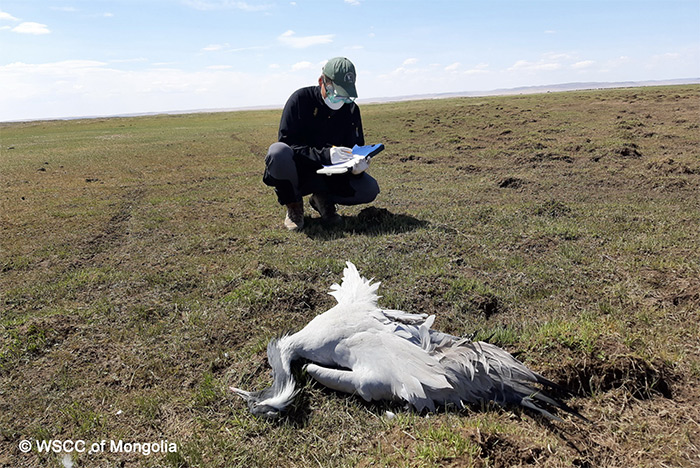
There were four cranes with blood clots in their mouths and haemorrhages in the digestive tract. Samples of dead cranes were sent to the State Central Veterinary Laboratory for further analysis. The laboratory analysis ruled out possible links to avian influenza viruses. However, they found traces of Bromadiolone, an anticoagulant chemical agent that is used in rodenticides. Bromadiolone was also found in the liver and food samples collected at the site. Pathological abnormalities were seen in liver, spleen, and kidney tissues.
It is clear that these Demoiselle Cranes were non-targeted victims of agricultural chemical that was used in this area. Bromadiolone is a widely used anticoagulant chemical in Mongolia used against rodents to protect pastures, crops, and warehouses. If the dosage exceeds the permitted level, it can kill birds and many species of mammals as well. It is a high risk agricultural chemical with significant environmental impact. A similar incident occurred in 2002 in Mongolia, where many cranes and other birds, mammals, and alarmingly two children were killed. There is a need to properly control the usage of Bromadiolone and other rodenticides and promote the safe use of agricultural chemicals in Mongolia.
We notified the incident to the Ministry of Environment and Tourism to take appropriate action. Rodents are often assumed to be the cause of grassland degradation. Research has shown that high rodent numbers are a result of grasslands degraded by overgrazing. We encourage the Government of Mongolia to strengthen its efforts to address the root causes of land degradation – overgrazing.
Wildlife Science and Conservation Center of Mongolia
13 Aug 2020
Share this story