Conservationists rescue oldest known wild Bearded Vulture
The oldest Bearded Vulture ever recorded in the wild was recently rescued in the French Alps by some of the same conservationists who released him 37 years ago
VCF shares a rare conservation turnaround
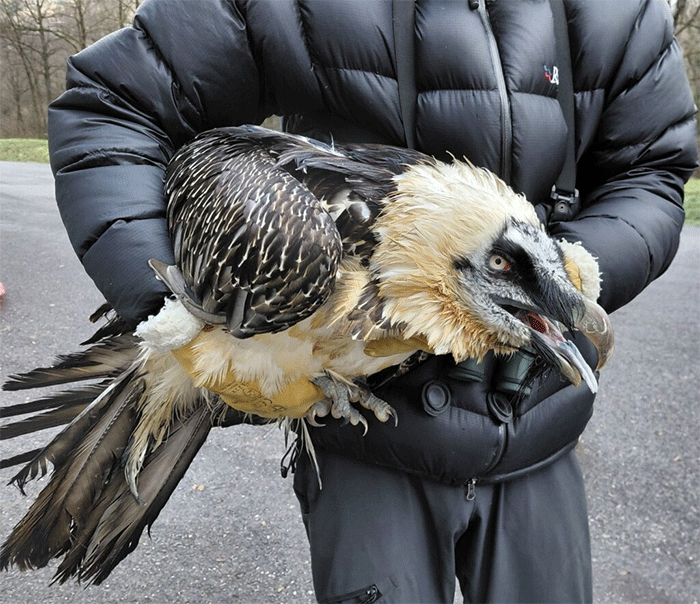
The Vulture Conservation Foundation (VCF) has reported the extraordinary rescue of a Bearded Vulture known as Balthazar - the oldest individual of his species ever recorded in the wild. The discovery closes a remarkable 37-year circle in European vulture conservation and highlights both the successes and ongoing challenges facing these iconic birds.
Balthazar was located weakened on the ground near Thyez, Haute-Savoie, and taken to a specialist veterinary clinic linked to the Bearded Vulture captive-breeding centre. Despite signs of arthritis and a lead pellet embedded in his foot, the bird regained strength over subsequent days.
A legend reborn
Examination of his rings revealed that Balthazar was originally hatched on 17 February 1988 at the Wassenaar breeding centre in the Netherlands - one of the earliest sites involved in the Bearded Vulture reintroduction programme.
Released later that year in the Bargy massif as part of collaborative efforts to restore the species, he went on to become the first male in the Alps to successfully breed in the wild in 1997. Since then, he fathered 15 wild-born chicks, whose descendants now number more than 30.
VCF on what the rescue means
Reflecting on the discovery, a VCF spokesperson said, “Balthazar’s story is a testament to the resilience of this species and the long-term value of coordinated conservation efforts - but it also reminds us that threats, such as lead poisoning, remain a real danger to vultures across Europe.”
Lead poisoning - a persistent threat
X-rays showed a lead fragment lodged in Balthazar’s right foot, likely the result of an old shooting. Even decades later, embedded lead poses toxicological risks and serves as a stark reminder that, despite strict protection for raptors in France and elsewhere, persecution and poisoning continue to endanger large birds of prey.
A coordinated release and careful monitoring
On 5 November, VCF and partner organisations - including the French national species action plan coordinator and veterinary teams - agreed to return Balthazar to the mountains of the Bargy massif.
Fitted with a GPS tag, he initially flew from the release site, but subsequent monitoring showed limited movement. He was recaptured on 27 November and remains in captivity while further health assessments are conducted.
A living symbol of decades of work
Balthazar’s journey reflects the broader success of the international Bearded Vulture conservation programme, which has seen 264 young birds released between 1988 and 2025 across the Alps.
His life story - from captive-bred chick to pioneering breeding male and now resilient elder - encapsulates both how far the species has come and how much vigilance remains necessary to protect it.
December 2025
Get Breaking Birdnews First
Get all the latest breaking bird news as it happens, download BirdAlertPRO for a 30-day free trial. No payment details required and get exclusive first-time subscriber offers.
Share this story