Spix’s Macaw heads list of first bird extinctions confirmed this decade
Eight bird species, including two species of macaw, look set to have their extinctions confirmed following a robust new assessment of Critically Endangered species. The findings reveal a worrying new trend: for the first time, mainland extinctions are outpacing island extinctions.
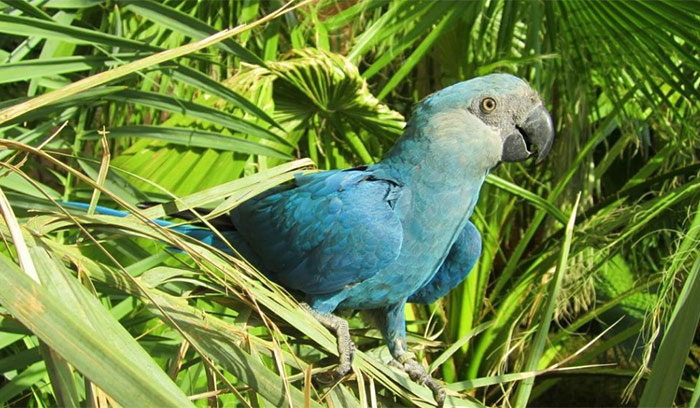
In the 2011 animated film Rio, Blu, a captive-raised Spix’s Macaw, arrives in Brazil to mate with the last-known wild member of his species a female named Jewel. But according to our latest paper, Blu was already 11 years too late – Jewel, the last of her kind, likely perished in or around 2000.
Spix’s Macaw is one of eight species primed to have their extinctions either confirmed or deemed highly likely, following a new study by BirdLife International. The eight-year study used a new statistical approach to analyse 51 Critically Endangered species, quantifying three factors at once: intensity of threats, timing and reliability of records, and the timing and quantity of search efforts for the species. Five of the eight confirmed or suspected extinctions took place on the South American continent, four of them in Brazil, reflecting the devastating effects of the high rate of deforestation in this part of the world.
“Ninety per cent of bird extinctions in recent centuries have been of species on islands” says Dr Stuart Butchart, BirdLife’s Chief Scientist and lead author on the paper. “However, our results confirm that there is a growing wave of extinctions sweeping across the continents, driven mainly by habitat loss and degradation from unsustainable agriculture and logging”.
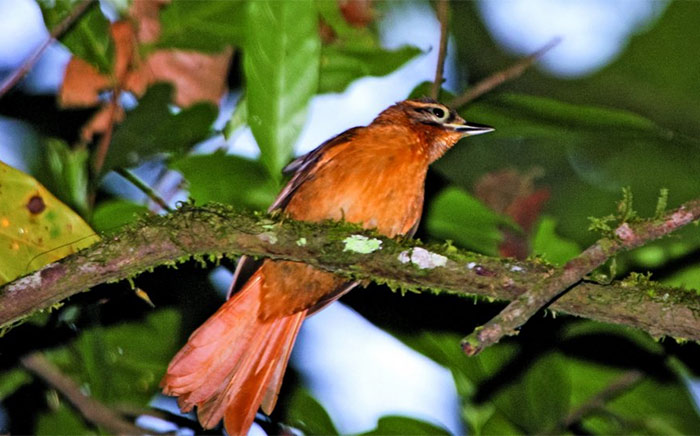
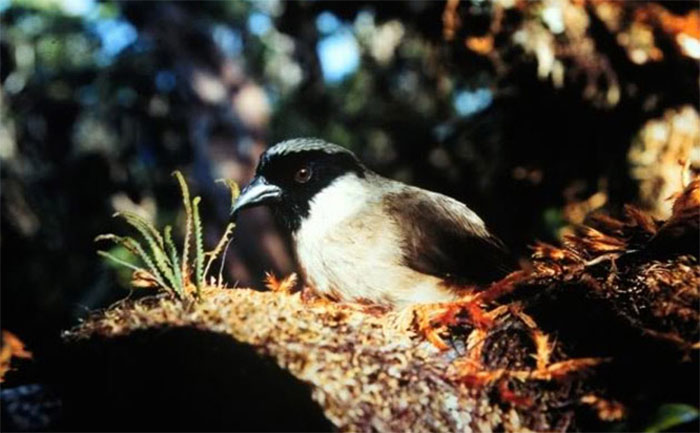
Of the eight species, it was recommended that three species should be re-classified as Extinct; the Cryptic Treehunter and Alagoas Foliage-gleaner, two ovenbirds from North-east Brazil, and Poo-uli, formerly of Hawaii, which has not been seen in the wild since 2004 (the same year the last captive individual died). The data also suggests another four species should be reclassified as Critically Endangered (Possibly Extinct), a category that indicates that the species is highly likely to be extinct, but further search efforts are required before we can definitively rule it to be Extinct.
These species are New Caledonian Lorikeet (last sighted in 1987), Javan Lapwing (1994), Pernambuco Pygmy-owl (2001) and another Brazilian macaw, Glaucous Macaw (1998).
Hope still persists for the Spix’s, however, despite the Brazilian endemic apparently being wiped out in the wild as a result of deforestation and other factors such as the creation of a dam and trapping for wild trade. An estimated population of between 60-80 persists in captivity, hence the suggested classification change to Extinct in the Wild. A lone sighting in 2016 sparked hope the species may persist in the wild, but it is now suspected to be an escapee from captivity. If so, it is sadly highly unlikely this Blu ever found his Jewel.
12 September 2018
Share this story